I am in Oaxaca. I’ve been here less than 3 hours and have procured two tamales and a cafe de olla. This is a strong start. One is stuffed with yellow mole. The masa is thick and fluffy and smooth and melts in your mouth, almost like pork belly fat. The other is a more traditional pollo verde with a thin textured corn masa and a little heat. I love this town.
How I’ve talked my parents into this, I’ll never know, but I like to think I’m using their love for me in a way that’s good for them. Oaxaca should be on everyone’s list.
If Mexico looks a bit like an inverted J, then Oaxaca is where the J begins to curve over, eventually becoming the Yucatan. It’s a remarkably diverse state, with the capital sitting in a high desert like valley surrounded by the Sierra Madres which boast coffee growing region on the east and south, bordering Veracruz & Chiapas, and on the west rise high before giving way to the tropical Pacific coast. Something like 80% of land in Oaxaca is mountainous. This is the home of mezcal and mole. In Mexico City, a vendor will tell you “it’s from Oaxaca” to denote it’s fine craftsmanship (and accompanying price point). While I feel like all of Mexico is a little better at loving life, no where does this feel more true for me than in Oaxaca.
My flight left the city at 6am and my parents flew over night, so we were all a bit delusional our first day. But we wandered about enjoying the sunshine and had a lovely first meal at La Olla. While many of the fine dining restaurants here are relatively new, opening within the last 5-10 years, La Olla has been serving up an elevated version of the classics (moles, caldo de gallina, tlayudas) since 1994. It’s a cozy and homey space with yellow walls and wooden tables that are not simply designed to look rustic, but actually are.
Day 2, we found our breakfast staple, Onnno, a nearby, hole in the wall (literally), with excellent coffee and beautifully laminated pastry. Because I was running this errand, I just bought a ton of pastry. A tarragon kouign amman (yes please), a chocolate croissant with Oaxacan chocolate, a sweet potato bread with thickest richest most delicious cream on top, and a banana nut bread basically for my dad. Then we set off on our first adventure!
Arturo picked us up at 9:30am and we drove through the central valleys up in the foothills to Hierve el Agua. He was a wealth of knowledge, chatting the whole way through about rural redistricting, mezcal production, and the geological history of the area.
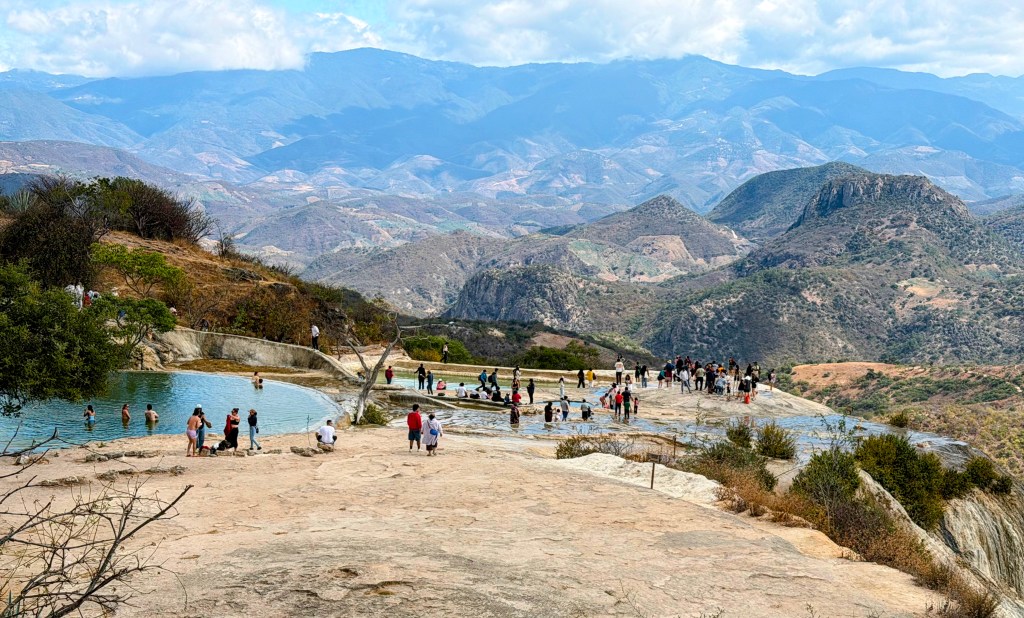
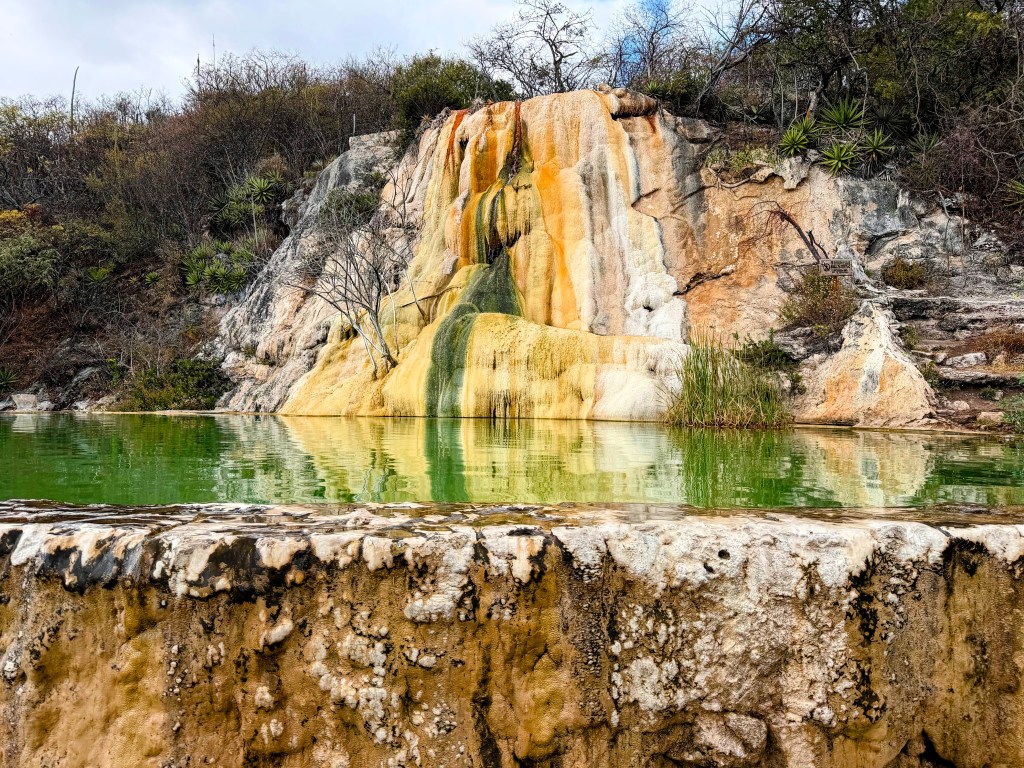
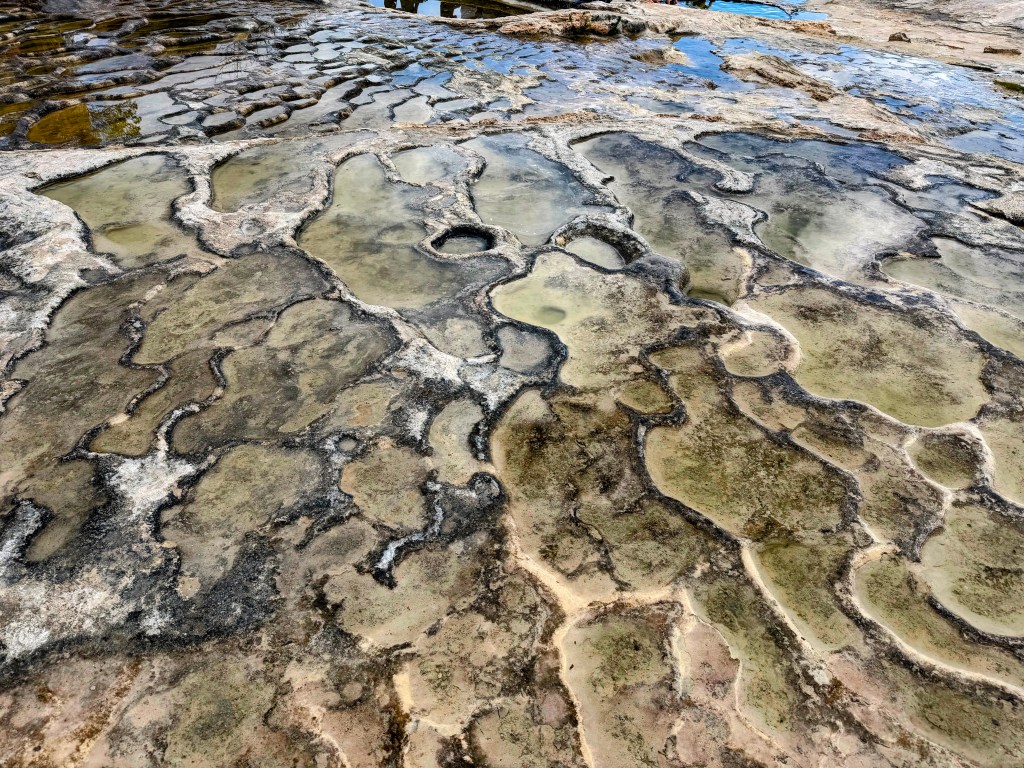
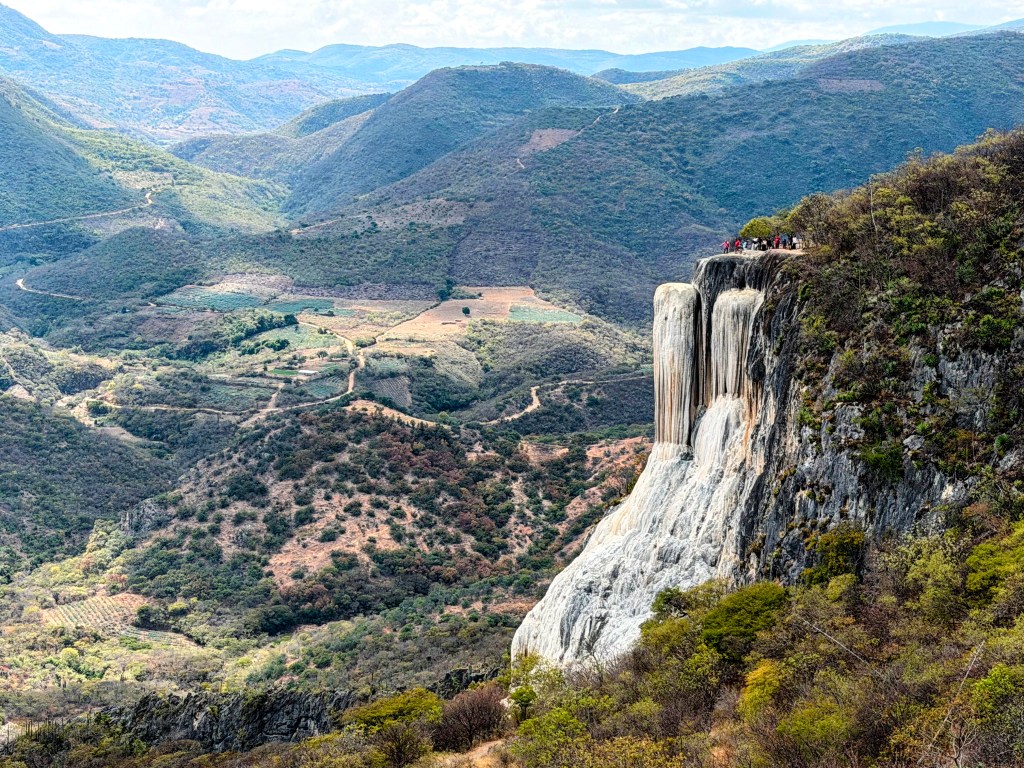
Hierve el Agua is a petrified waterfall formed by mineral springs, mostly comprised of calcium carbonate, running slowly over the edge of the cliffsides. Up top the water has created striation in the ground beneath and small pools to swim in above a sweeping valley view. Oaxaca has great clouds. The site features two large petrified waterfalls, the larger of the two extending over 90 ft down to the valley. While considerably more built up and tourist friendly than I remember it, it remains a remarkable space just striking in its landscape.
From there we drove back toward the city to Mitla, a Zapotec ruin.
The Zapotecs are indigenous people dating back to around 700 BCE who dominated Oaxaca. These are a distinct people from the Maya and Aztec, with their own language, calendar and writing system. They were largely sedentary and practiced agriculture. The Zapotec were not a particularly expansionist people, focused more on agricultural development, weaving, carving, and developing complex urban centers.The rugged landscape of Oaxaca also meant that the Zapotec language developed many distinct language variants as villages were often quite isolated from each other. There continues to be a lot of local pride in Zapotec heritage. Our guide at Mitla, Hector, made a point of informing us that he is Zapotec and giving us the Zapotec name for places and things, as well as the present day Aztec based name.
Mitla is the second most well known site in the area, the Zapotec name was Lyobaa meaning Place of Rest (or Burials) and was translated by the Aztecs into Mictlán (Place of the Dead), before becoming Mitla under Spanish rule. It rose to prominence after the Zapotecs abandoned Monte Alban in the 700s. The site was built by both and the Mixtec and the dual influence is noticeable in the differences with the earlier capital which features classic pyramids. This is an earthquake prone area, so much like the Inca, the Zapotec built by carefully carving and sanding stone to fit together tightly without the use of the mortar. This allows the construction to move during seismic activity thus reducing the likelihood of cracking or breaking.

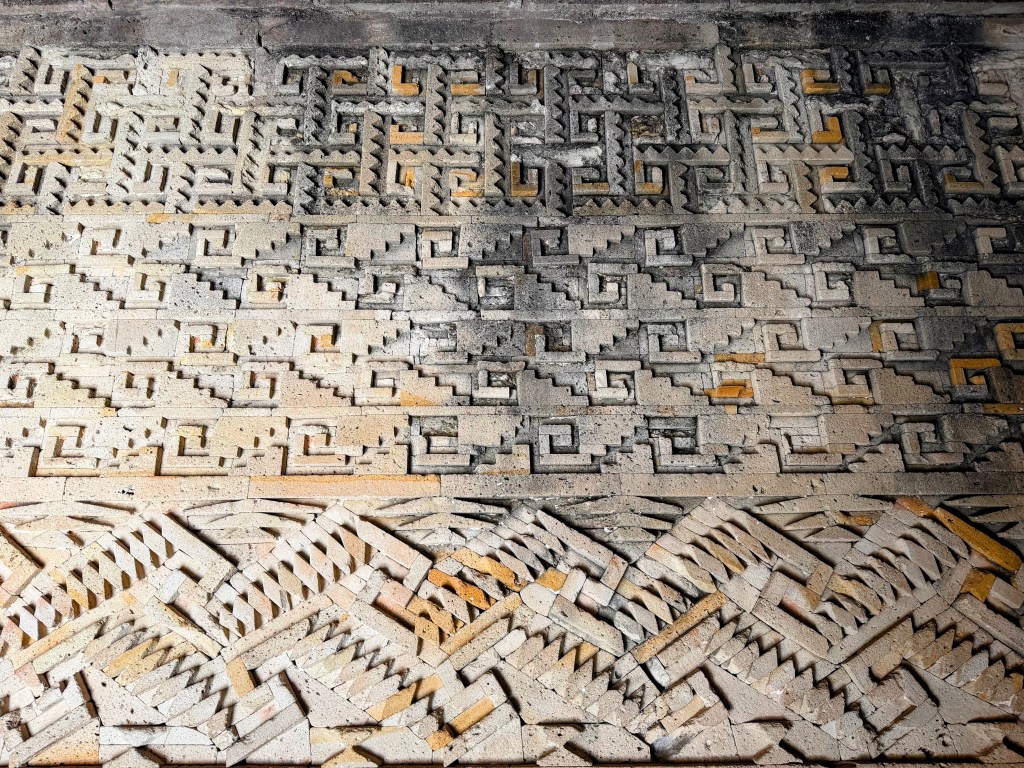
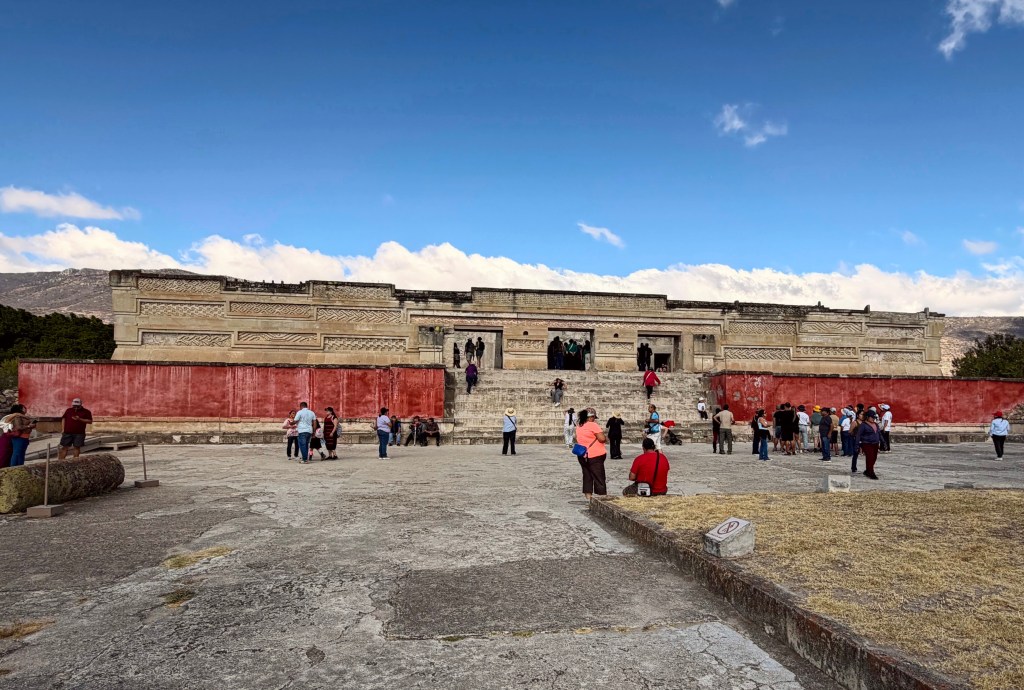
Mitla is famous for its grecas, 13 styles of intricate stone carvings in the wall symbolizing various aspects of Zapotec life and religion, like thunder or the eye of god. Many of this imagery can also be found in the famous woven products of the area. The culture was big into red, so you have to picture all this stone inlaid over a red wall. The city was still active when the Spanish arrived in the early 1500s, so they did what the Spanish do and destroyed some temples to construct a church on top out of the stone. I don’t actually know why the Zapotec, rather than the Mixtec, seem to get all the credit and fame here, perhaps because the Mixtec were spread over a wider area? This may require future research.
We had a quick (for Mexico) bite, my mom enjoyed a memelita de cecina. It was a really good fluffy memelita. Cecina is a thin piece of air dried beef or pork that’s then cooked. It most commonly comes lightly coated in a flavorful, not very spicy chile powder, although you do see it “natural” or without the powder from time to time. It’s usually salty and delicious and can be found in tacos, atop tostados or memelitas and on tlayudas.
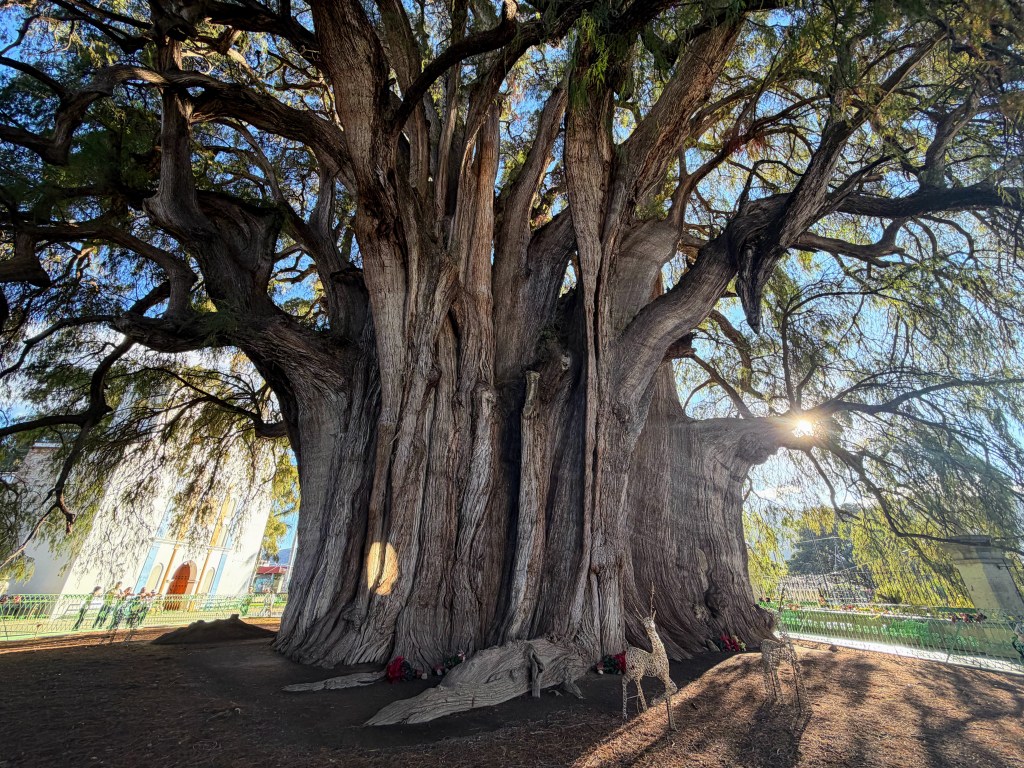
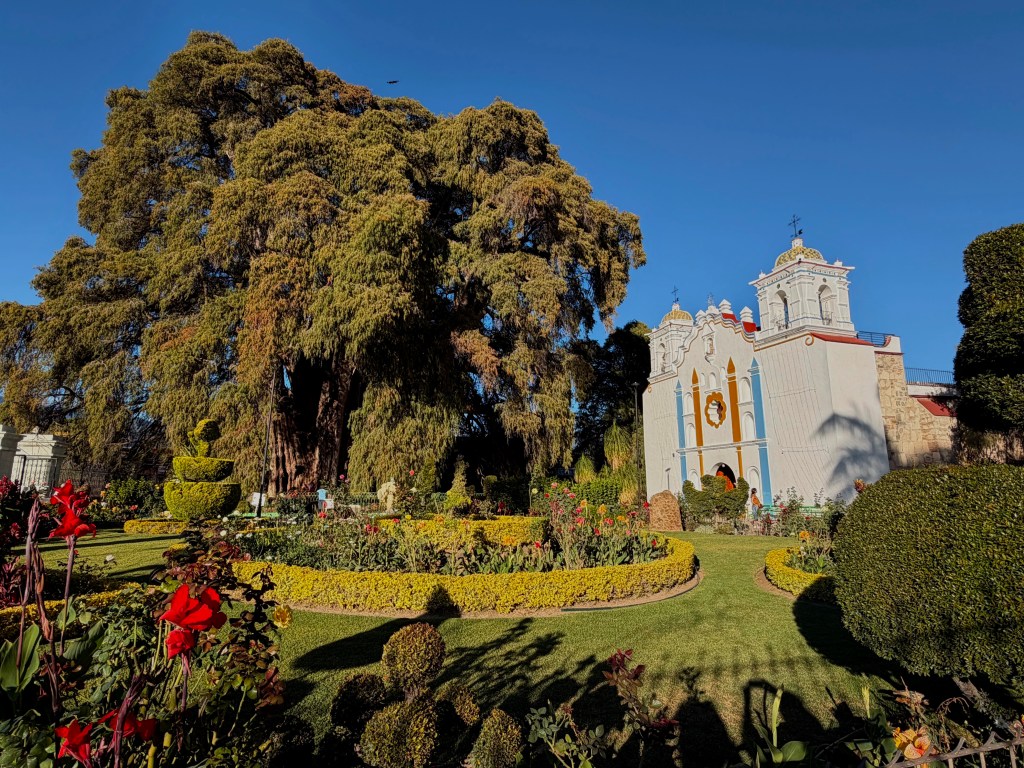
Afterwards, we made our last stop of the tour at Tule tree, the widest tree in the world. Located in Santa Maria de Tule, the tree is a sacred spot that Spanish couldn’t cut down, so they just built a church next door. There’s some argument over how to measure the diameter of the tree since it isn’t one smooth round surface, most generously it boasts a 46 ft diameter, or, if smoothed, just over 30 ft. Either way, it wins as the next widest tree is only 29 ft in diamater. While no one knows how old the tree is, most estimates place it around 1500 years old. Tule is an ahuehuete tree, a Montezuma cypress in English, as I just learned and is also called the Tree of Life as people point out various animals they can find in the trunk.
We finished the day with a meal at Quince Letras where mom and I shared a delicious almond mole and dad, of course, had fish in some kinda of vegetable stew situation that smelled heavenly..
There was some unavoidable sadness in being here and doing these things. This was our first trip. Am I trying to reclaim these spaces? Am I savoring the sadness? Do I just want to write over those memories? Regardless, it’s definitely sussed out some feels.
Next day was an adventure… and probably something I wouldn’t have intentionally done to my parents. Most towns in the outskirts of Oaxaca specialize in some type of craft, San Bartolo Coyotepec makes black clay pottery, San Martín Tilcajete carves and paints intricate wood alebrijes and Teotitlán del Valle is a town famed for its weavers and natural dyes. As many of you know, my mom is a phenomenal knitter. What you might not also know, is that she has some experience weaving as well and actually owns a loom.
I had been to Teotitlán before as part of a larger tour and remembered being a little frustrated at only going one place and not being able to explore the town, so I’d reached out to set us up a demonstration and thought we could do this one independently. That morning I realized I wasn’t 100% sure I’d fully confirmed, but their website seemed like they offered demonstrations every day at the same time that I thought I booked and I knew the town was full of these types of demonstrations. So we grabbed a taxi for the ride out there, roughly 35 minutes, and then struggled a bit to find the very closed location. Oops. From here a few things happened. 1. We realized we had shit for cell service 2. I managed to send a message to our guide from yesterday who we knew had a weaving friend, and 3. we trudged back up to the main road when I found a kid who gave us a couple recommendations.
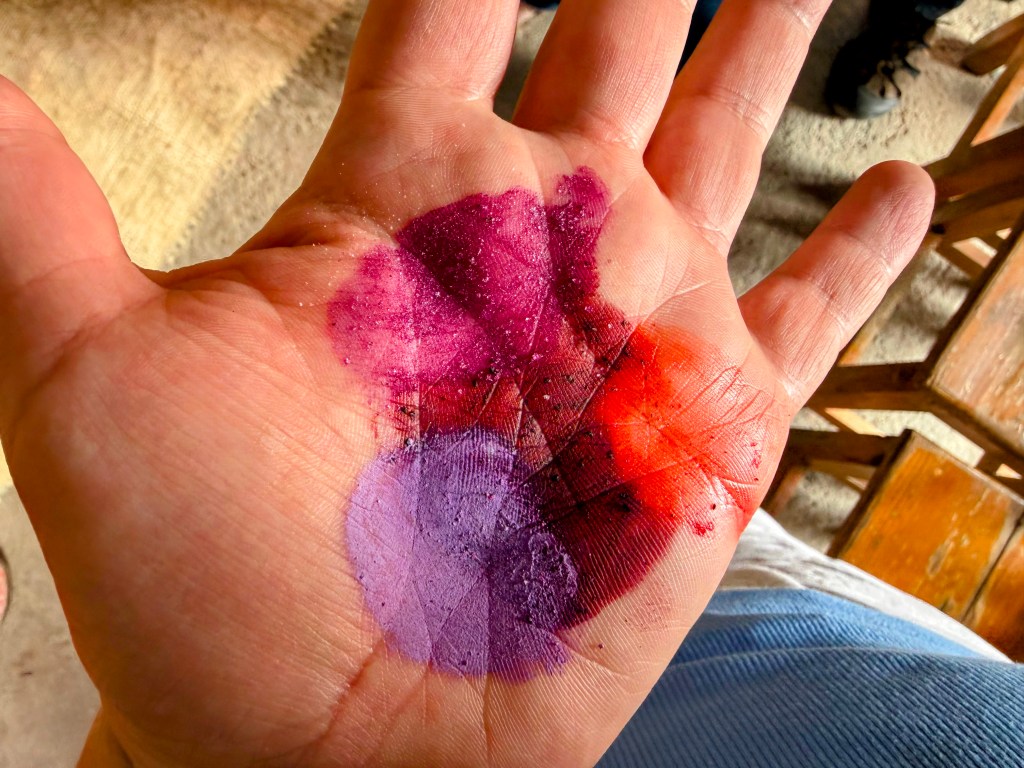
La Zapoteca was around a corner and while the main door appeared to be closed, the one next to it was open. I ducked in and yelled Hola to what appeared to be their courtyard. Isabel, perhaps the most stereotypical version of an abuelita I’ve ever beheld, emerged from the house. She let us know that they weren’t doing the full demonstration but could show us a little. First her grandson demonstrated use of the loom and then her son, Felix, popped out and took over. Mom had questions, which was great, because I think it’s what engaged Felix to truly perform. We learned about cochinilla which is a parasitic insect that lives on the big broad nopal leaves (cactus paddles). It appears as a small white blob, almost like a cocoon, when smushed it produces the brilliant red color used to dye yarn here. You can add alkaline products, like mineral lime to change the red to purples and browns, or add lemon or citric acid to produce brilliant oranges. And then we learned about making indigo which I was not familiar with.
So there’s a plant called jiquilite, it’s native to the area and inocuous enough looking. Once it’s mature, the leaves are collected and ferment in a tank of water for 60 days. They give off an intense blue. After the 60 days the leaves are collected in a cloth and spun tightly to expel all the water and then hung for another 2 weeks until dry. The leaves will have disintegrated and reformed in a hard, stone like mass. Pieces are broken off to be used as dye. The blue water is apparently waste. My parents bought a rug here and we departed.
In the meantime, Arturo had gotten back to me with the directions to Daniel’s place near the town center, “up the cliff”. Hmm. We found the centro, collecting a few dog friends on the way, and had a grand old time finding a bathroom. Mom was able to load the map to Huella Carmín and we set off up the hillside in search of the shop.
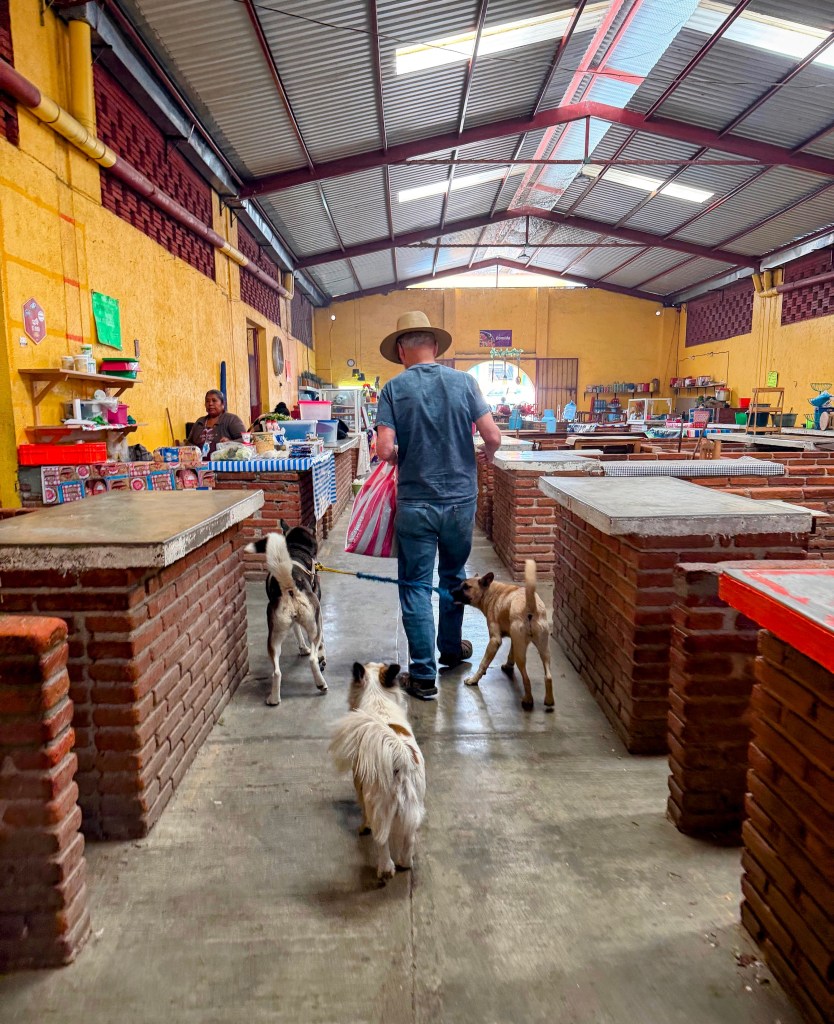
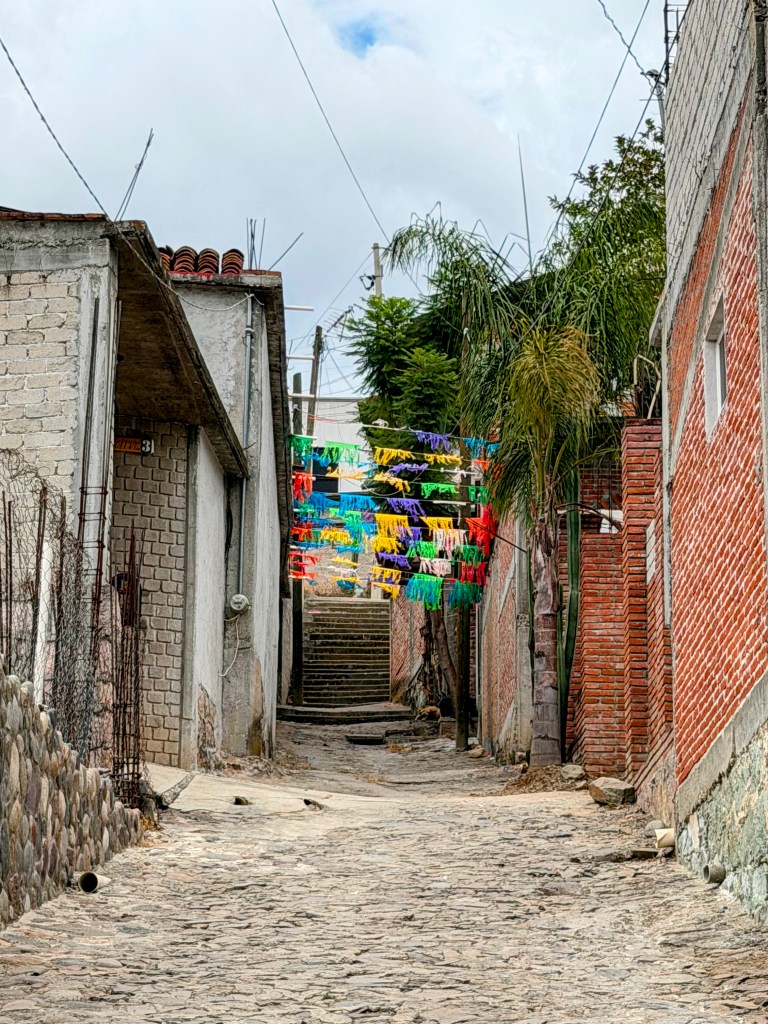
This was definitely a more rugged event that I might have planned for my parents. However, we arrived and were warmly greeted by the family. This was a manicured and industrious operation. The exhibition space was well laid out with chairs, we were each given a small cup of mezcal and had more bugs crushed on our hands. We had an opportunity to try carding (that’s a pain in the ass) and use a loom and a whole wall showed the variety of dyes that could be produced using the area’s wildlife.

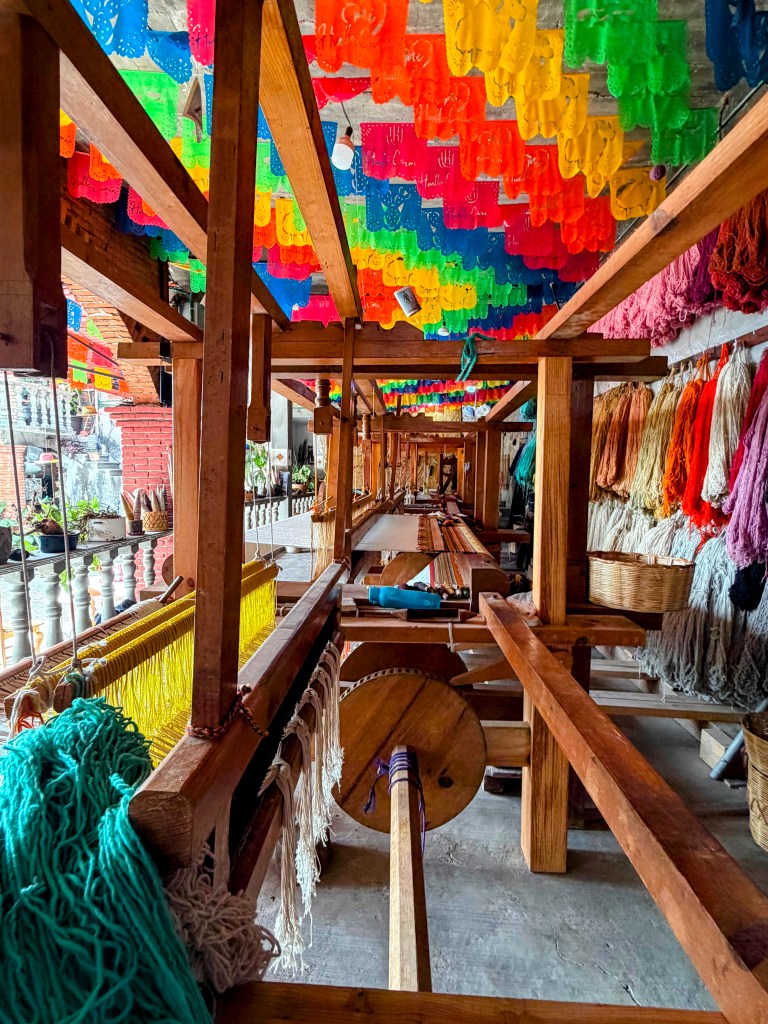
We were then led downstairs to a big open courtyard, one covered side of which was lined with looms in various sizes and the patriarch gave us a demonstration of how to use the loom, which I’m pretty sure only my mother understood. Then they fed us chocolate. And I got a rug!
Then came the real fun. I asked about taxis, a bus back, etc. Turns out no taxis in town and you have to order them at least 3 hours in advance. We’d also just missed the bus, which wouldn’t return for another couple hours. So our best bet, was tuktuk from the church to the highway and then catch a colectivo from there.
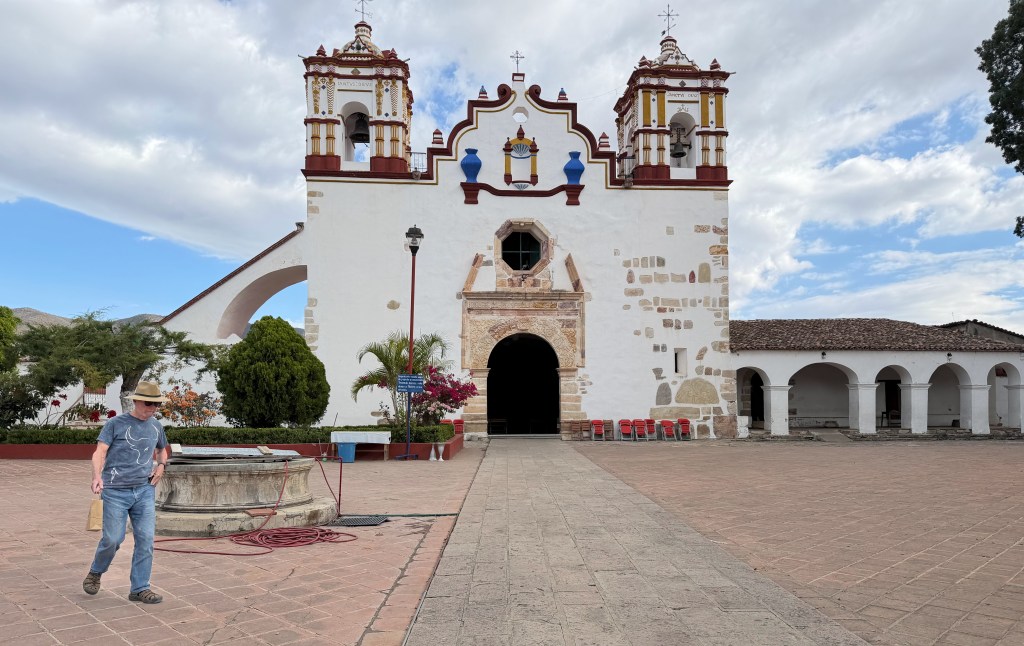
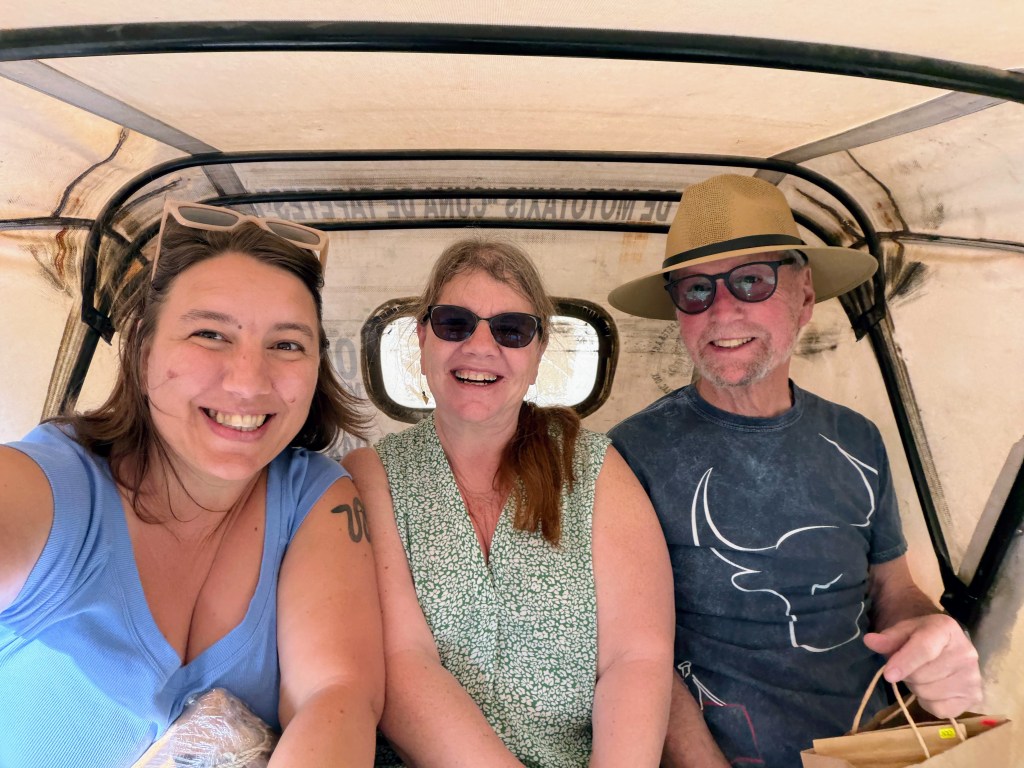
Ok. Back down the hill we trudged. It was a pretty little church and we stopped to admire before cramming into a tuktuk. The cabs sitting at the highway entrance informed us that they would not go to Oaxaca, but a bus came by soon. It was crowded and we stood and I cringed inwardly and prayed to god no one fell over.
We were deposited a very short walk from our home (and passed a cat cafe!), where we rested for a bit before heading out to the zocalo and dinner.
December 23rd is a very special day in the center of Oaxaca marking an 120 year old tradition of radish carving. What the fuck is that you ask? I can show you.
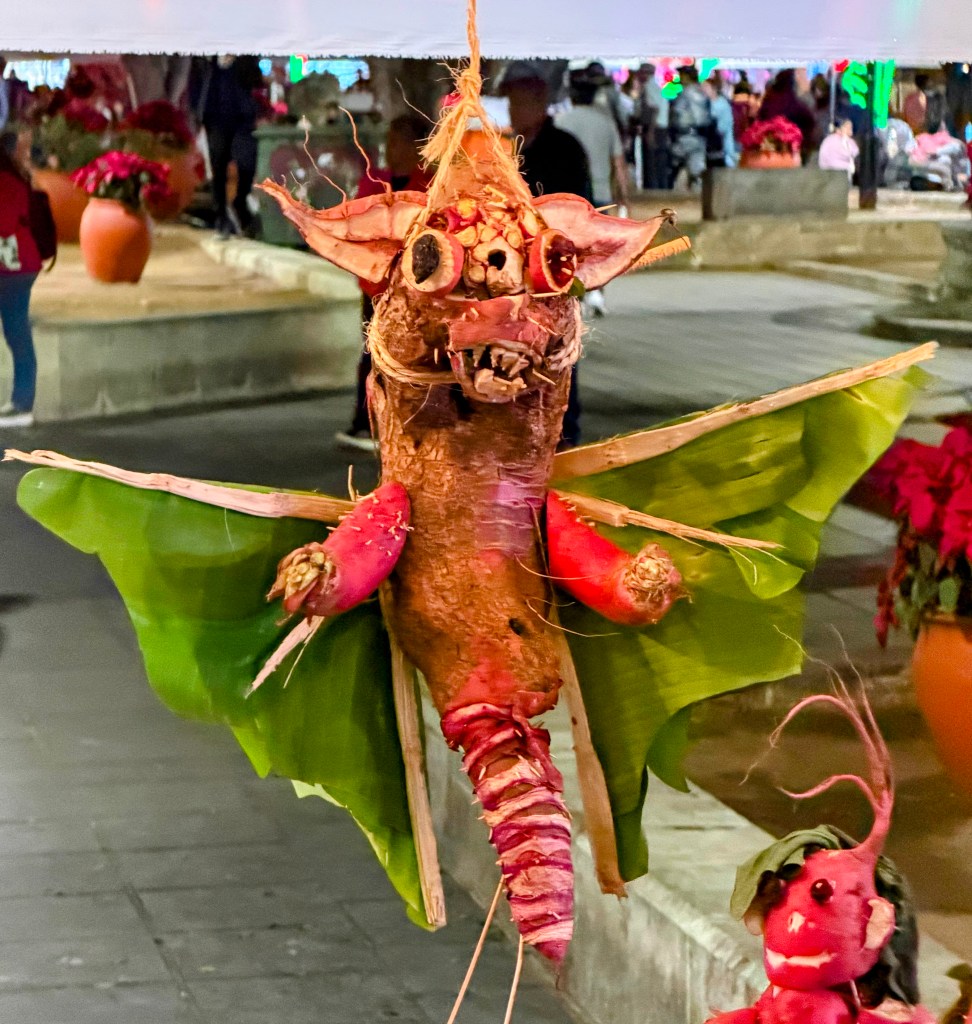
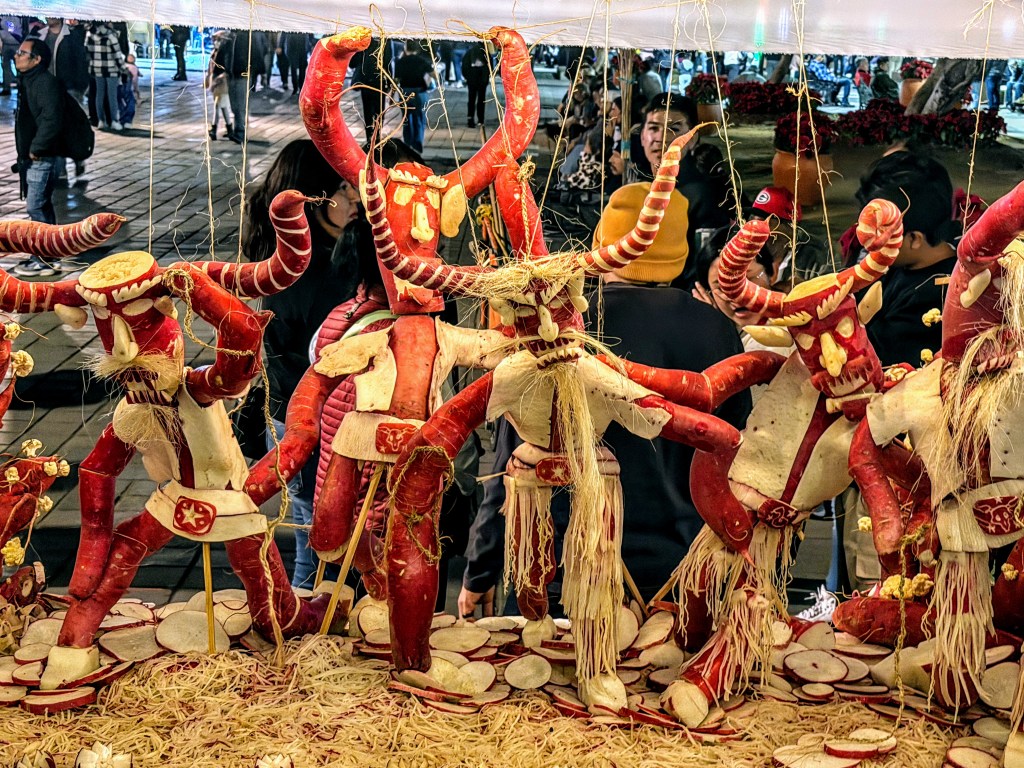
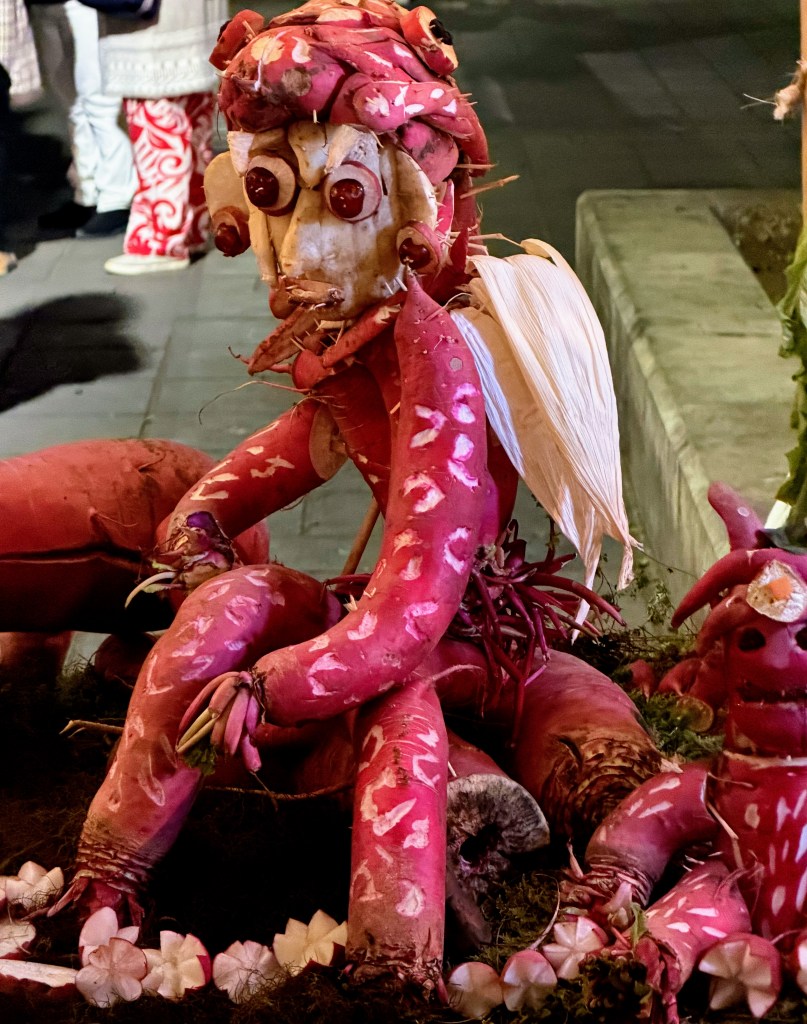
The line stretched for blocks around the zocalo. As the primary question had been “are we seeing radishes before AND after dinner or just after”, I bounced up to the front of line to inquire about closing time and much to my delight overheard a conversation about the special (read: nonexistent) line for older adults. I immediately produced my older adult and we were in!
Noche de los Rábanos is unique to Oaxaca and features several levels of competition. These are elaborate scenes built from specially grown radishes, now produced by the state, that are on display and lit up for one night only. And the flock comes to see! It was packed. I will now bombard you with pictures of radishes.
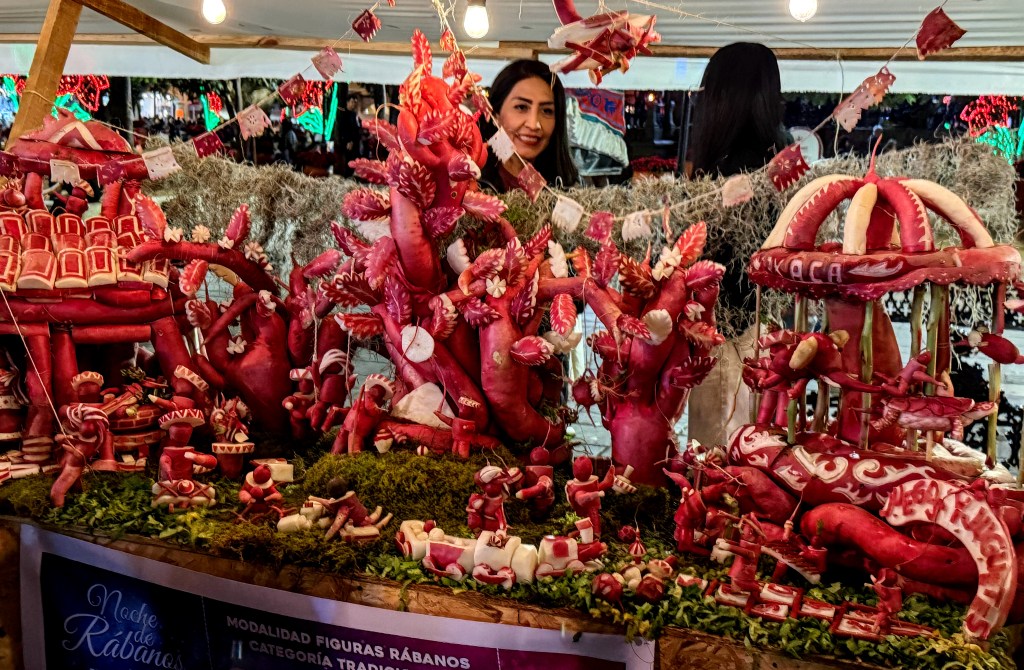
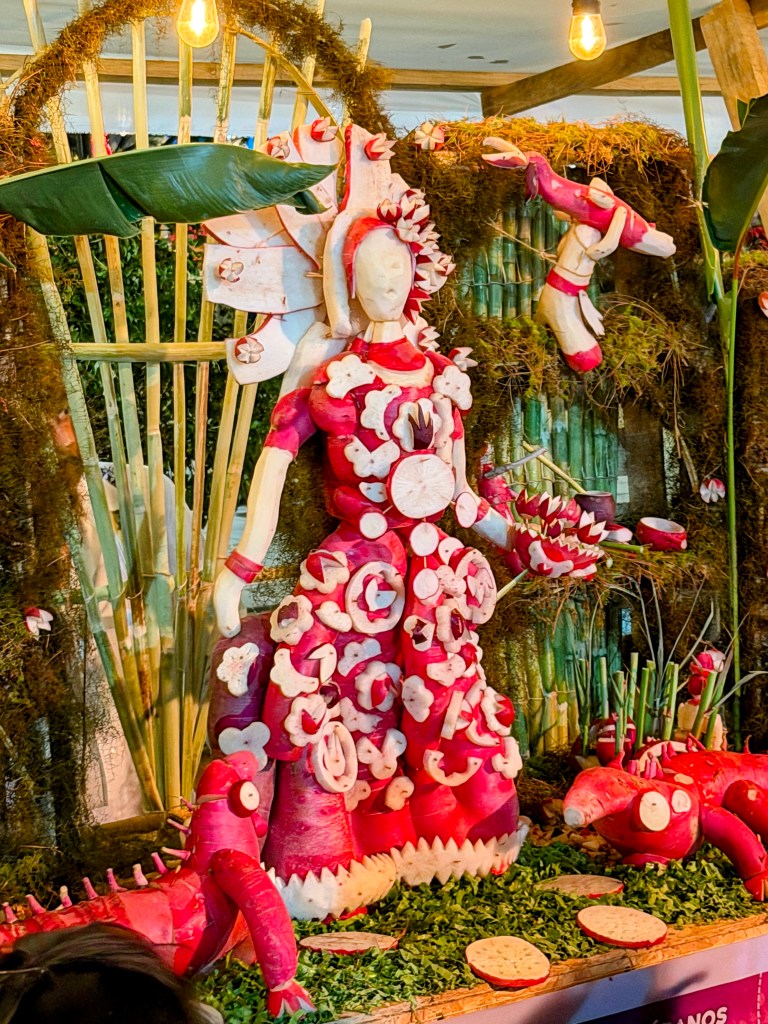
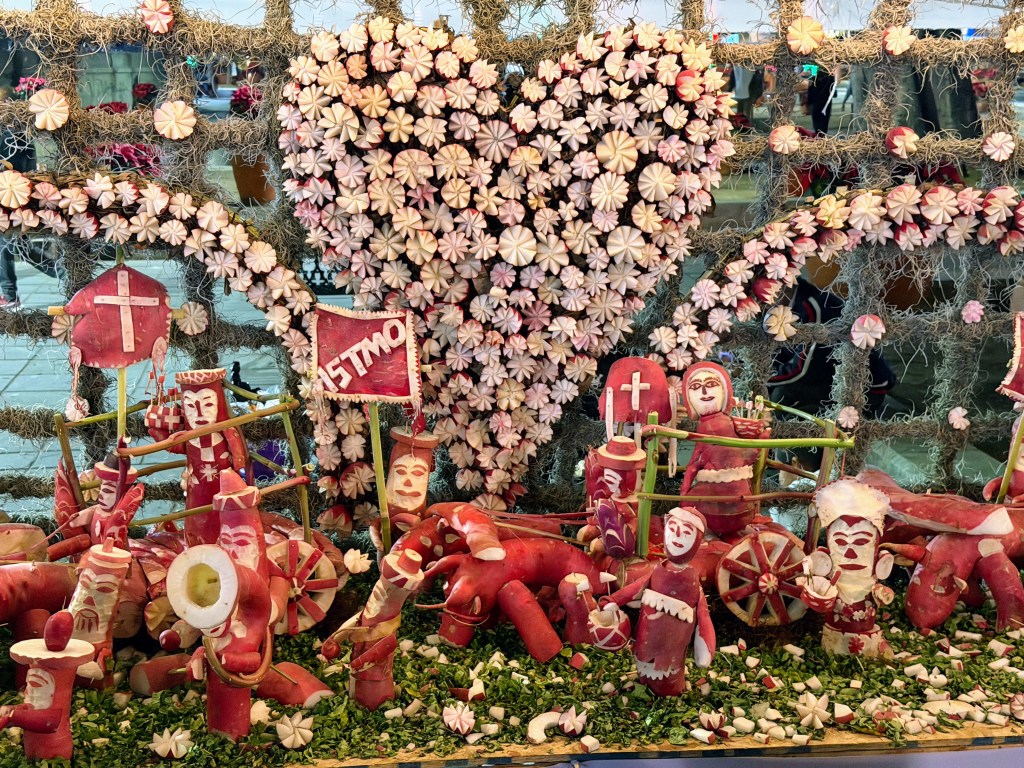
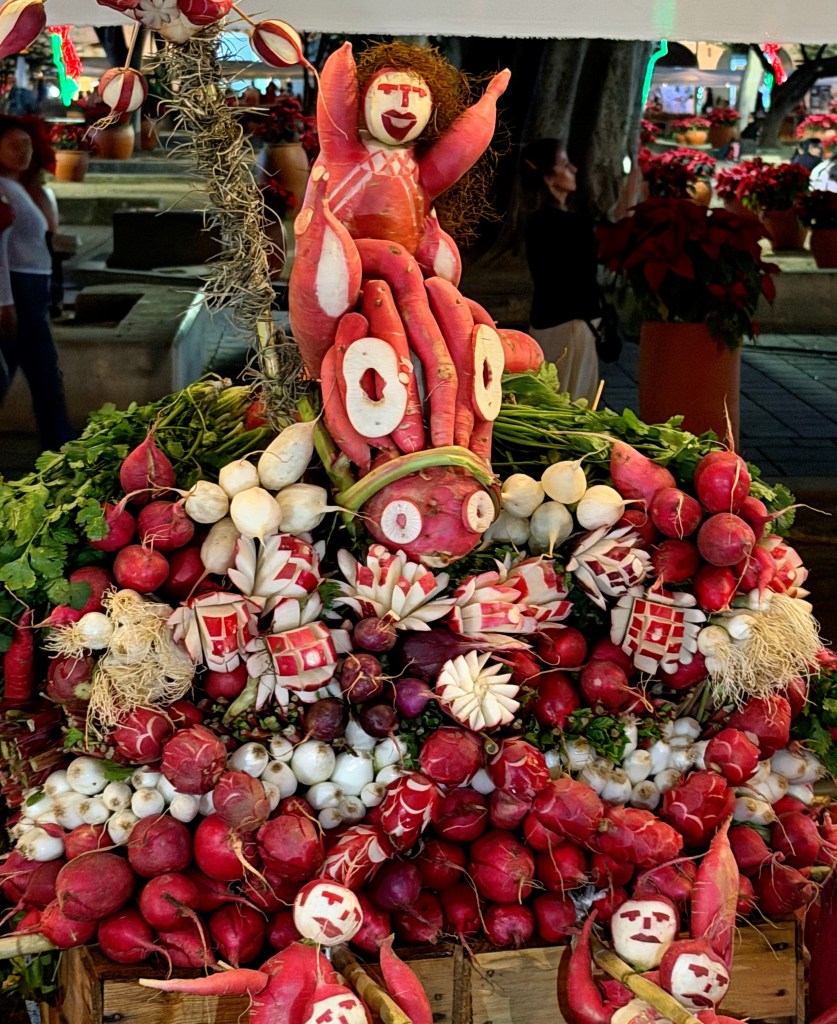
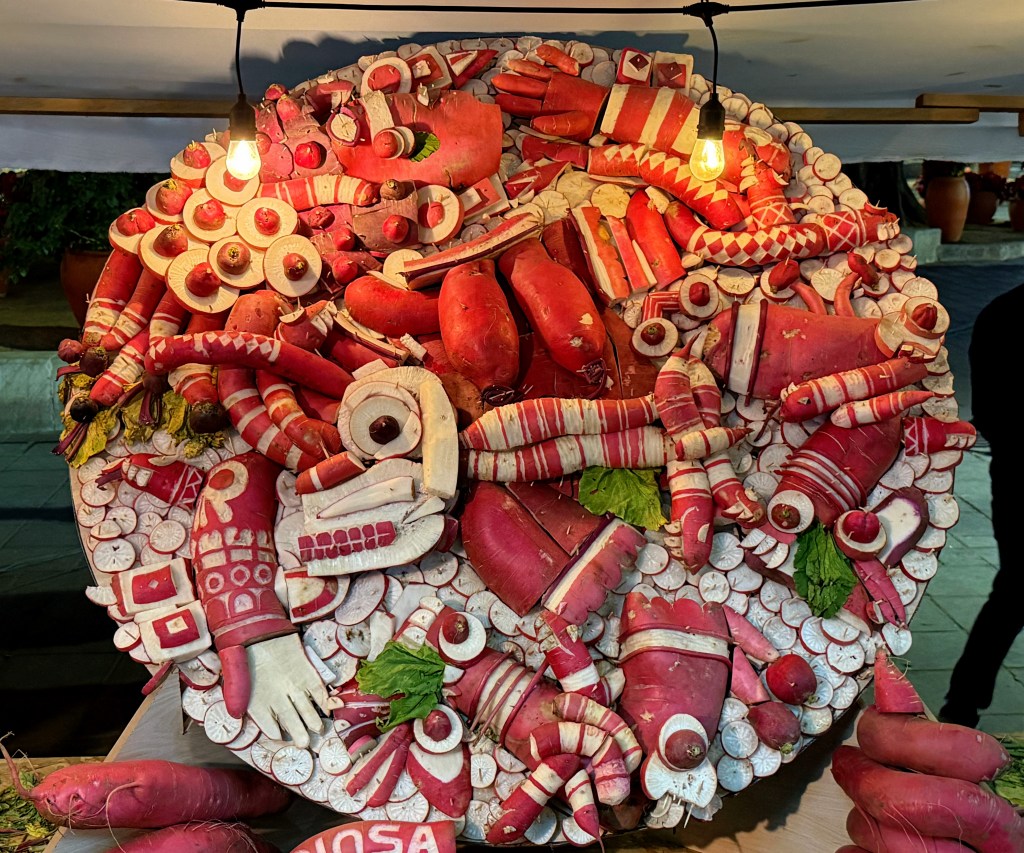
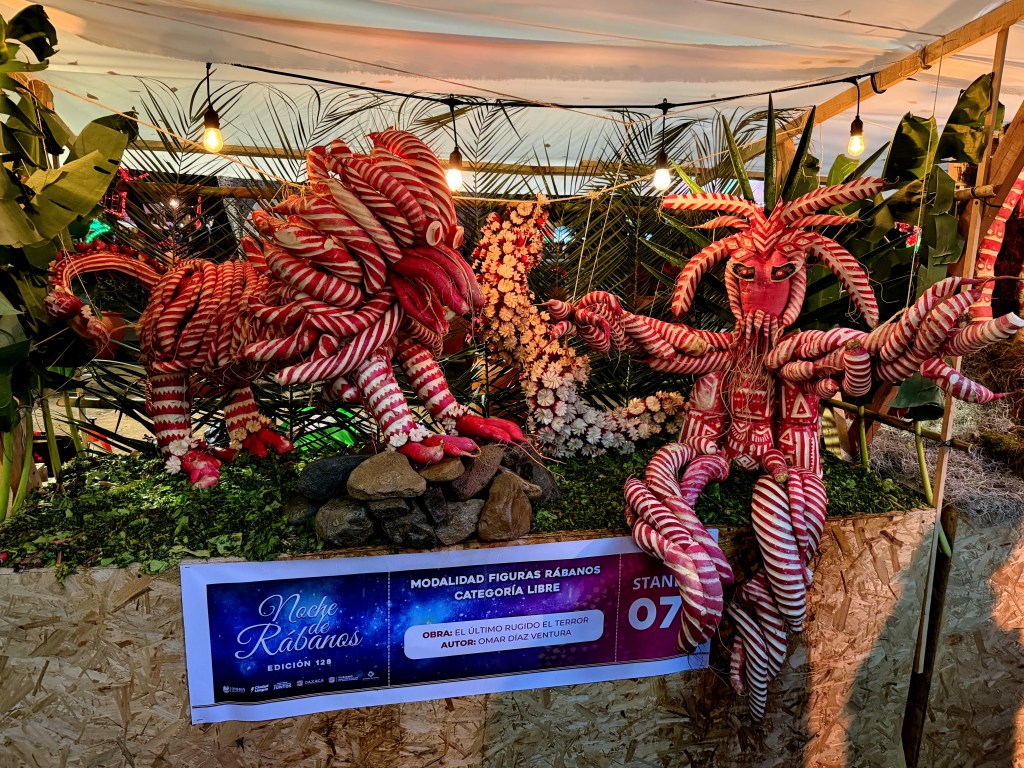
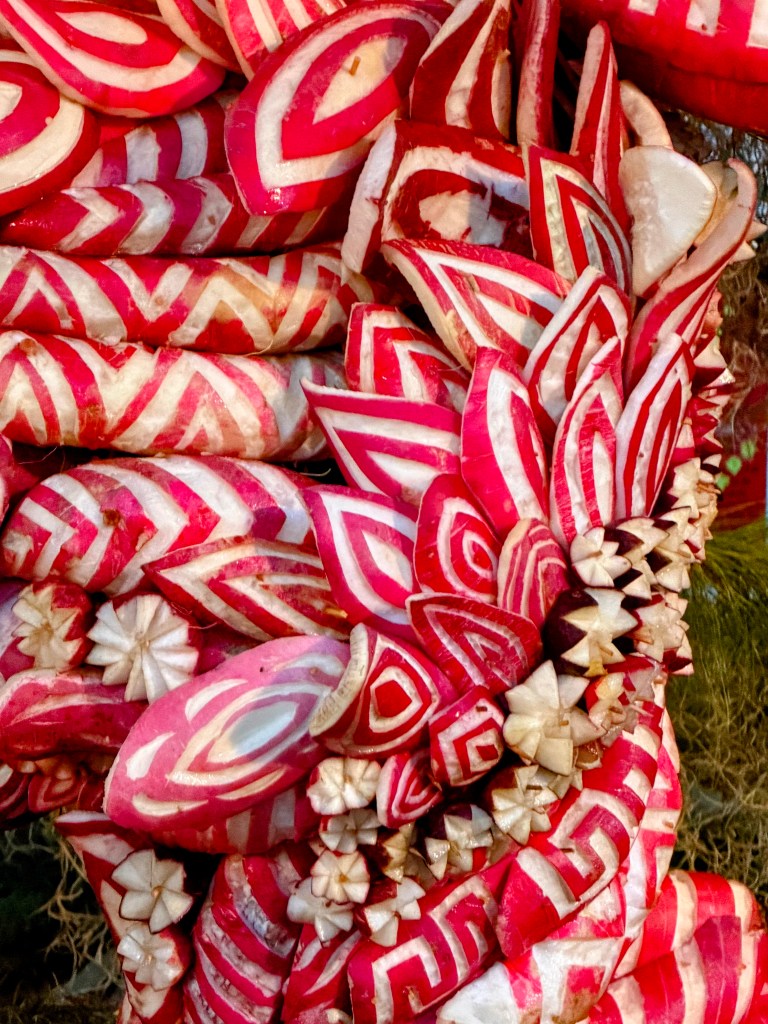

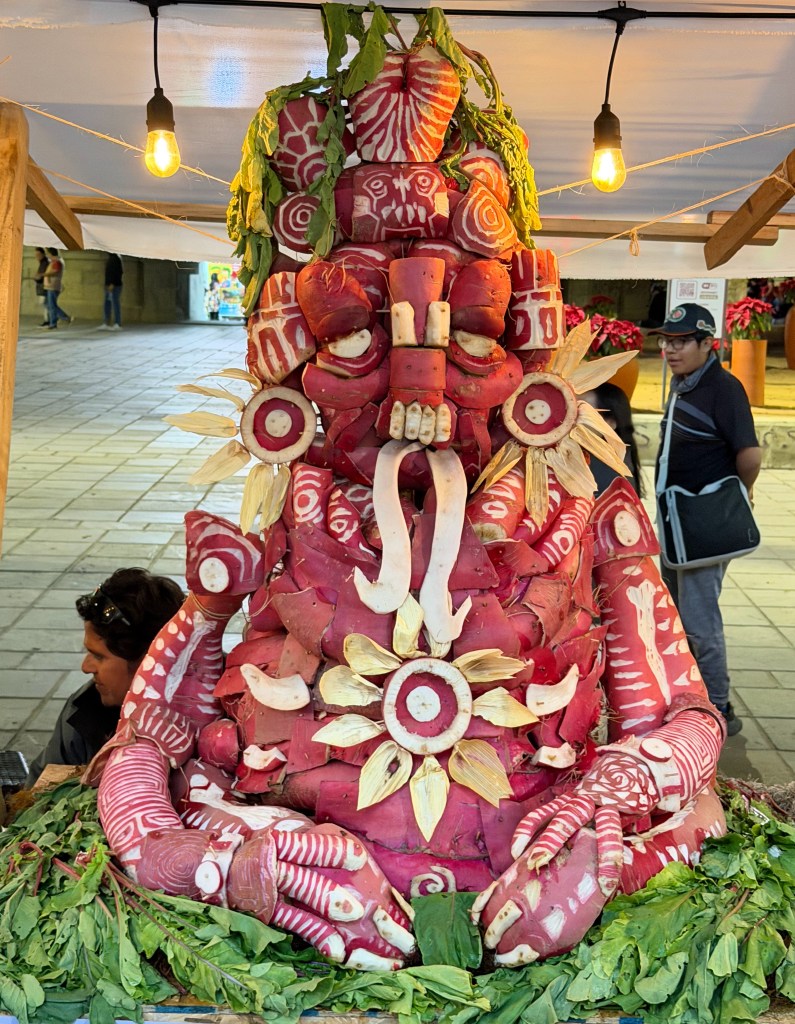
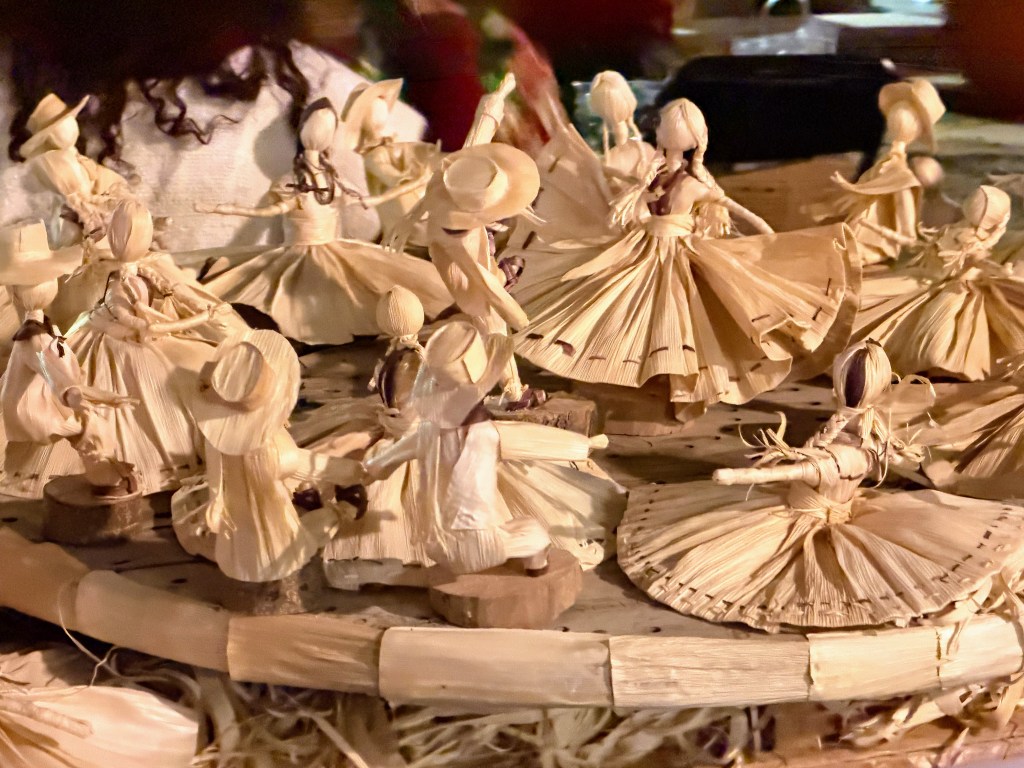
There were at least a hundred radish based entries. The latter section included flower displays and corn husk dolls. Again, big displays on table maybe 8ft by 2.5 feet. These were truly unbelieveable. Also these were some enormous radishes, obviously well past the point of edibility, but also considerably larger than it have ever occurred to me a radish could get.
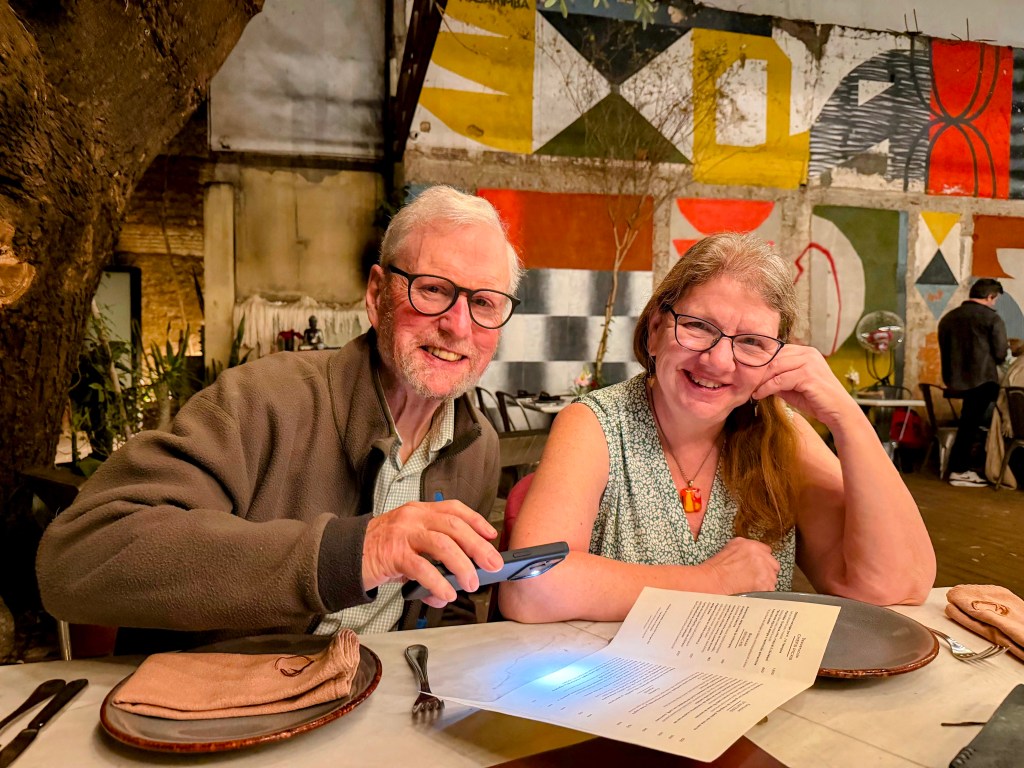
From there we wandered to Origen for another fabulous meal with some divine foie gras. This place featured a very modern menu and the sort of colonial wood meets industrial look that I do so love in Oaxaca.
Christmas Eve we began to seriously worry about our ability to procure breakfast the next day, so we took a jaunt down to the local mercado, which like all mercados is a little bit of a hectic scene. I think mom really enjoyed it and I know she took a fabulous photo of some whole chickens all stacked up and ready to go. Dad may have been a bit more on the fence.
We also ventured over to one of the makeshift Christmas markets where Felix’ wife, Soledad, was selling more rugs. Initially we believed it to be a more formal exhibition that mom had passed featuring a women’s cooperative from Teotitlán. Long story short, they bought another rug.
Levadura de olla is probably my favorite restaurant in Oaxaca. And their tomato salad makes me unreasonably happy and featured heavily in my birthday blog. They had no dinner reservations by the time I was looking and so we had a fabulous lunch.
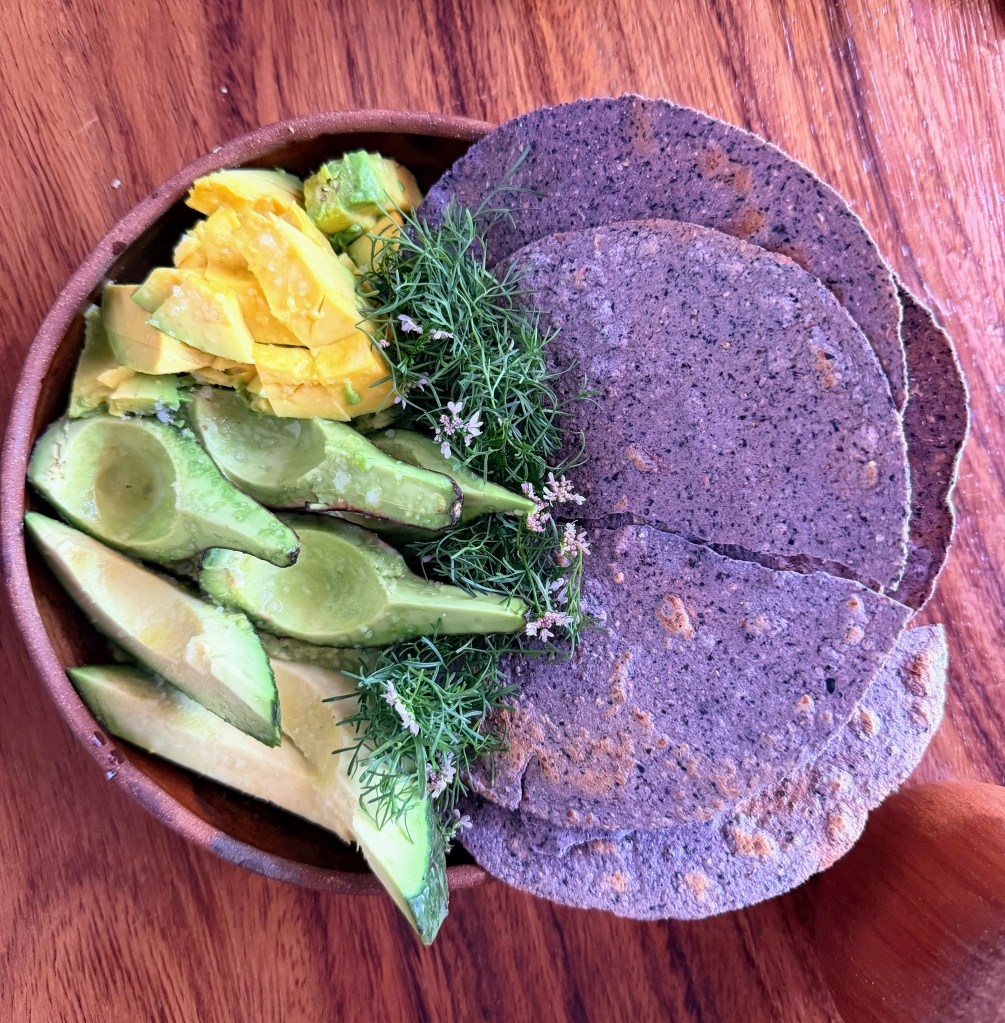
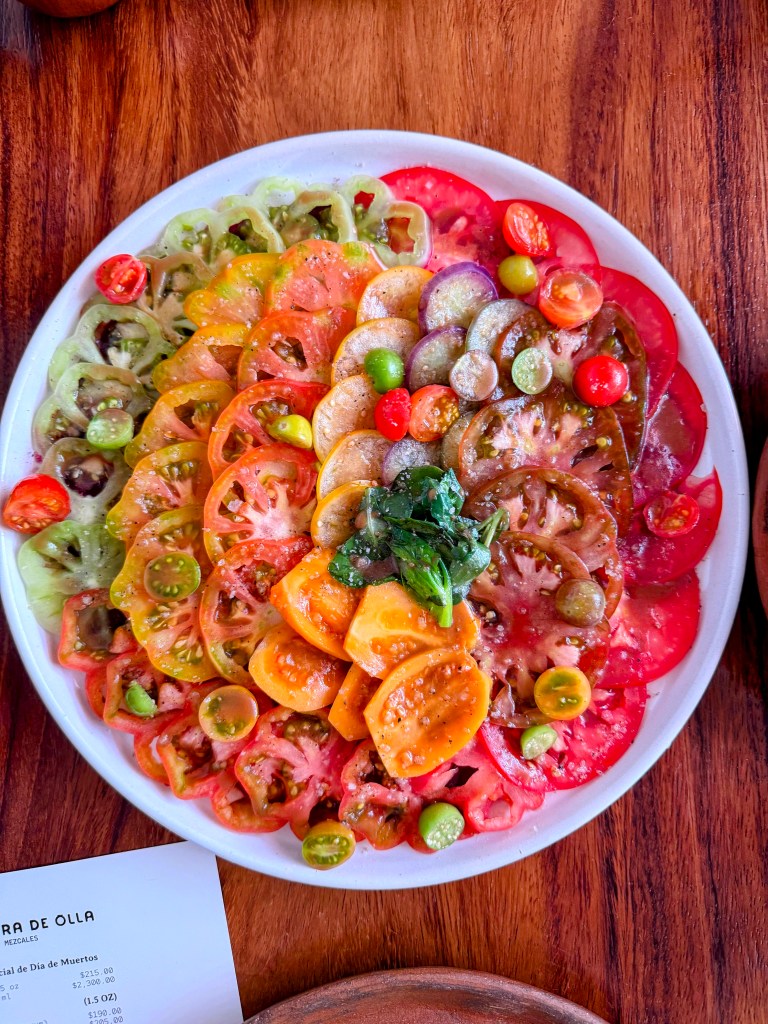
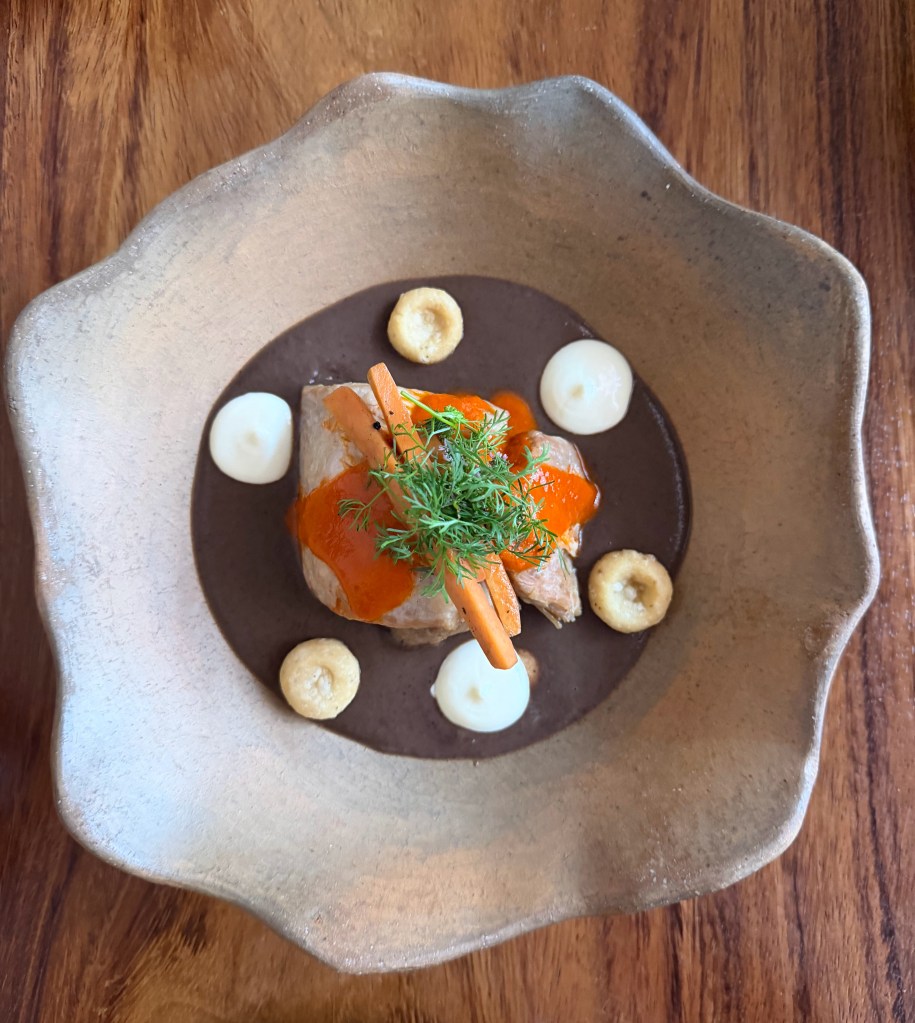
The space is beautiful in a charming colonial with a big open courtyard. Wooden bookshelves line one edge displaying terracotta pottery, big wood and white columns extend to the ceiling and a comal station is featured on one edge. We began with guacamole that comes with agaucate de agua diced in the picture, aguacate criollo which has a skin so thin you can just eat it, and aguacate mantequilla a large avocado with an extra buttery texture. And then of course my darling tomato salad. Followed by a not picture heirloom squash with pipian blanco. Our main was a pork rib with mole that was just fall apart tender and delicious.
After lunch mom rested and dad I searched for a wine store with much better success than I had anticipated and visited the pottery shop where I wound up buying some plates and bowls which are currently bubble wrapped and therefore unavailable for a photo shoot. I also just completely gave up on finding a grocery store and ordered on uber eats.

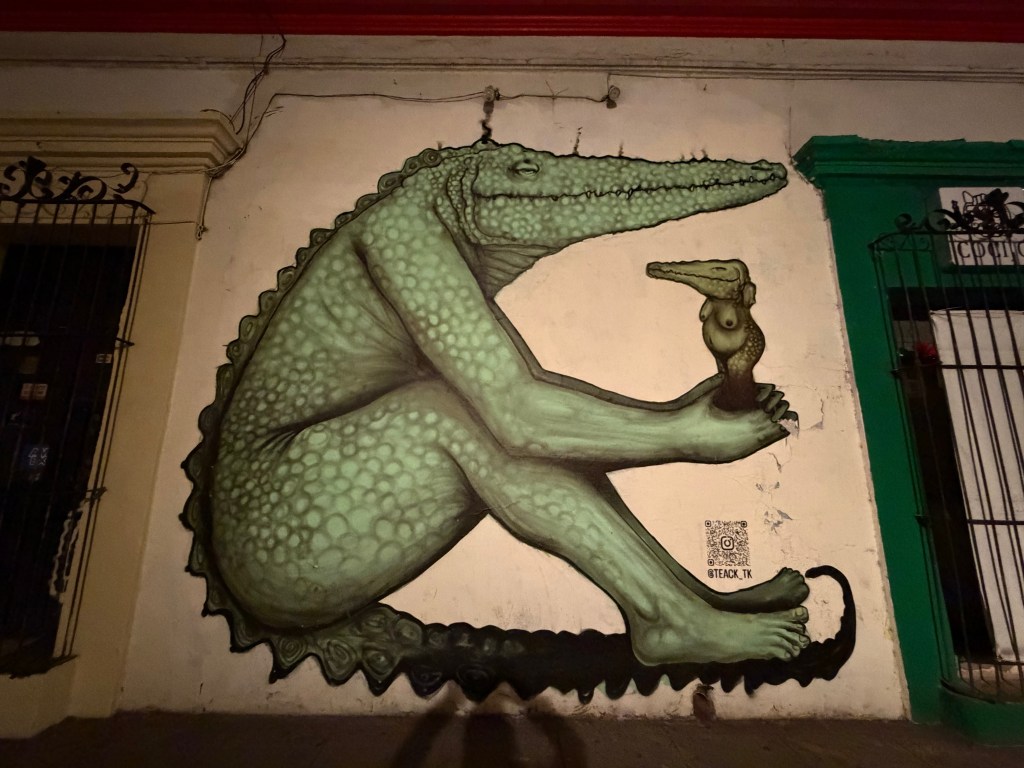

In the evening mom and I ventured back down to the center for what I believed was going to be a parade heading from each church to meet in the zocalo, so we directed our steps to Iglesia Santo Domingo. which is the most stunning church in Oaxaca.
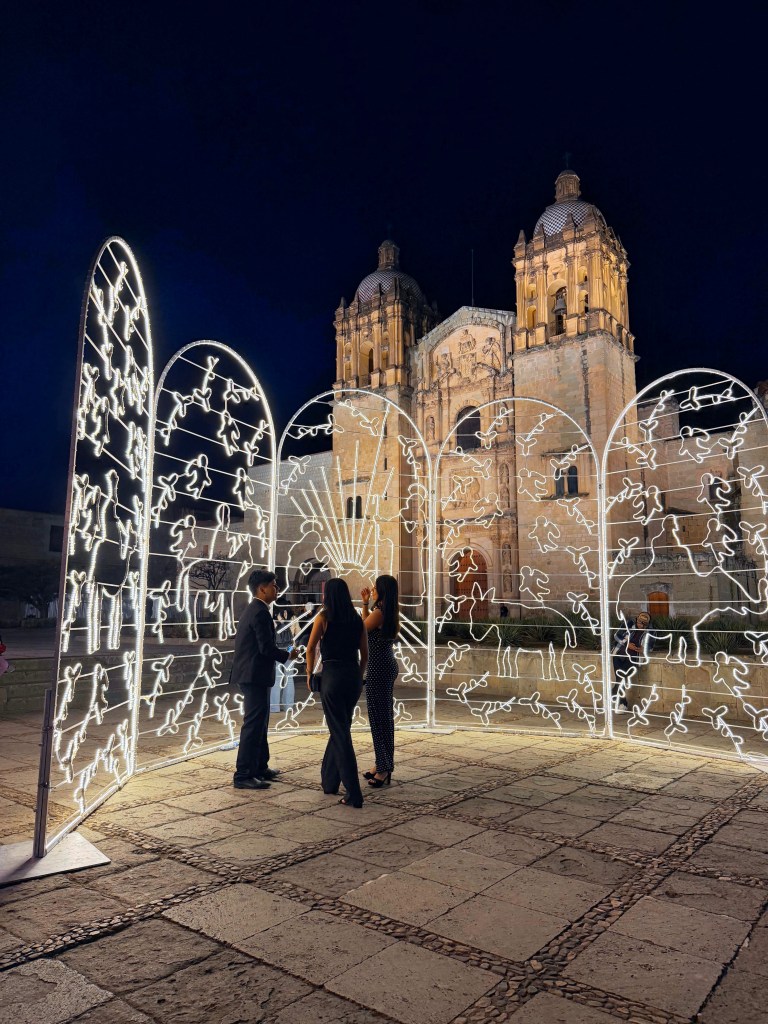
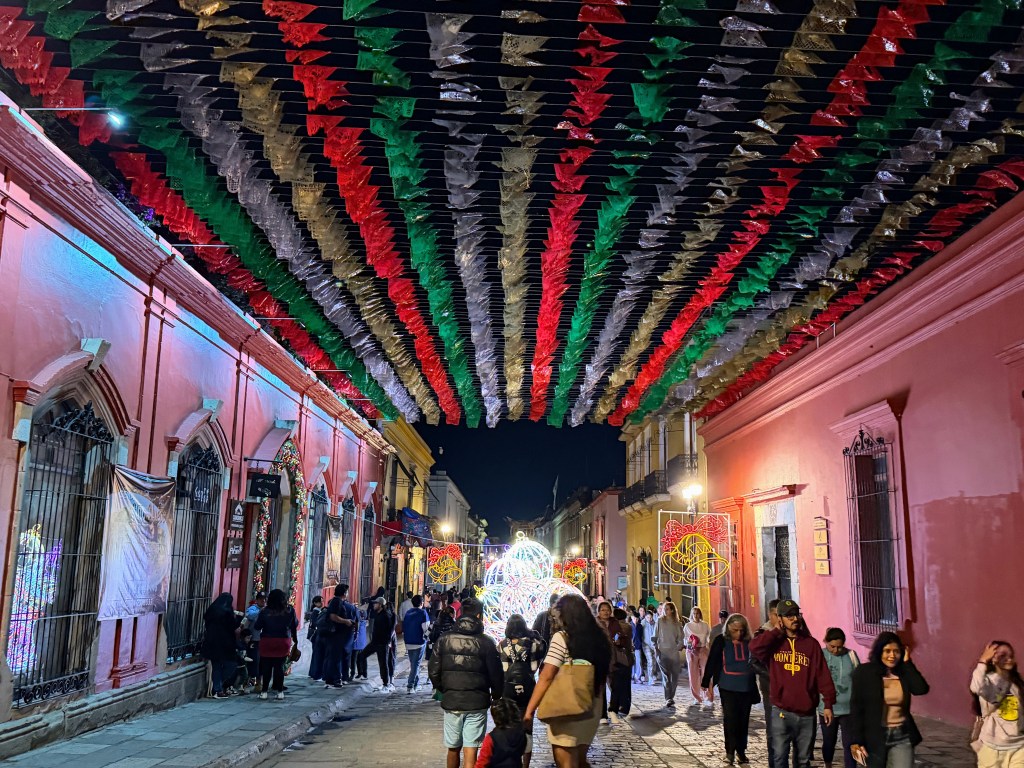
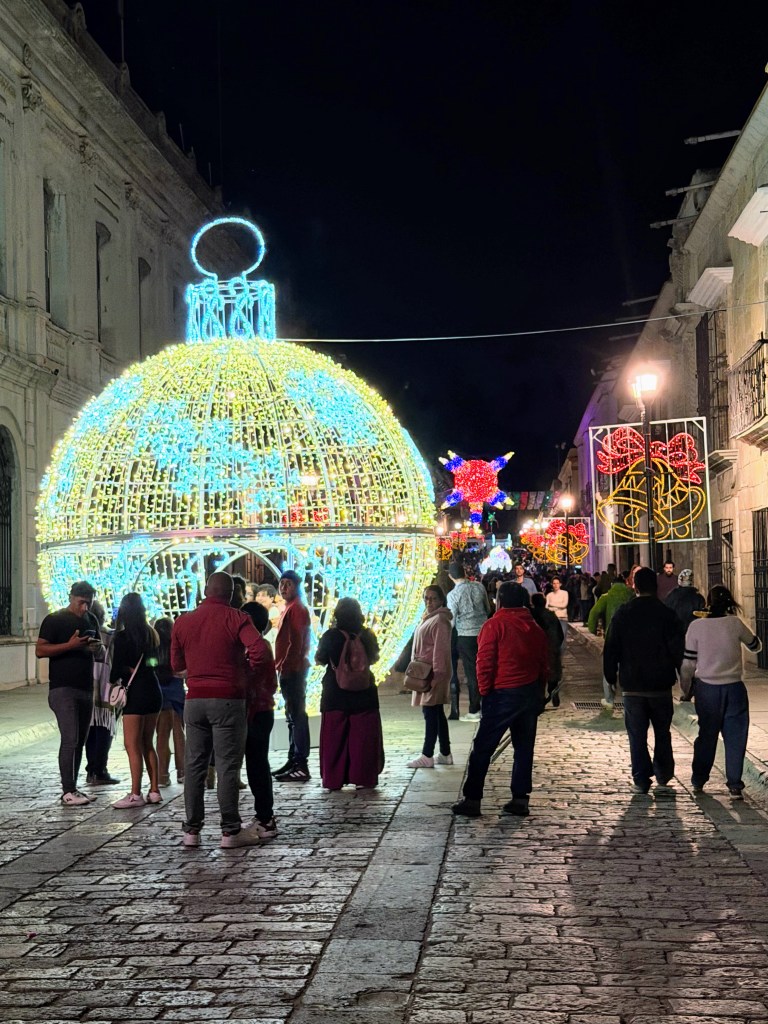
;Christmas in Oaxaca is a festive affair with the main street featuring light displays and overhead decorations. This night we also came across some singers performing Ave Maria. The man in particular had an incredible rich and deep voice and it was a moving performance that attracted a crowd. There was no sign at the church nor at the zocalo of any gathering. Our confused walk up and down featured extroardinarly loud firecrackers on a regular basis in addition to the noise of the crowd and general merriment. Eventually I asked a police officer about a parade and in a sign of how much my Spanish has improved I was able to identify the word I didn’t know, calenda. Which it turned out my mom had just read about.
Calendas are processions frequently featuring religious iconography. In this case, churches in the area would march to the zocalo. The time is ambiguous and possibly hours away, so we headed back to the house, although I’m pretty sure it was a party cause there were most definitely fireworks late into the evening.
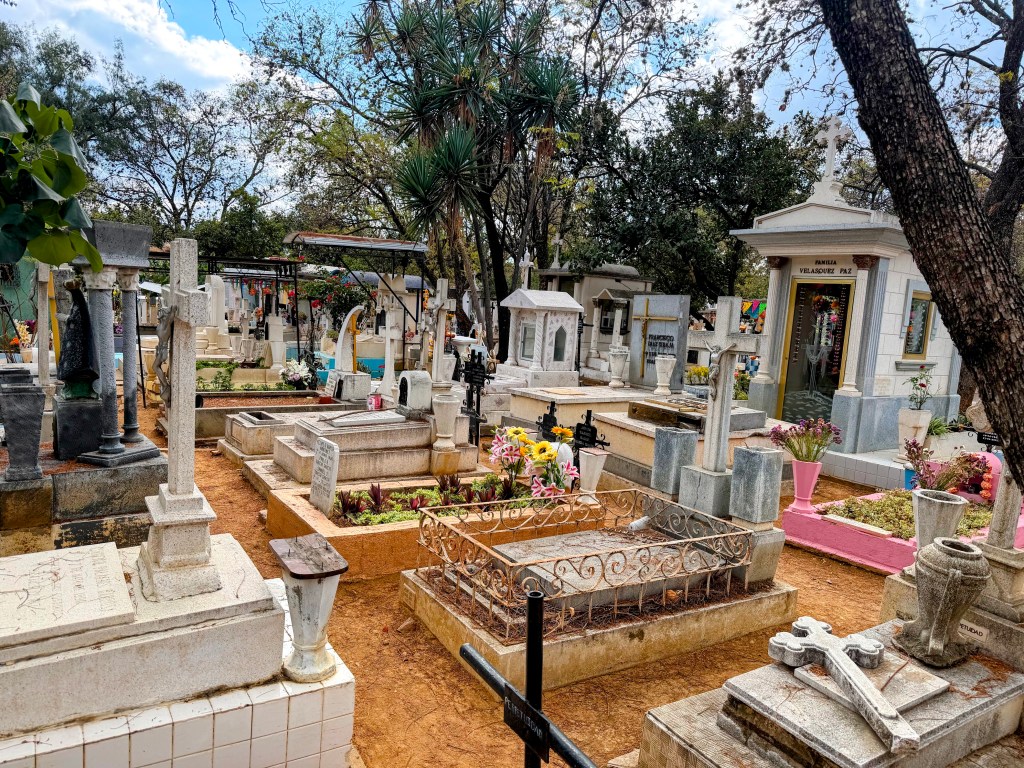
Christmas itself was a mellow day. Dad and I made do with instant coffee and we walked over to the Panteon General which is a very pretty cemetary a short walk away.
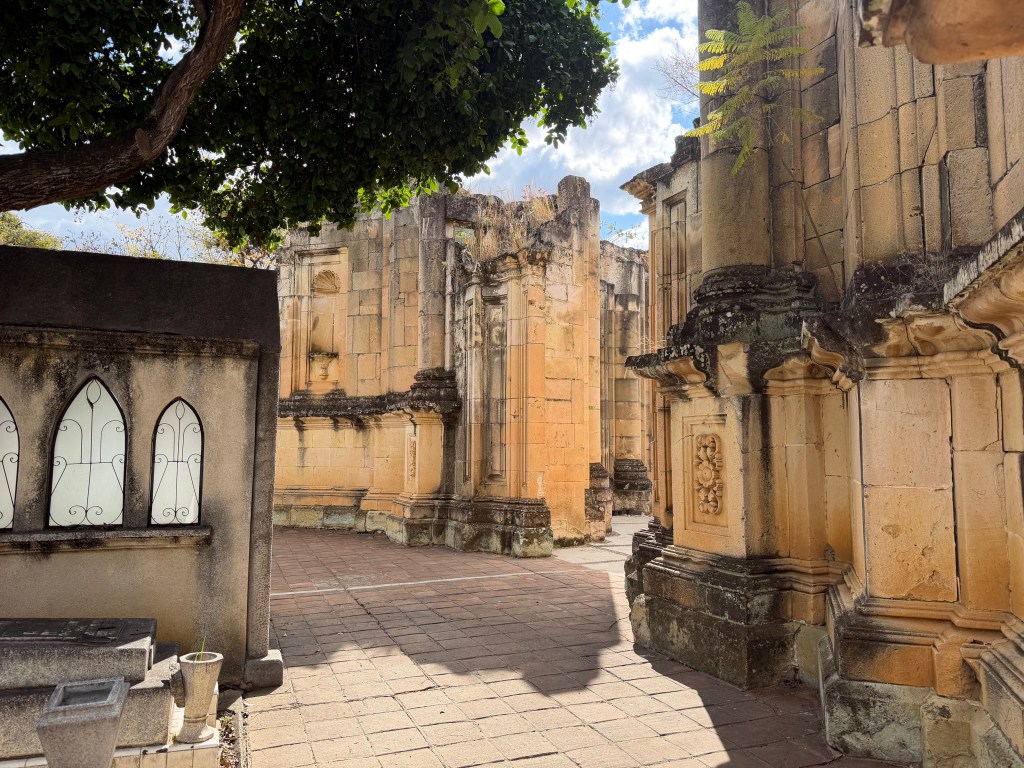
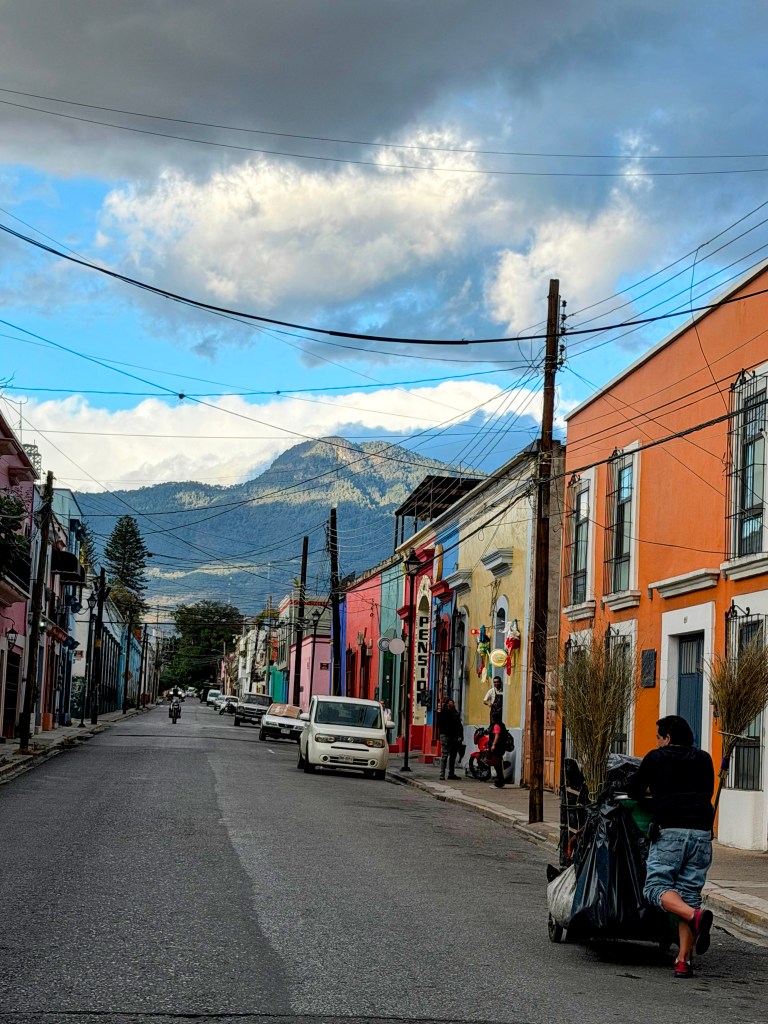
For Christmas dinner, we headed to a tasting menu at Criollo. This time, the restaurant was utilizing the back half under an enormous tent strung with lights. On one side tropical plants grew up a white wall, on another there was a bar, a giant clay oven, and other culinary stations. I massively failed to take pictures here, but we began we croquettes, had some chileatole which is absolutely one of my favs, but I keep feeding my parents these incredibly high end versions of it, the most perfectly fried fish for an elevated baja taco, a stunning piece of rare steak in a lovely black mole. Dessert was served with a small glass of atole which is a warm corn based beverage almost porridgelike in texture. It’s absolutely not my fav and absolutely a thing. But perhaps the most remarkable aspect was how incredibly well paired the dishes were with their corresponding beverages. I wasn’t a fan of the champagne on its own, but with the croquettes? Beautiful and so it continued. My parents were charmed by the chickens running around the ground and that the restaurant had a ready supply of blankets to hand out to cold patrons on windy nights like the night we were there.
The evening was really topped off on our cab ride home when we had an incredibly gregarious cab driver who chatted with me in Spanish the whole way home.
Friday was really our last day as we both were leaving relatively early on Saturday and we decided to abandon the original plan of heading to Monte Alban in favor of a more low key day around town. Mom also had some shopping to do and I had some plates to buy.
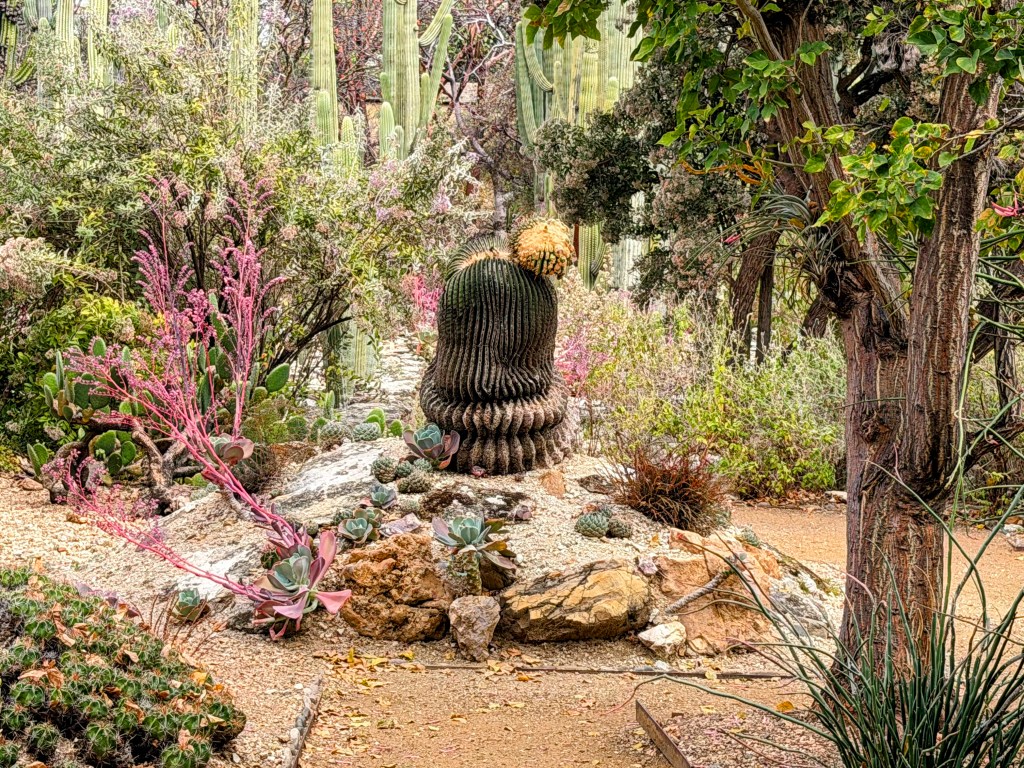
We really just did Templo Santo Domingo, starting with the ethno botanical garden at the back end of the compound. I don’t really know what the story is here, but the garden was once run by an independent group Friends of the Garden, that has since been taken over by the government. Which is made very clear on their website. In turn the government has not really provided a website, so it’s a bit of a mess. They used to have amazing tours in English, essentially to study the area you had to give tours. Most recently they only had tours in Spanish and they lacked the personal touch of the English speakers who were studying. This trip apparently they didn’t have the staff to do tours at all, so they just took you on a free curtailed walk through part of the garden.
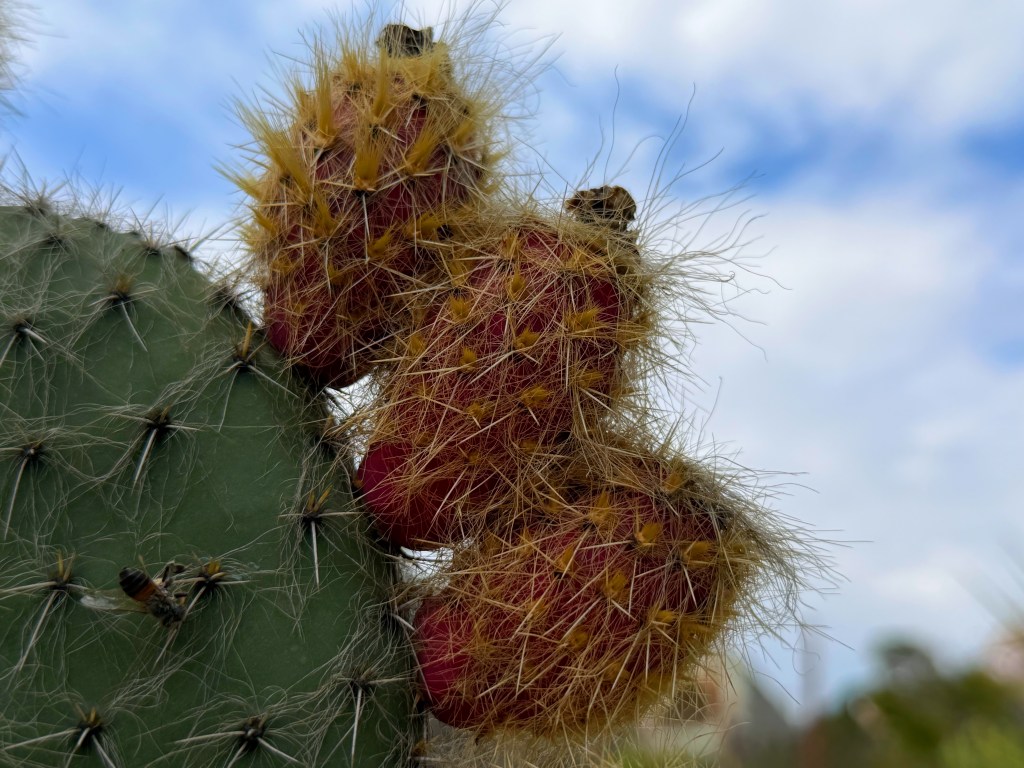
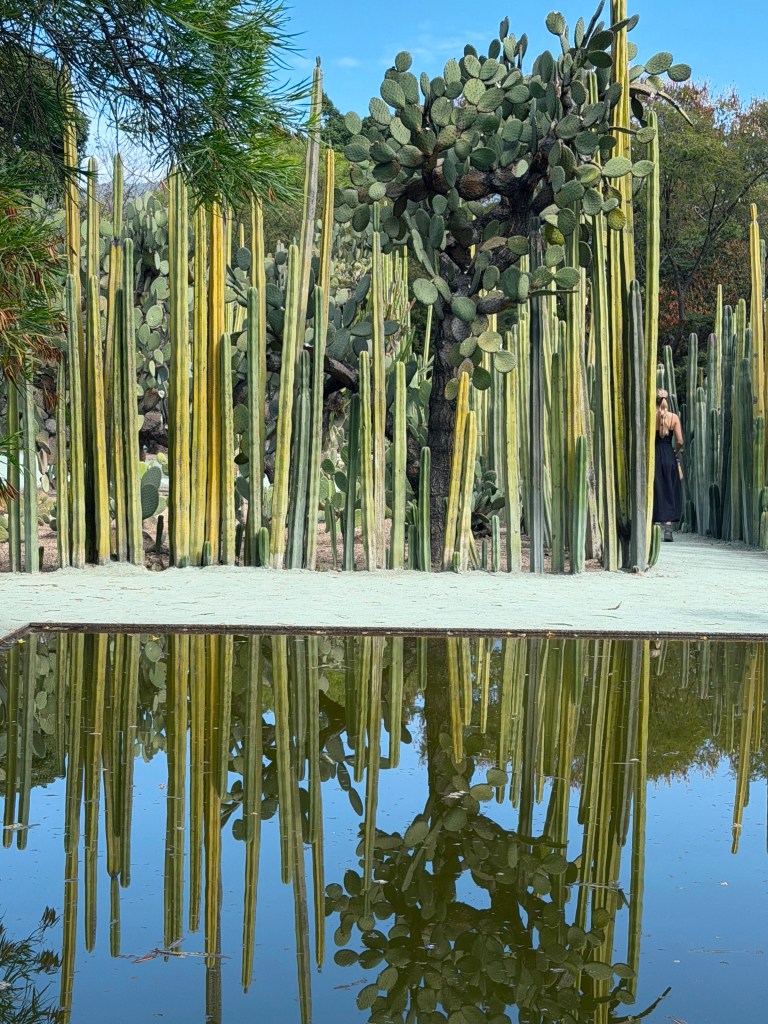
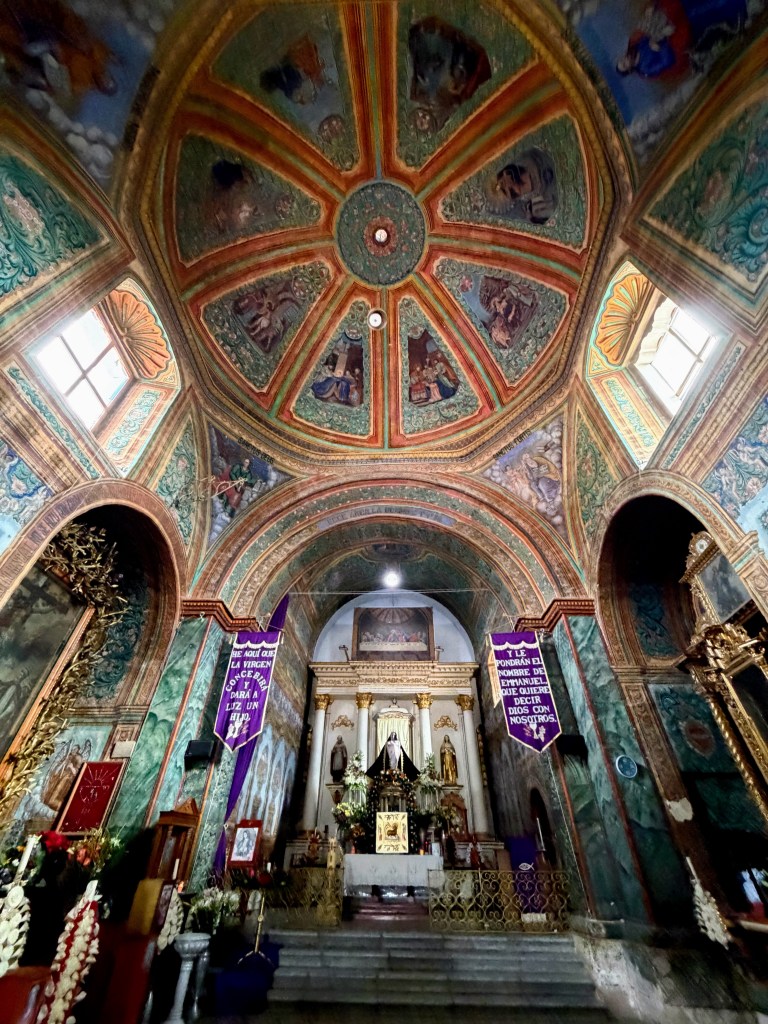
Aftter this very short visit, we took a quick look in Templo Santo Domingo. The church has a complicated history with initial constructiong beginning in 1551, it was finally inaugurated, though still incomplete in 1608. The construction faced several set backs due to a lack of funding, but was finally completed in 1666. During the Mexican independence war the church was used a military camp for both armies at various points. In 1859, after Mexico had gained its indepedence, a series of Reform Laws were enacted that sought to check the power of the Catholic, including one that nationalized large swaths of Catholic property. And Santo Domingo was used for military purposes once again. The church remained closed until 1902 when President Porfirio Diaz returned it to the Church. It’s now both an official monument in Mexico and an Unesco World Heritage site.

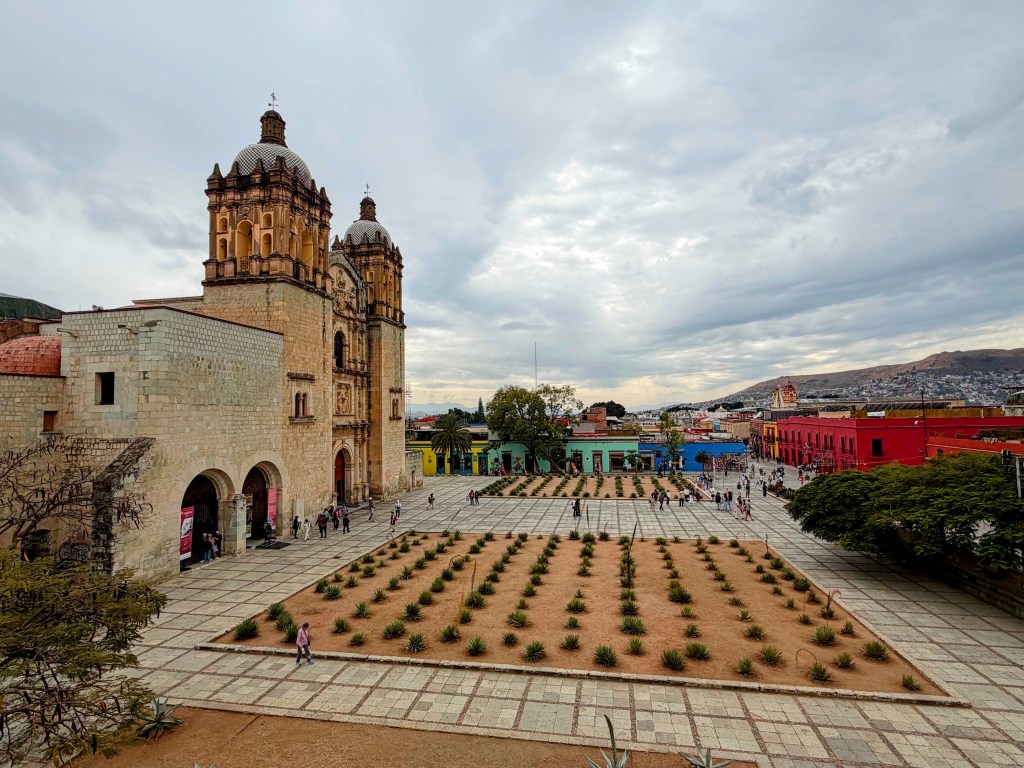
The museum, now housed in the old convent, could use some love. It has some amazing pieces, but the organization is a bit haphazard and doesn’t fully engage the audience as a result. They did have a very cool temporary exhibition on Manuel Jiménez Ramírez who is widely considered to be the creator of the wooden painted alebrijes of Oaxaca.
In the evening we went in search of food and after a couple missteps found ourselves heading up the main street and running into a parade of sorts. I mistook it for a wedding parade initially, as it featured the same characteristics, but actually this was a quinceañera, a really freaking expensive one at that.
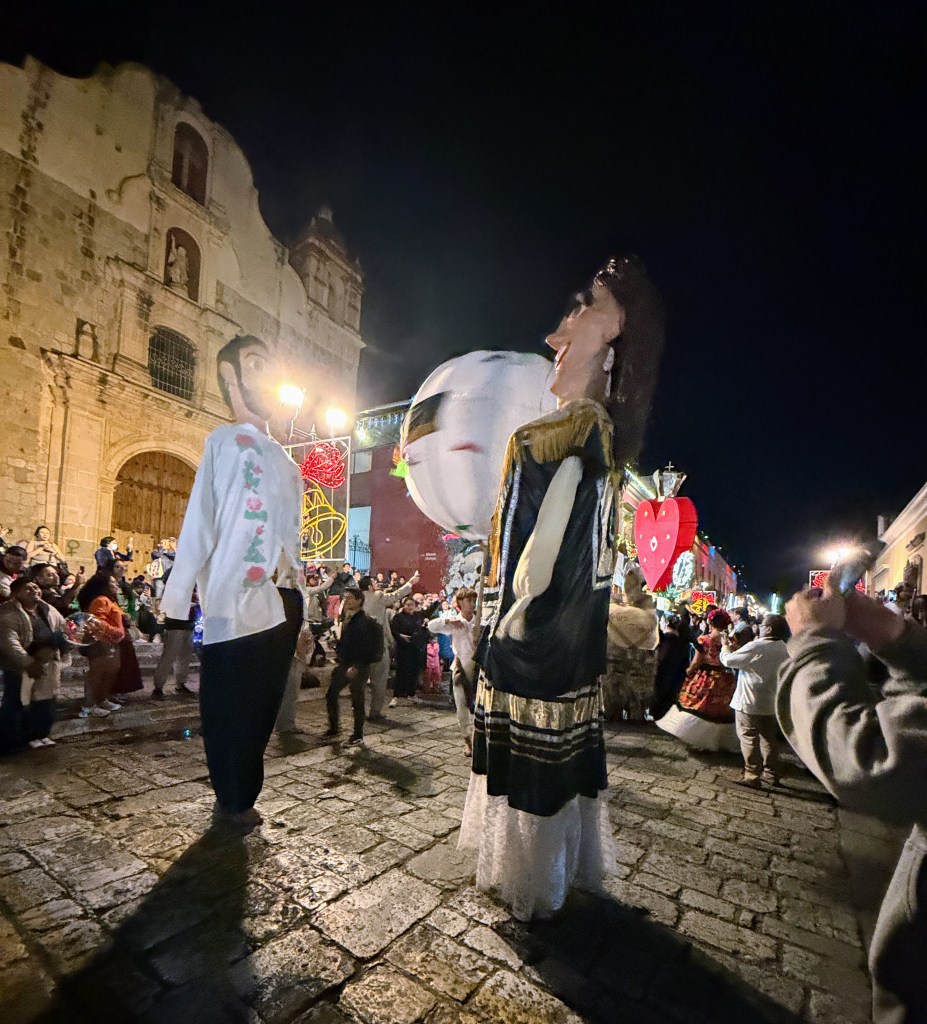
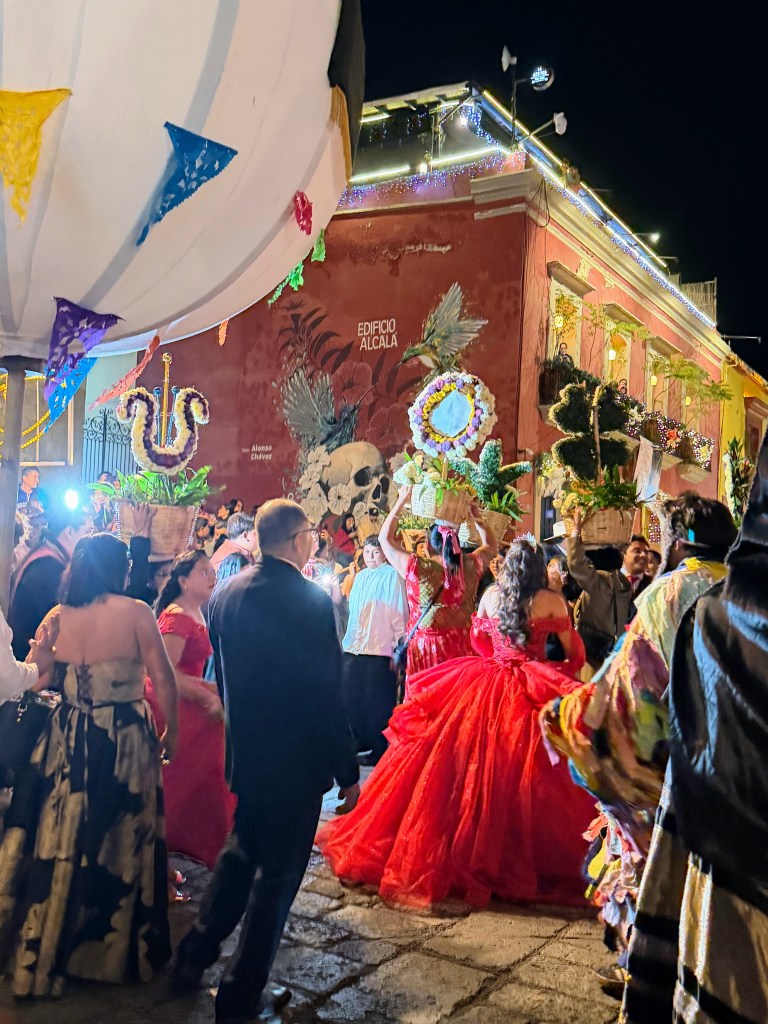
I was really excited that my parents got to experience this cause it’s so unique to Oaxaca and really encapsulates the sort of joy of life I find so abundant here.
We then managed to get a table at Casa Oaxaca and had a delicious final meal in the city, featuring some bunny that was magically transformed into something more pork belly like.
Early in the morning I packed my parents into a Didi, grabbed some coffee and made my way to the bus station for my first trip on the long awaited super highway to the coast.
 Year One Project
Leave a comment