In hindsight, I would’ve done myself a favor by writing a little each day on the topic. But here we are. I left Mexico the evening of 9/4 on a red eye into Lima. The flight itself was only a bit over 6 hours, but with Lima’s time difference, I arrived at 6am, bleary eyed and sleepless. I had just the right amount of time to go through customs and get to my next plane, where they were most definitely like “yeah, lady, that’s not a carry on”, but then only charged me $15 to check at the gate, so we’re calling it a win. Then just a hop, skip, and a jump to arrive in Cusco at 8:10am.

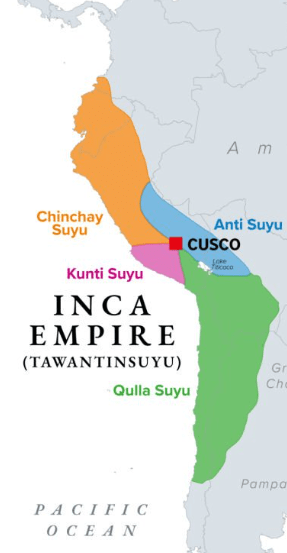
Cusco sits in the southeastern part of Peru, high in the Andes, at 11,200 feet, although how they determined this defies all logic cause it is a city of hills. Cusco is a city, a geographical region, and a political one. The area has been inhabited since about 2000 BC by various indigenous peoples before becoming the center of the Incan empire in the 1300s. It was taken by the Spanish in 1530s, who did what Spanish do and built all their stuff on top of other stuff. I should at this point note that if nothing else, this trip certainly brought to the forefront my general ignorance around Incan history, if not just broader South American history. I will be ordering books. One thing I did learn was that the Inca divided their empire into 4 quadrants as shown on the left, and also that each local leader had a residence in Cusco and was expected to spend at least part of the year there. In classic empire style, they were all ruled by an Emperor who inherited his position from his father, but was also chosen by the sun god, Inti. Currently the city is home to over half a million residents. This is not a town. Another thing to know about the area is that while Machu Picchu definitely boasts the most acclaim, it is only one of many archeological sites in the region. #smallembarrassmentsaquickgooglewould’vesavedme
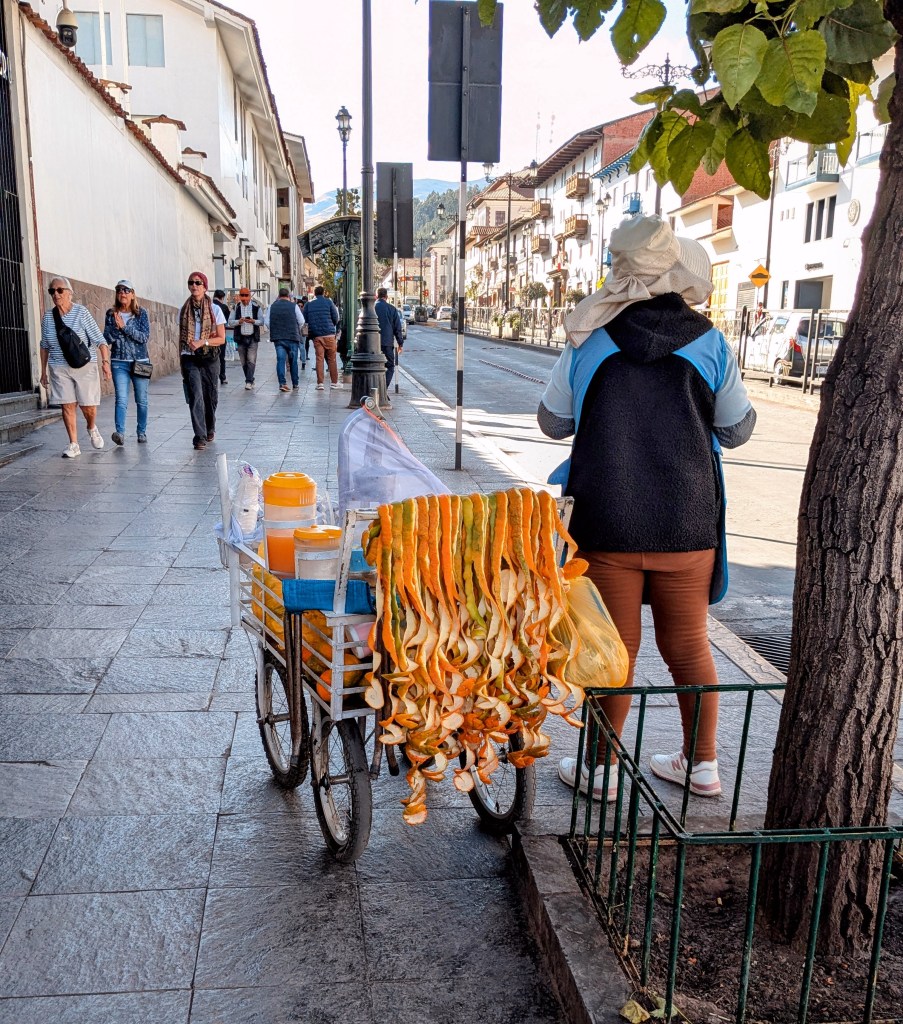
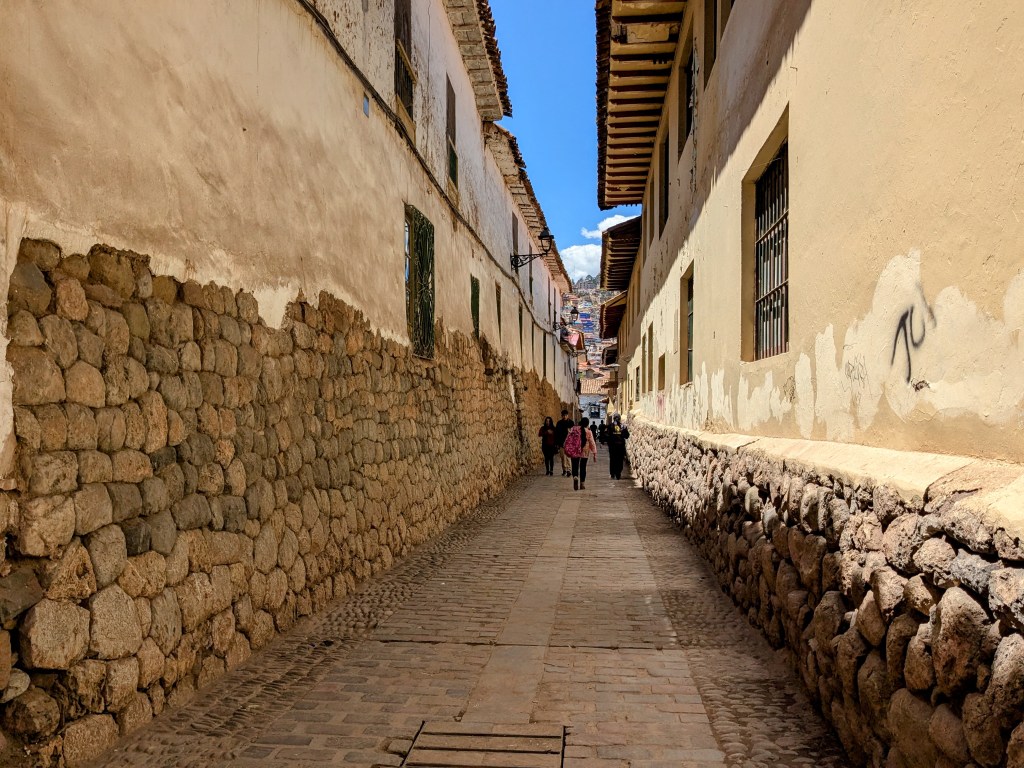
Our Airbnb was in the historic center and only about a 20 minute Uber from the airport. I was met by our host who was all that was charming and lovely to my extremely tired self. I got a tour of the apartment with an emphasis on using coasters and water conservation and then napped hard. After my morning sleep, and as Lea wasn’t due in till the evening, I took a brief stroll up to Plaza de Armas. Brief side note- I swear to God half the cities in Latin America have a Plaza de Armas, which apparently is a classic piece of Spanish colonial city planning – a centralized location to host military parades. The air was crisp, clean and dry, the sky overhead startlingly blue, and the city adorably charming with some kinda colonial mountain town vibe.

The apartment was on the top floor (ultimately, highly unclear if it was the 3rd or 4th floor) and possessed all the charm and quirkiness of the city with creaky wood floors, exposed beams, a lovely little covered terrace, one bathroom where you hit your head on the slanted ceiling and the other where you had to go through the shower to get to the toilet (yes, you read that correctly). I think both Lea and I had a little increased apprehension around the hike given that neither of us could manage the 2 flights of stairs to the apartment without being somewhat winded. Lee got in Friday evening and we scurried off to the first of many wonderful meals.
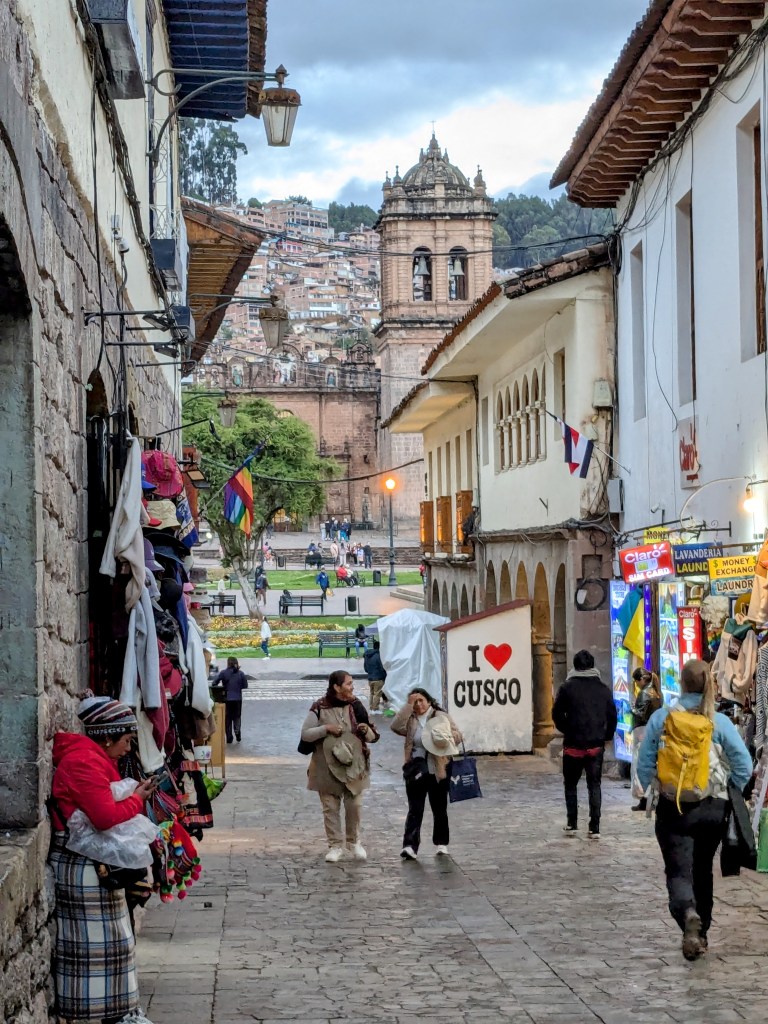
Having planned, prepared, and paid for the Inca Trail, Lea and I had maybe overlooked Cusco activities, alloting ourselves 5 days for acclimatization with little to no thought on how we’d spend those 5 days. As it turned out, we probably could’ve happily given several weeks just to the city and surrounding area even without the draw of Machu Picchu. I had so fully enjoyed the idea of a multi day hike at elevation that the signifcance of the area and all it offered were a bit lost on me prior to my arrival.
After ambling about charming city streets our first full day, Lea and I booked an action packed tour for the second day. This tour would take us to the highlights of the Sacred Valley: Chinchero, Moray, Salineras de Maras, Ollantaytambo and Pisac. Our mission preceding the tour was to procure a boleto turistico that would allow access to most of these sites, along with several museums in Cusco and some additional archeological sites. For anyone who is not super up on Peruvian geography. The Sacred Valley runs roughly from Pisac to Machu Picchu, a distance of a bit over 60 miles, if you could drive directly. The valley is very fertile and relatively narrow, averaging only a kilometer in width, with the Urubamba River running through the basin at around 9500 ft in elevation and is bordered by mountains, the highest capping over 19,000 feet. The scenery is striking, at lower elevations it’s desert like with cacti and agave dominating the landscape.
Early in the morning (this is a theme of this trip), we found ourselves in a Sprinter van heading towards Chinchero. This small town is considered one of the areas that has best preserved Incan culture. It’s a small, hilly town that sits on a windy plain with low stone buildings painted white. The central plaza features a church on one side, on the other a vista of the plains and a terraced hillside, between which sits the archeological site dotted with snacking llamas.


The town is renowned for it’s textiles and is home to the remains of the palace of Incan Emperor Tupac Inca Yupanqui. Like so many of these towns, the Spanish built on top of ancient sites, so it’s no small feat of imagination to picture the palace. What is easily visible are Incan terraces used for agriculture (more on this later) and the amazing clouds that roll through this region. The archeological park sits in/adjacent to the main plaza and Catholic Church that was built in the late 1500s. It was early and vendors were just beginning to set up. We also learned that the next day was the Festival of the Virgin of the Nativity. Actually through out this trip, I learned a great deal about celebrating different interpretations of the Virgin.
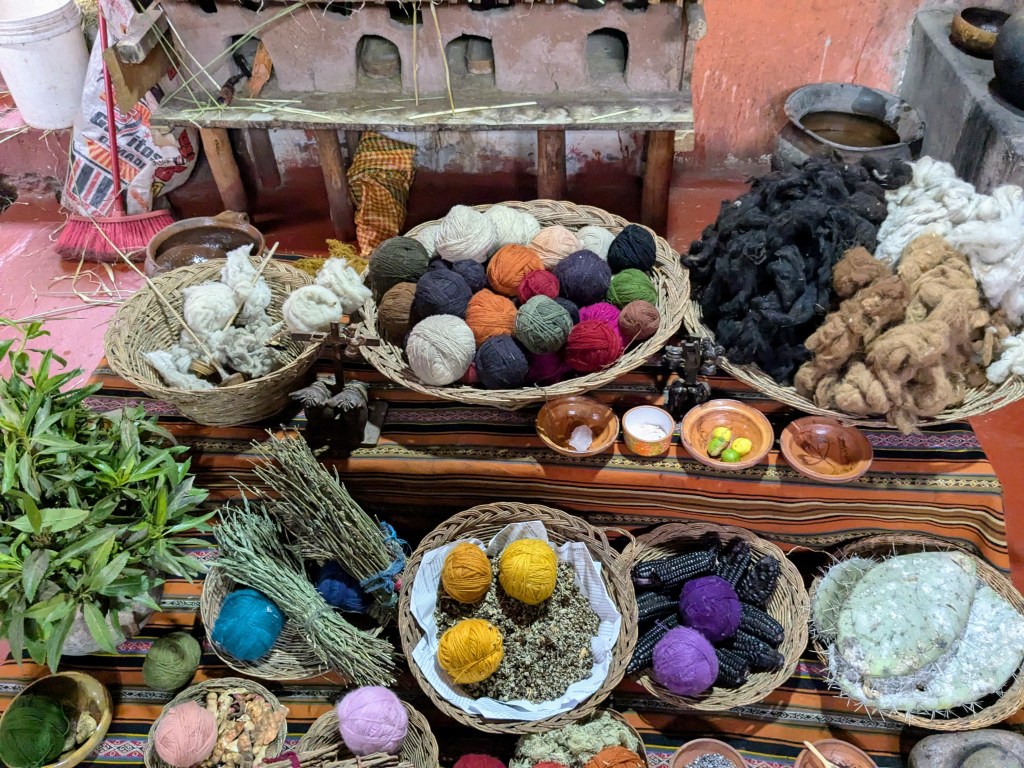
After wandering about the site, we were taken to a local handicrafts store and manufacturer where we received a demonstration on the textiles the town is famous for and the traditional methods of producing dyes and other goods. The picture to the right shows the many colors achieved using various plants, bugs, etc to dye wool which is harvested from sheep, alpacas and of course, the softest, baby alpaca. In the back of the photo you can see a structure with mini archways, this is actually a guinea pig home. Guinea pig, or cuy, is a common food item here, being indigenous to the mountainous regions around the Sacred Valley. I couldn’t bring myself to actually order it.
Next up was Moray! And this is where I extra need a book. Moray is thought to be an Incan agricultural research center. It’s rings of terraces create various microclimates and with the center circles hosting the warmest soil temps and each ring slowly decreasing in temperature as the circles expand out.

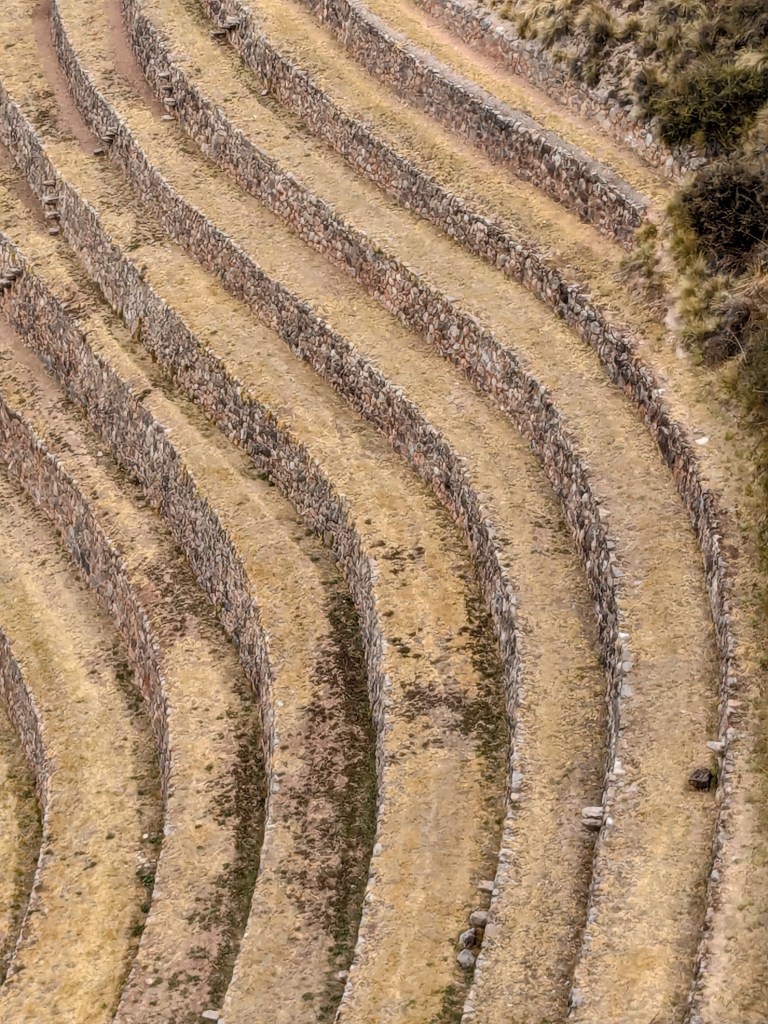
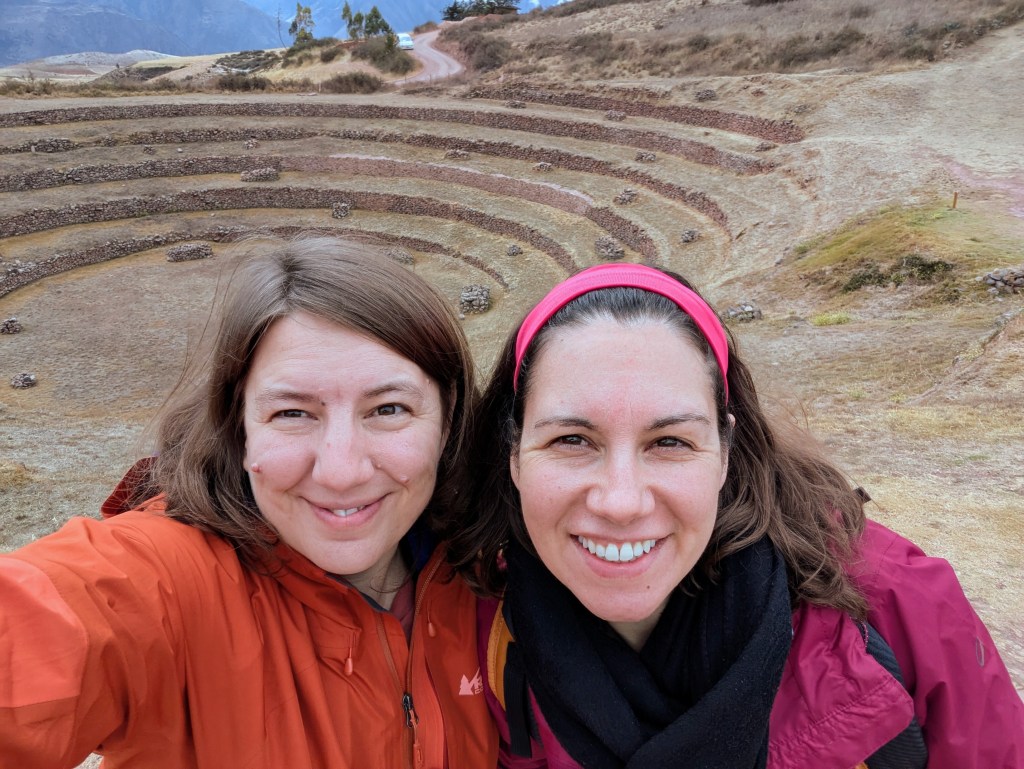
The full site is comprised of multiple sets of these concentric circles. The one pictured above is over 800 feet in diameter and goes down nearly 100 feet. There were irrigation canals to provide water to the various levels, along with systems to block or curtail the amount of water. Different theories abound as to the exact usage of the site, some folks saying it could reproduce every climate found in the Incan empire, others hypothesizing that it was a means of slowly hardening plants found at lower elevations to the altitude, particularly pointing at the coca plant. It’s generally agreed that in its entirety, the complex’s terraces contained over 20 distinct ecological zones.
Our whirlwind tour, in retrospect way too much for one day, continued on to the Salineras de Maras, which is one of the largest prehispanic salt extraction centers, while definitely used by the Inca, ceramics of pre Incan origin have also been found there. This site is crazy! It’s tucked in a very narrow valley and just covered with small salt pools produing Peruvian pink salt.
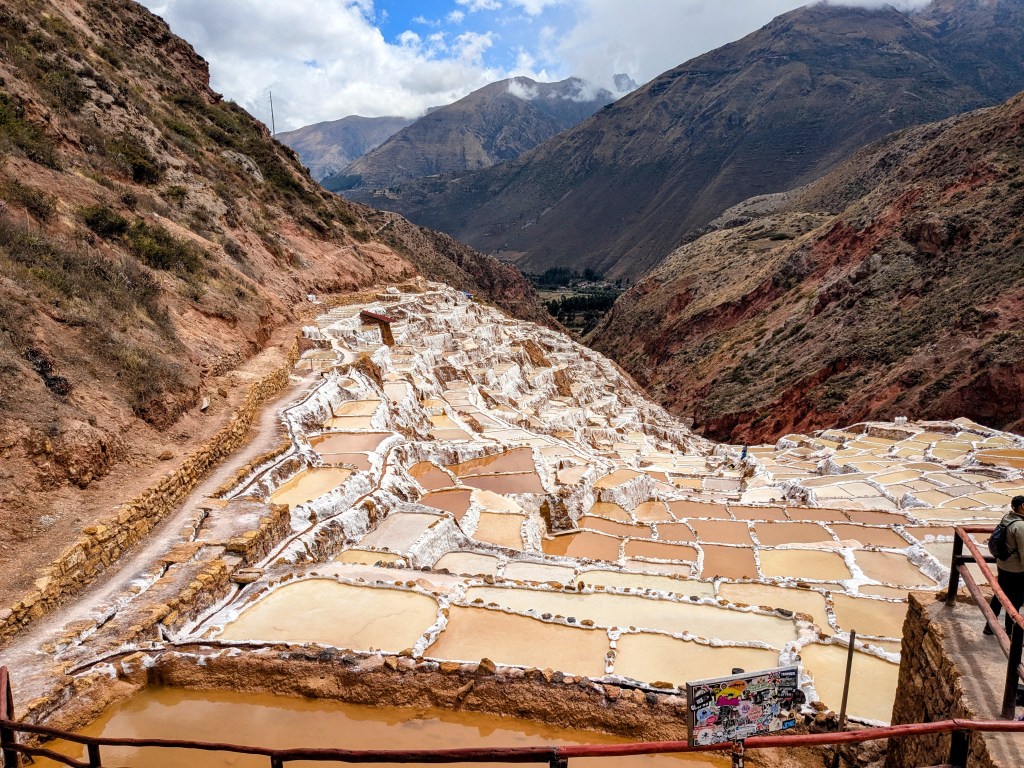
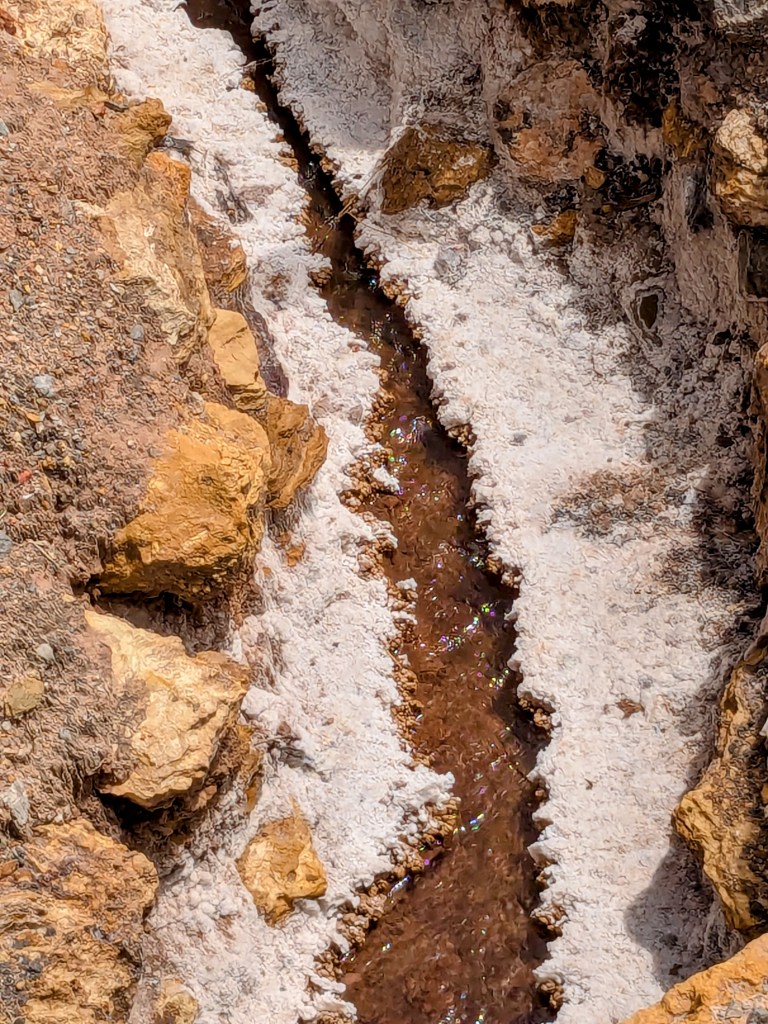
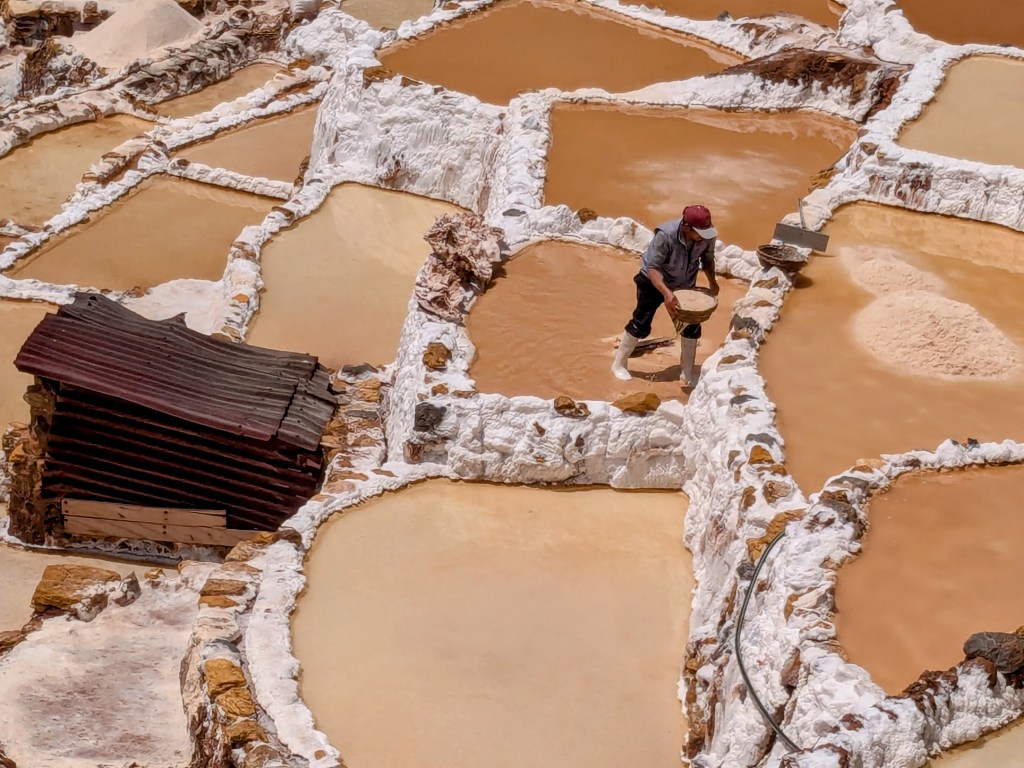
I don’t think I got a satisfying picture of the scope of this enterprise despite taking countless photos. You descend into the valley and on the opposing hill there’s almost terraces of these salt pools. While not uniform, each individual one is not terribly large in size, maybe 10 x 7. The pools are naturally formed by a mineral rich underground spring and count in the thousands. Exact numbers vary, but go as high as 6,500 pools with each pool owned by a local family. The darker colored pools were harvested more recently, as shown on the right. Lighter colors have a higher salt content. The salt is harvested after the wet season when dry and warmer temps begin the process of crystallization. Basically the principle appears to be take a bucket, scoop, set aside, repeat.
Then they fed us.
And mad dash and we’re off to Ollantaytambo. This is a bustling small town of about 11,000 residents. You drive through narrow cobblestone streets opening to small plazas littered with restaurants and various shops and then the town abruptly ends in the archeological site of Ollantaytambo. And it’s like right there, almost like a natural border to a town because the site is carved out of a mountainside. From what I can discern, in the general, the Incas appear to have been super excited by an architectural challenge.
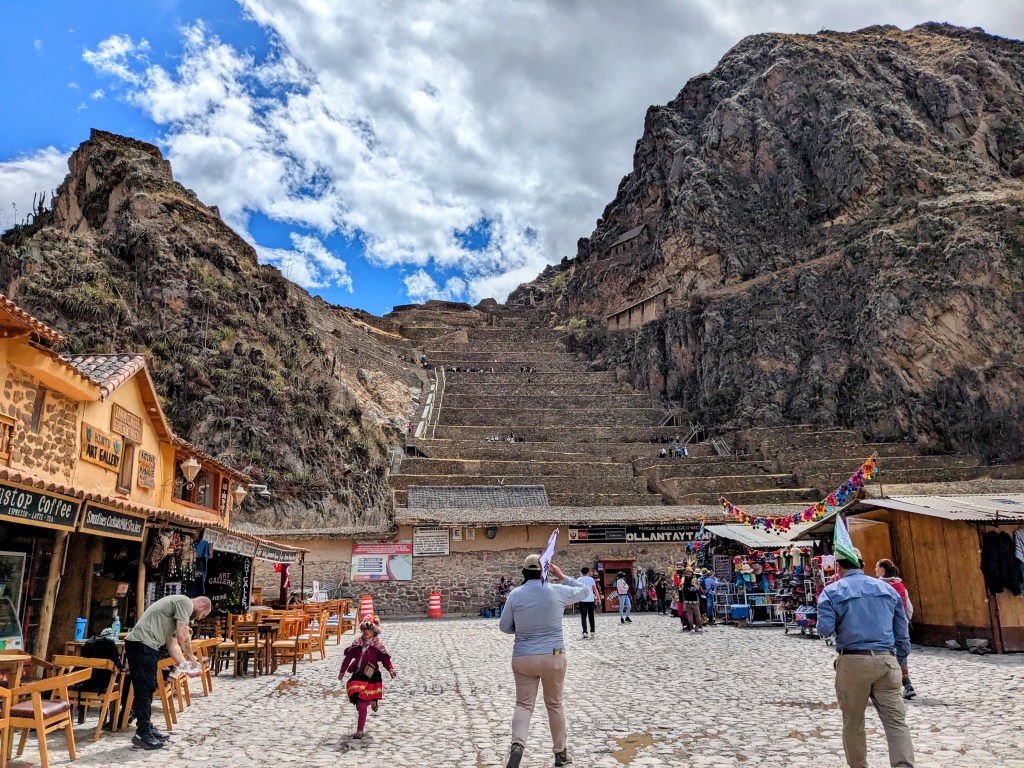
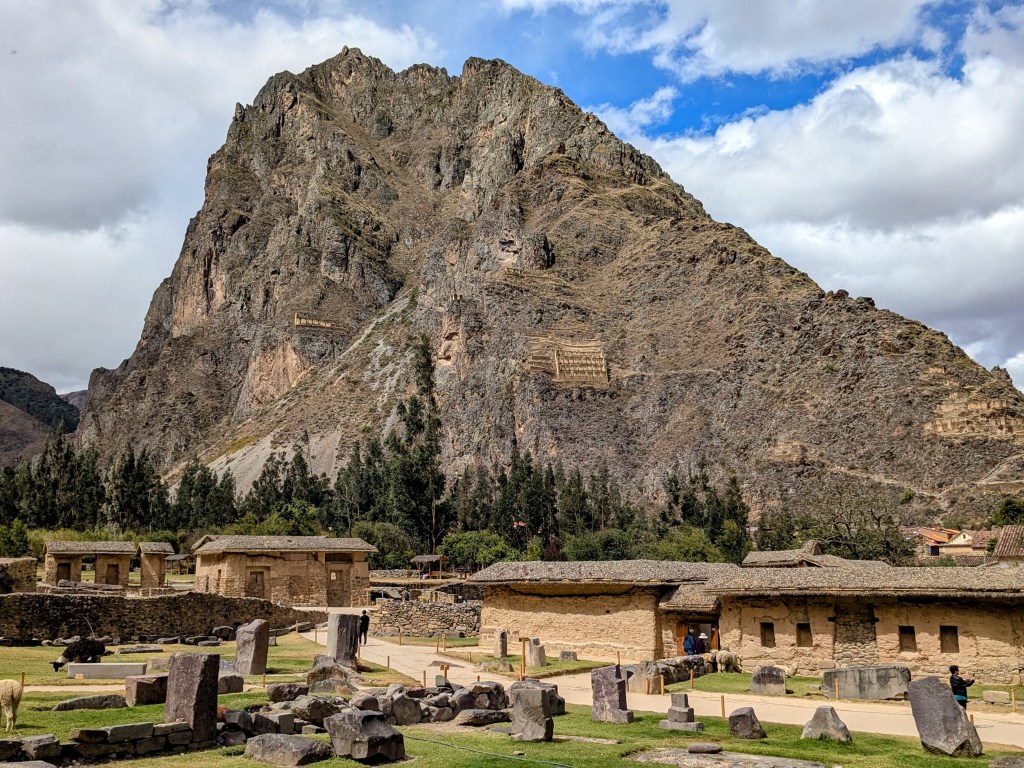
And they were really partial to some stairs. Tall stairs at that. It’s really hard to explain the wonder of this place. You’re kinda just in a city and then run smack into a sheer wall with another city carved into it, and as you go higher up the stairs you begin to see more and more cliffside infrastructure on neighboring hillsides. It’s remarkable. We really did not have enough time at this location. It’s thought that the area was first inhabited by the Huari civilization and the site contains evidence of their settlements. It was later expanded upon by the Incans and actually was the site of a great victory against the Spanish was won here by Manco Inca.
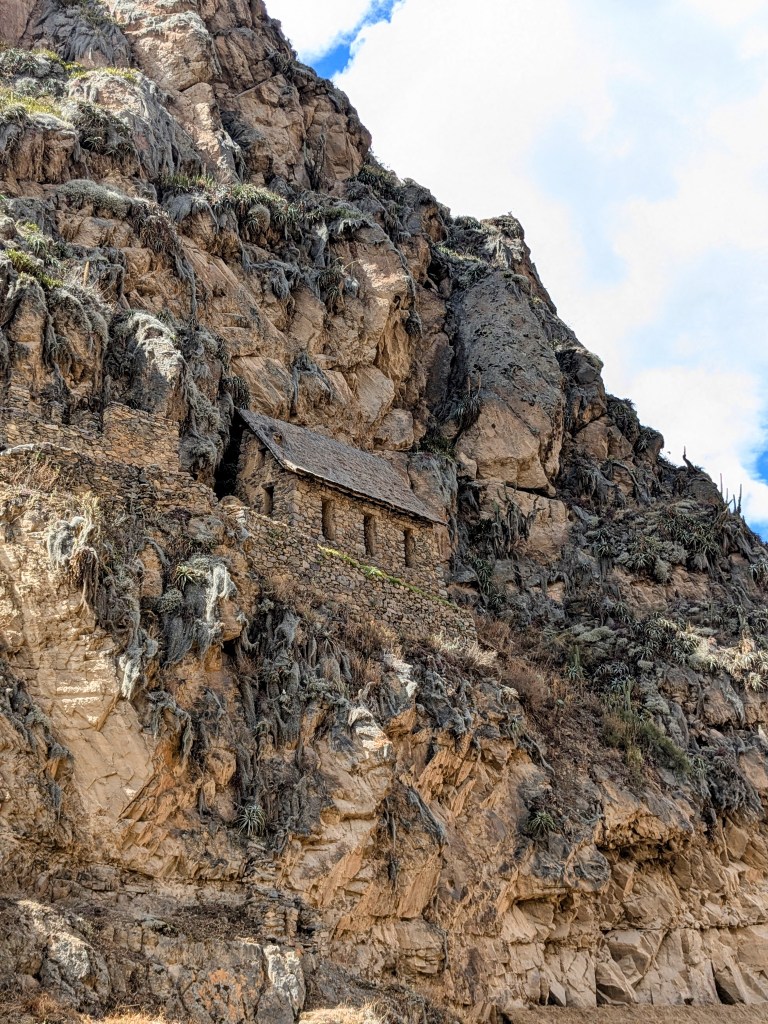
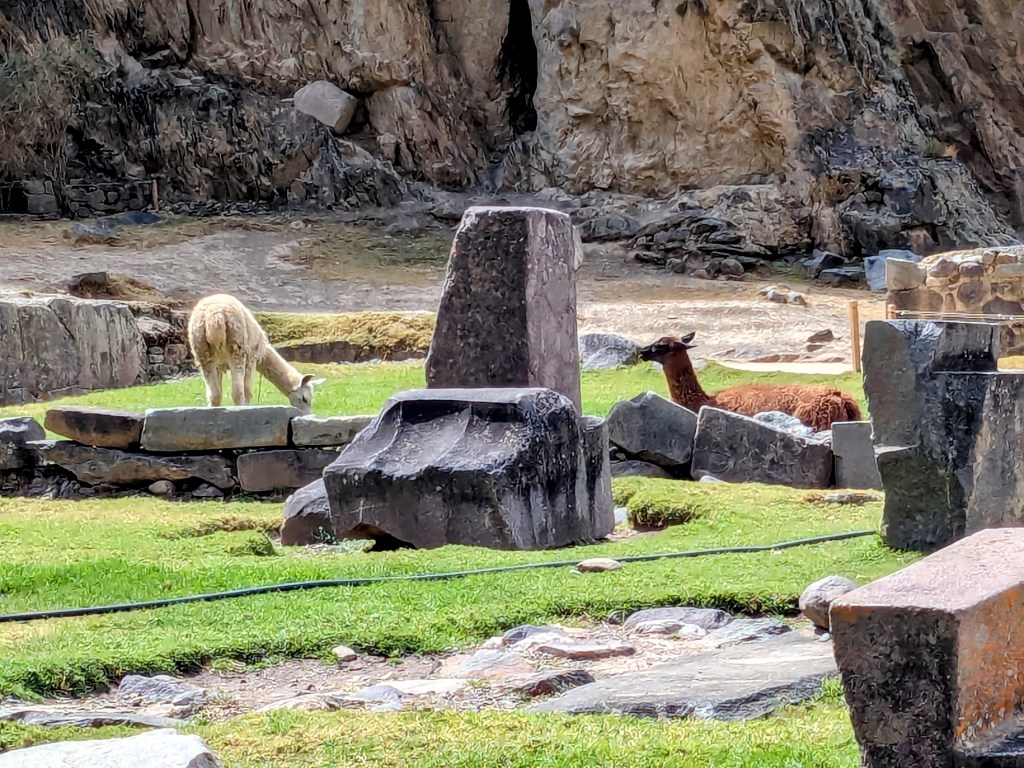
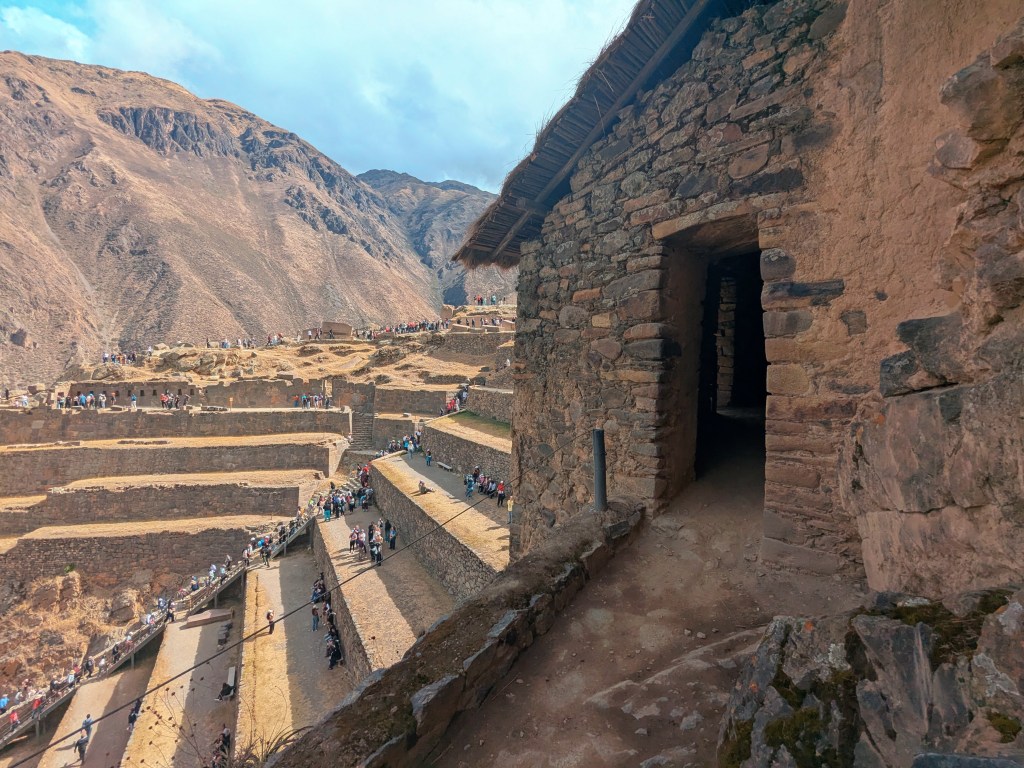
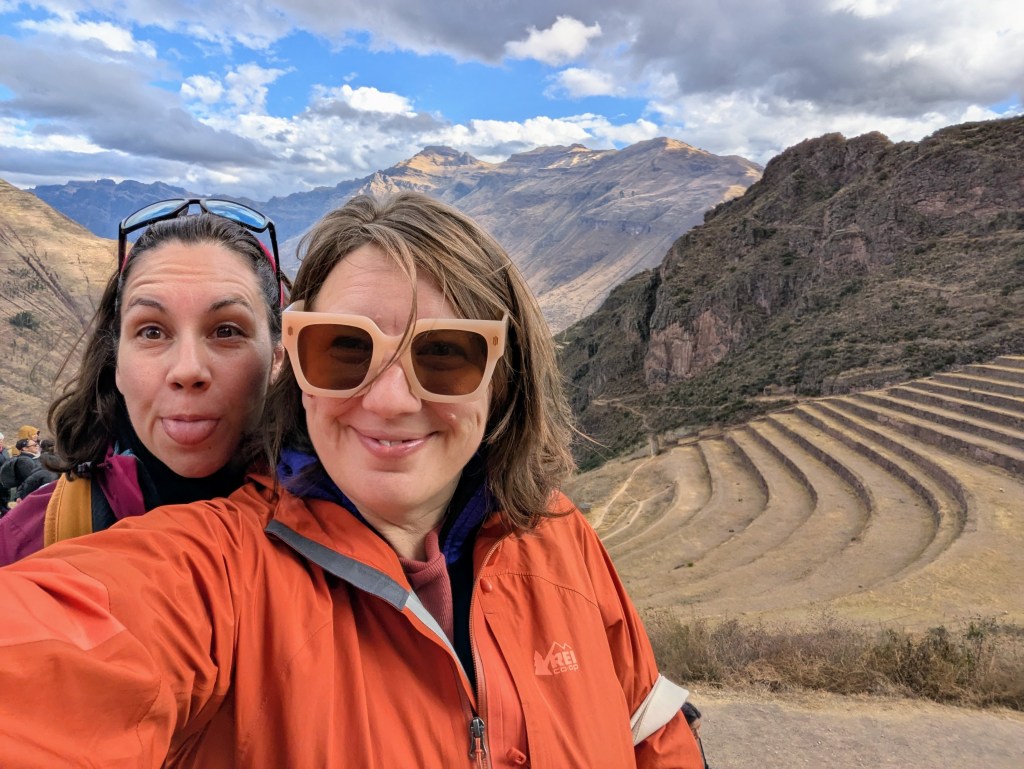
Our final stop for the day was Pisac, yet another small town in the Sacred Valley hosting a large archeological site. By this time we were all a bit tired and running short on time, so while we went to the site they had already closed access to the upper ruins and we managed to miss the Sunday crafts fair for which the town is famous. So kinda a bust, but also I was definitely fading and not longer retaining much in the way of info.
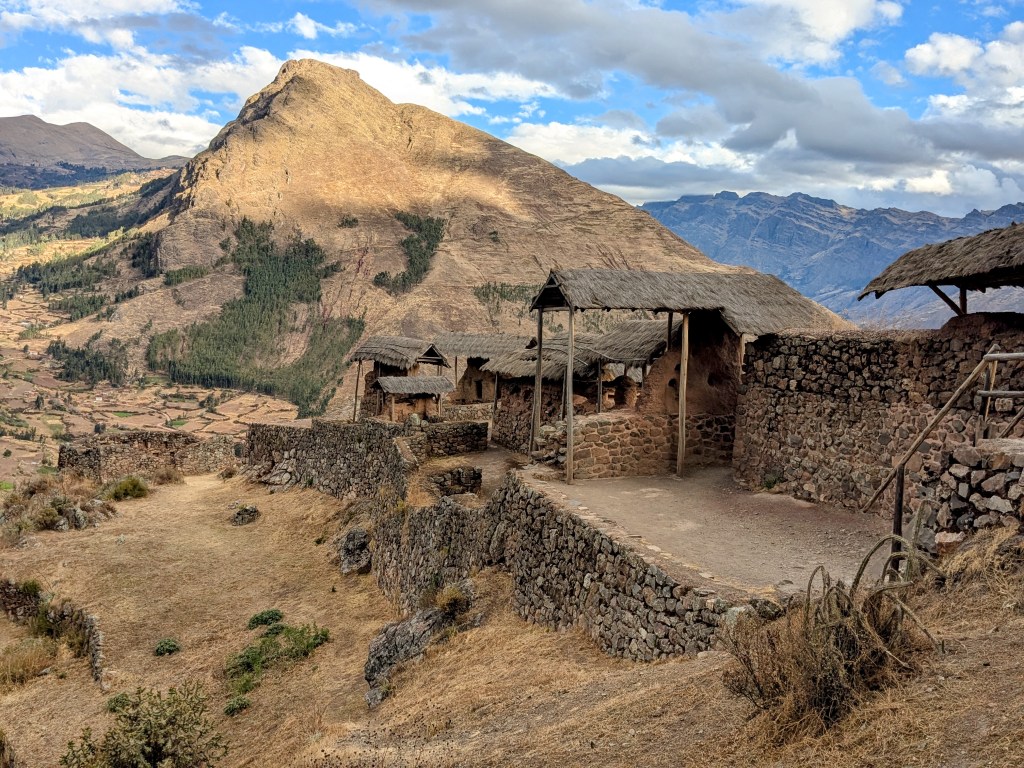
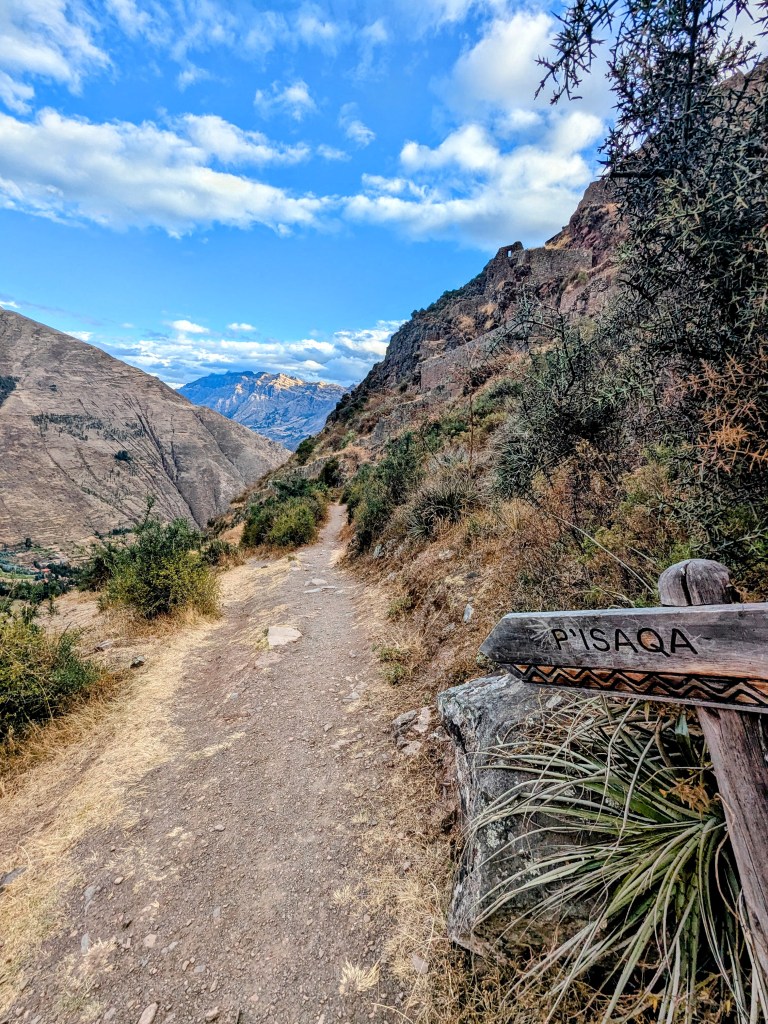
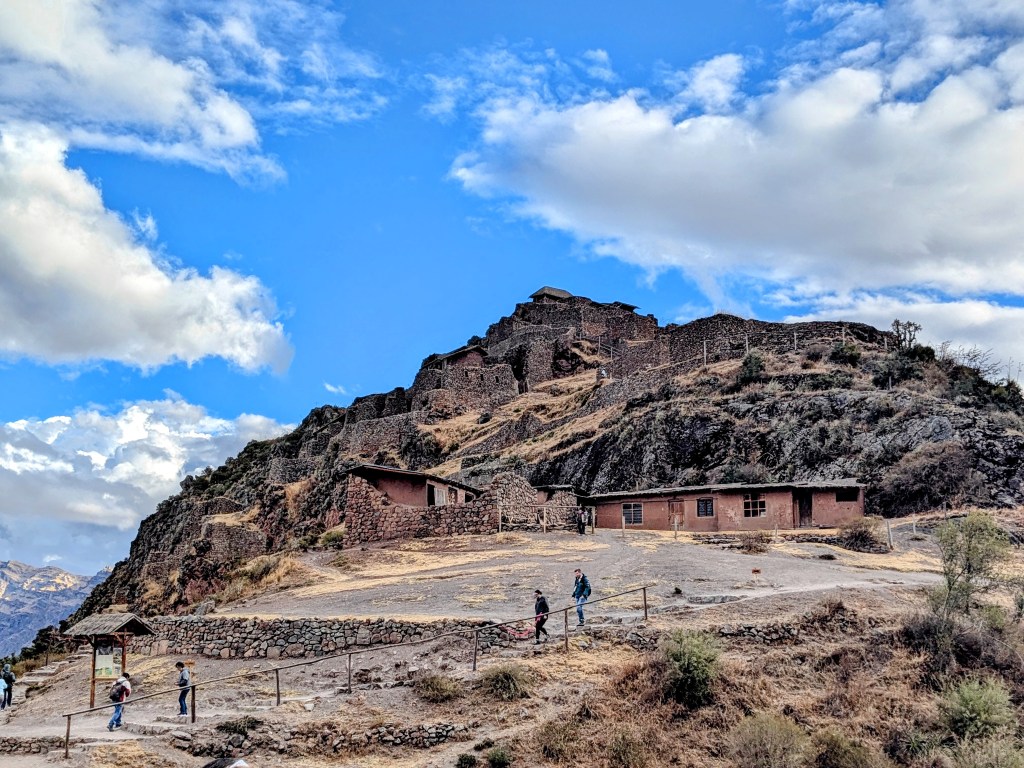
Similar to other sites, it appears that even older civilizations populated Pisac prior to the Incas. Ceramics of both Lucre and Killke peoples were found here. It’s thought that the Incas constructed this site as a residence, religious site, agricultural lab, and an observatory. The area overlooks a nearby mountainside that served as a cemetary. The Incas mummified their powerful and carved out areas from the mountain into which to place these remains. I couldn’t get an adequate photo, but you could see excavated holes dotting the cliffside. We returned to Cusco late and tired.
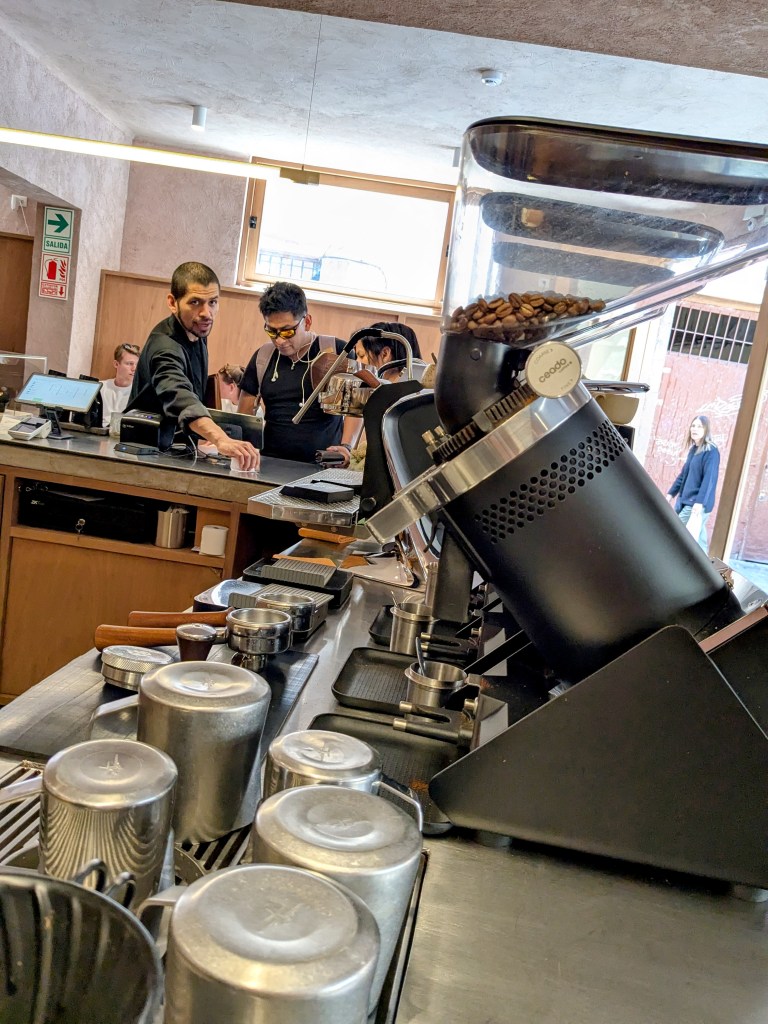
The next morning we had an epic adventure in coffee land. Turns out Cusco is home to Three Monkeys Coffee, which has won awards, got a Food & Wine nod, received a #22 in the 100 best coffee shops of the world according to some publication I’d never heard of. But just as I’d hoped, when they realized we were gonna be coffee nerds, they nerded out with us. Their, apparently new, space is very slick and modern with fancy espresso equipment. You receive a proper menu with selections and recommnedations for the three espressos they’re currently serving, as well as a list of pour over options and a really fun list of specialty beverages that include things like their house distilled milk and coffee cherry skins and lucuma, a south american fruit with rich warm almost butterscotchy or mapley tones (aka goes well with coffee). They feature a selection of Peruvian coffees with information on the farm, it’s altitude, the processing technique, and the varietal of coffee plant. Y We each ordered a specialty drink and three shots of espresso to taste each type. One of the baristas stopped and said “you ordered three espressos?” And then proceeded to pull us a lungo shot of one of them to check out the difference and also separately steamed us a bit of this house made milk which he referred to in spanish as distilled. To me it just tasted cooked down a bit so water had partially evaporated and all the sugars in the milk were at the forefront. It reminded me of making cajeta. I was in heaven. Lea thoroughly enjoyed the experience, but is not accustomed to overloading herself with caffeine in this particular way and I think felt some combination of drunk and on the precipice of a heart attack.
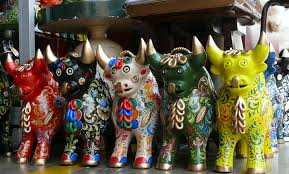
Afterward, we meandered toward the market and on our way over, encountered folks setting up stools and chairs along a thoroughfare. There would be a parade later. Mercado Central de San Pedro is a large quasi outdoor affair – picture those basketball court with fencing halfway up the side and a metal almost barn shaped roof overhead and you’ve got the gist. There were juice vendors, fruit vendors, folks selling bread, selling pisco, selling corn, potatoes and various assortments of other veggies. This is the home of the potato and the wild potato population has gone nuts in producing an array of shapes, sizes and colors. Then there were the crafts vendors. These were a little more interspersed, though it seemed like the textile folks hung together. Predictably, Cusco and Machu Picchu were found written on every type of object imaginable. Here we saw ceramic bulls, the Pucará Bulls it turns out. These are displayed on the roofs of house to protect and offer various blessings, such as wealth or love. We left with a plan to return to be sure to catch the parade.
As it turns out, we needn’t have worried. It would have been a challenge to have missed this parade which may well be the longest parade I’ve ever seen. The parade was in honor of the aforementioned Feast of the Virgin of the Nativity celebrating the birth of Mary, which is apparently a very big deal here. To set the stage:
Every group had it’s costume, it’s band and it’s dance. Many costumes featured slightly terrifying and inexplicable masks that we’d actually just in the mercado. And just it went on and on and on. The whole scene is terribly overwhelming with folks crowded on narrow sidewalks, a cacophony of various bands playing, it was a hot and sunny day, and the color and pagaentry were popping. I haven’t been able to find a good summary of the significance of all the costumes, but this article will get you part of the way. For the most part, they were varying degrees of creepy. I will now proceed to dump a ton of photos.
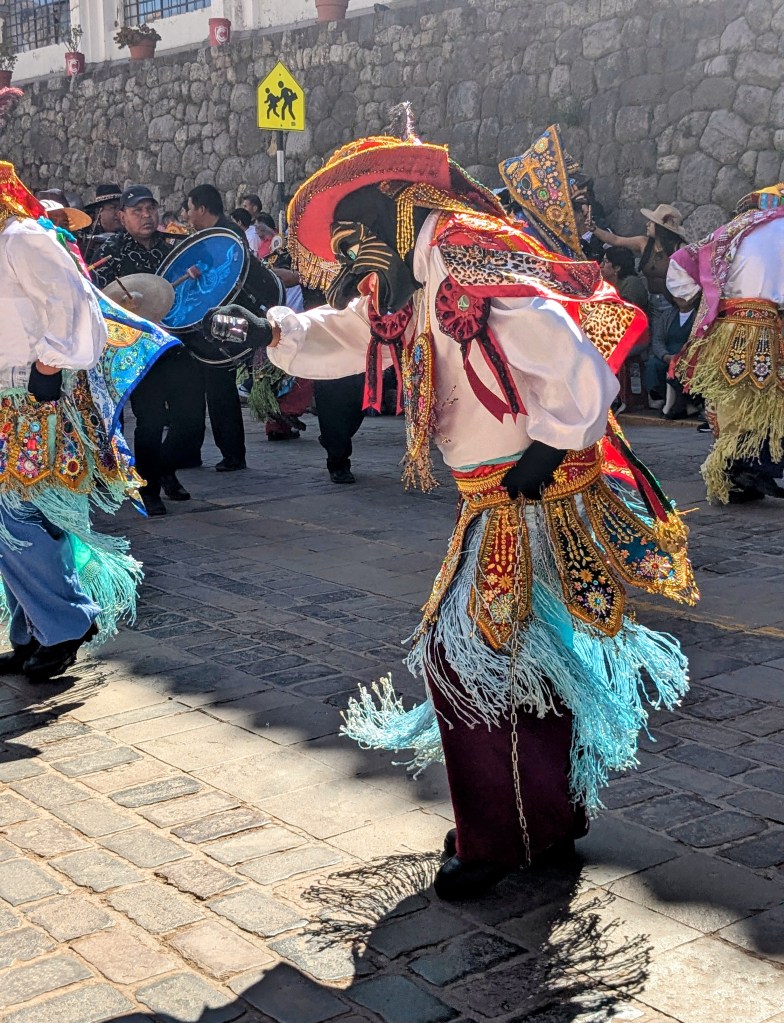
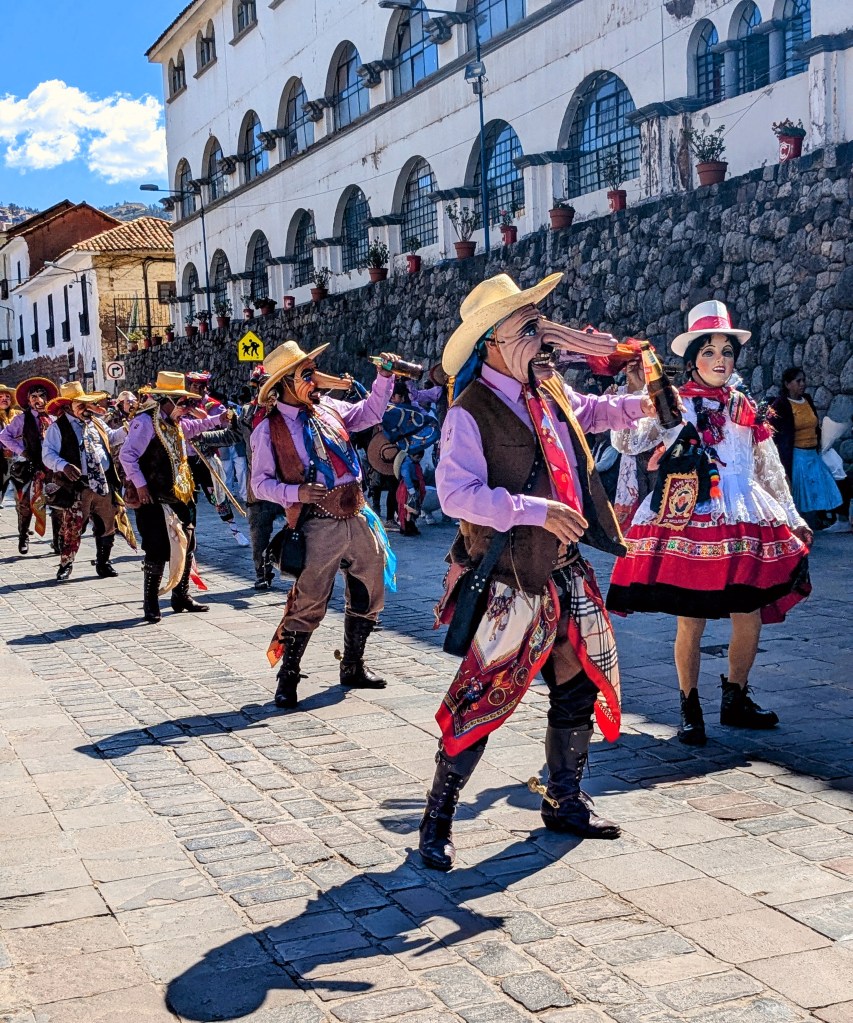
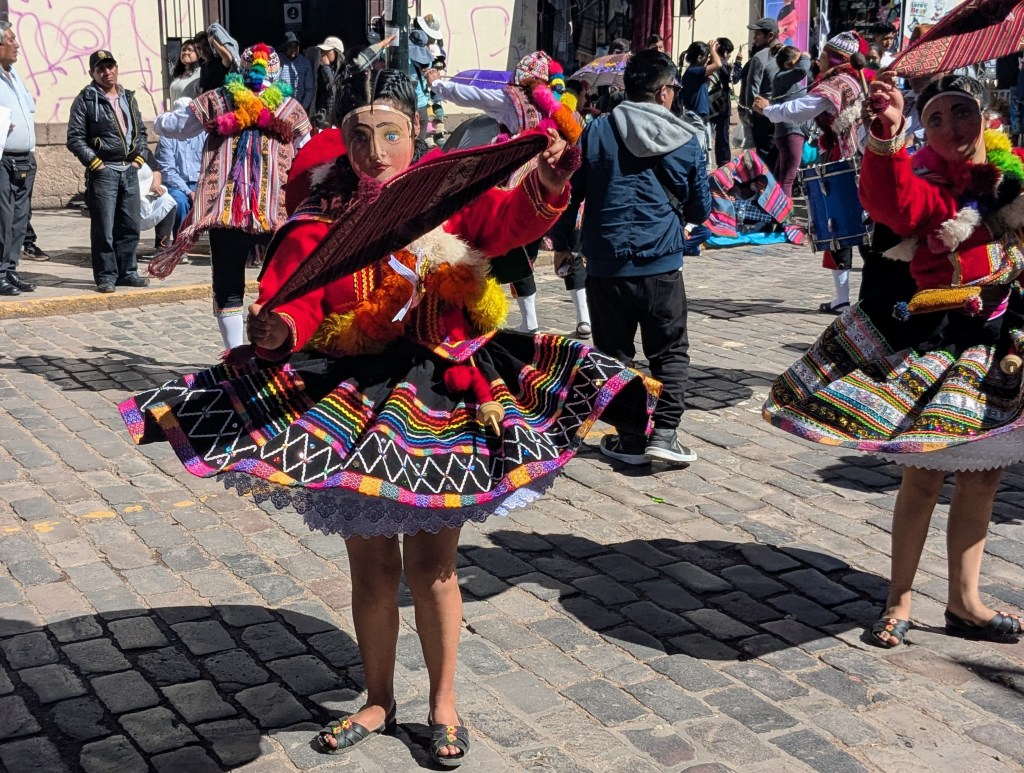
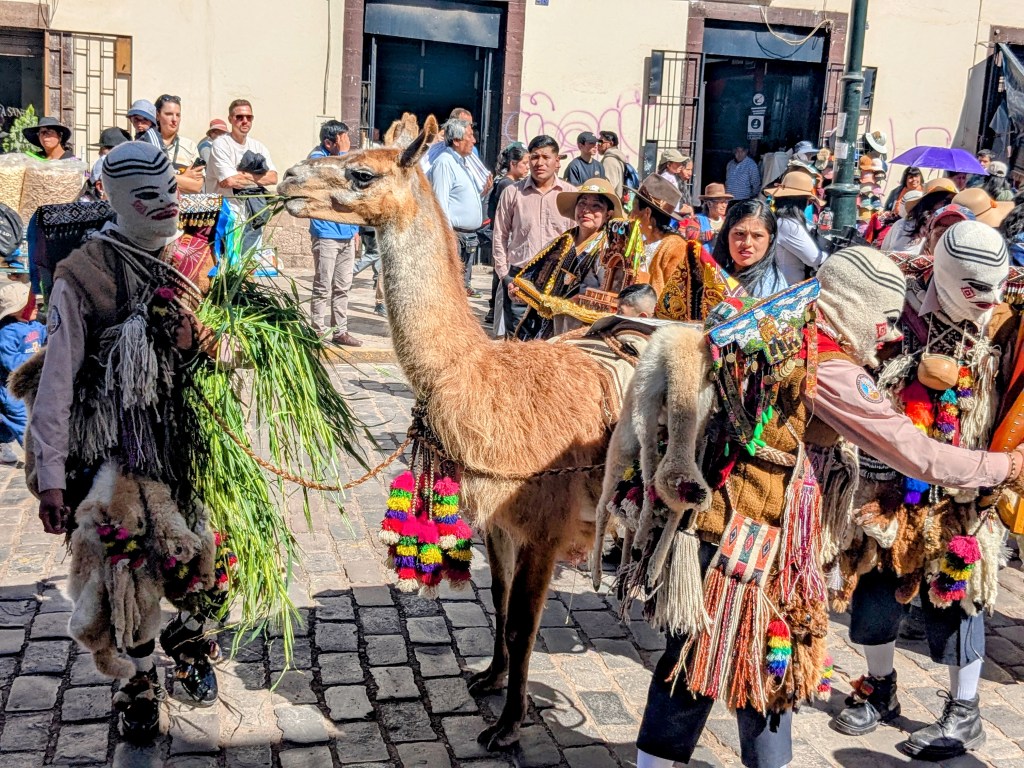
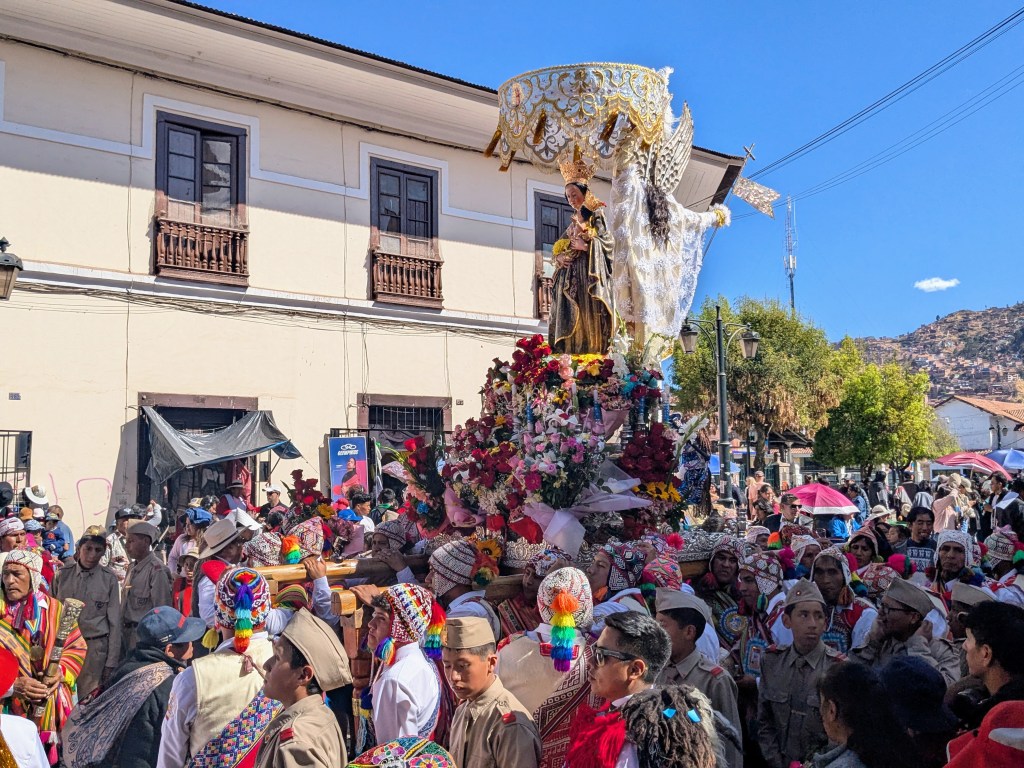

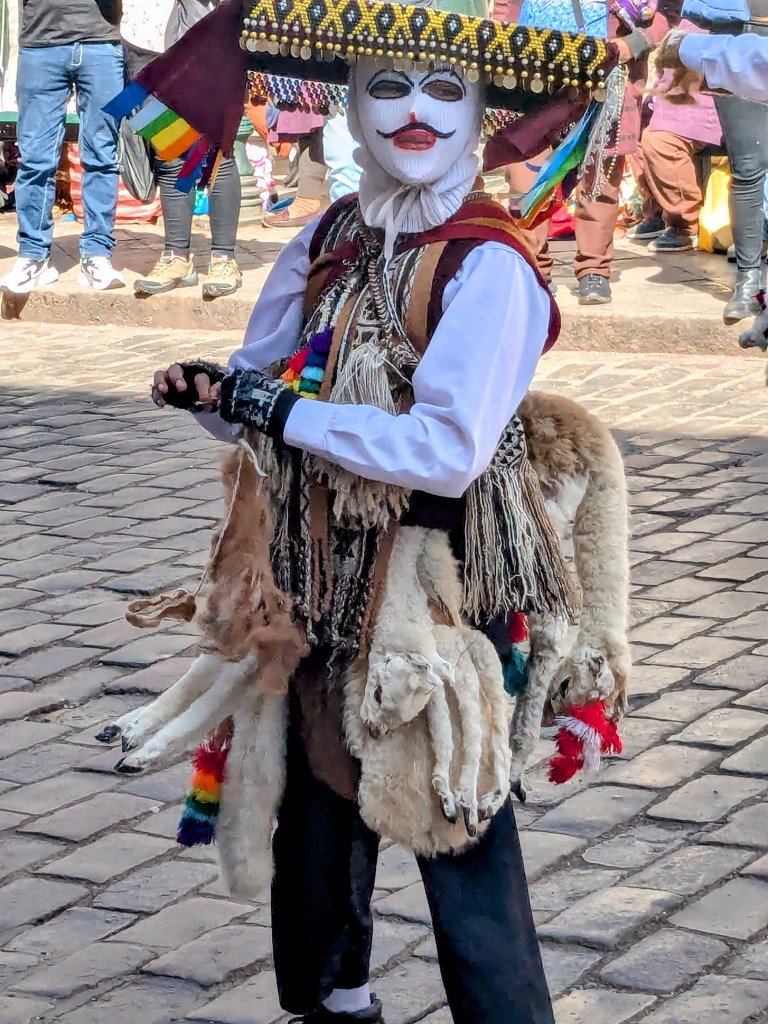
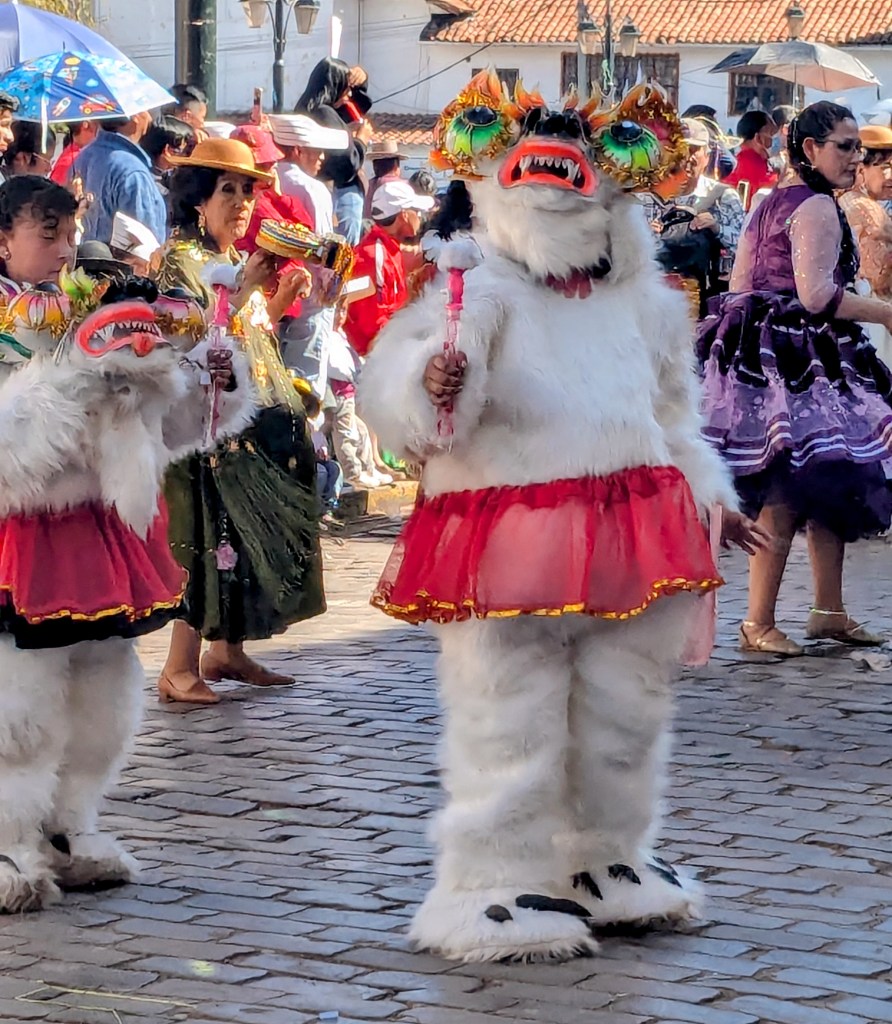
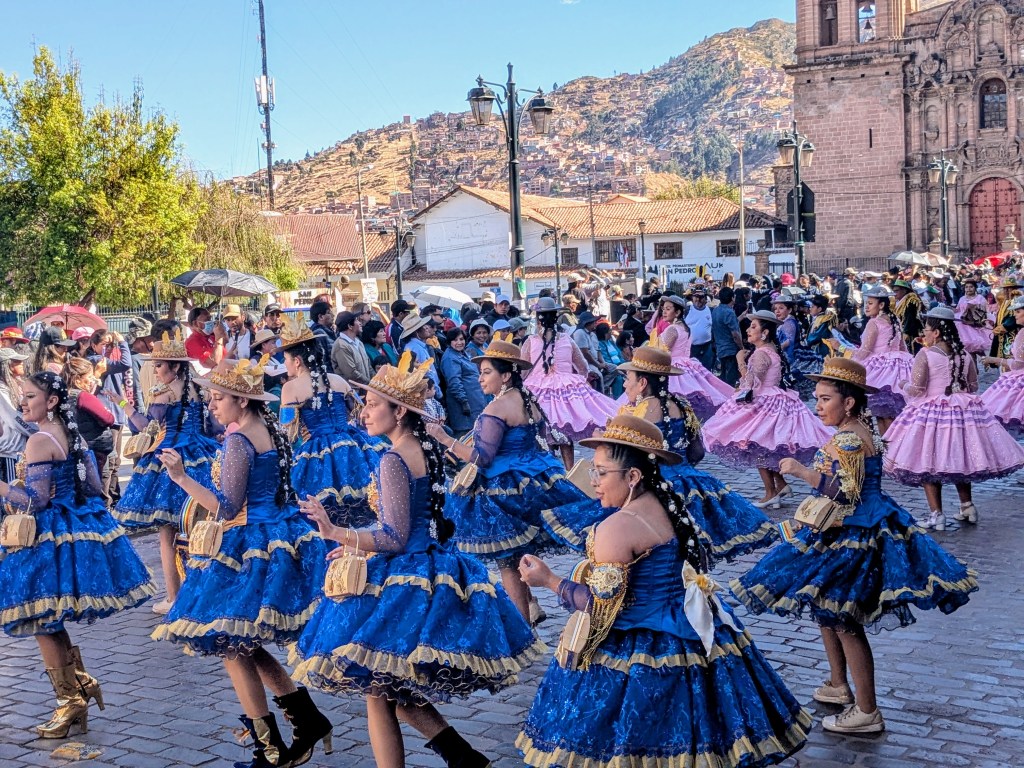
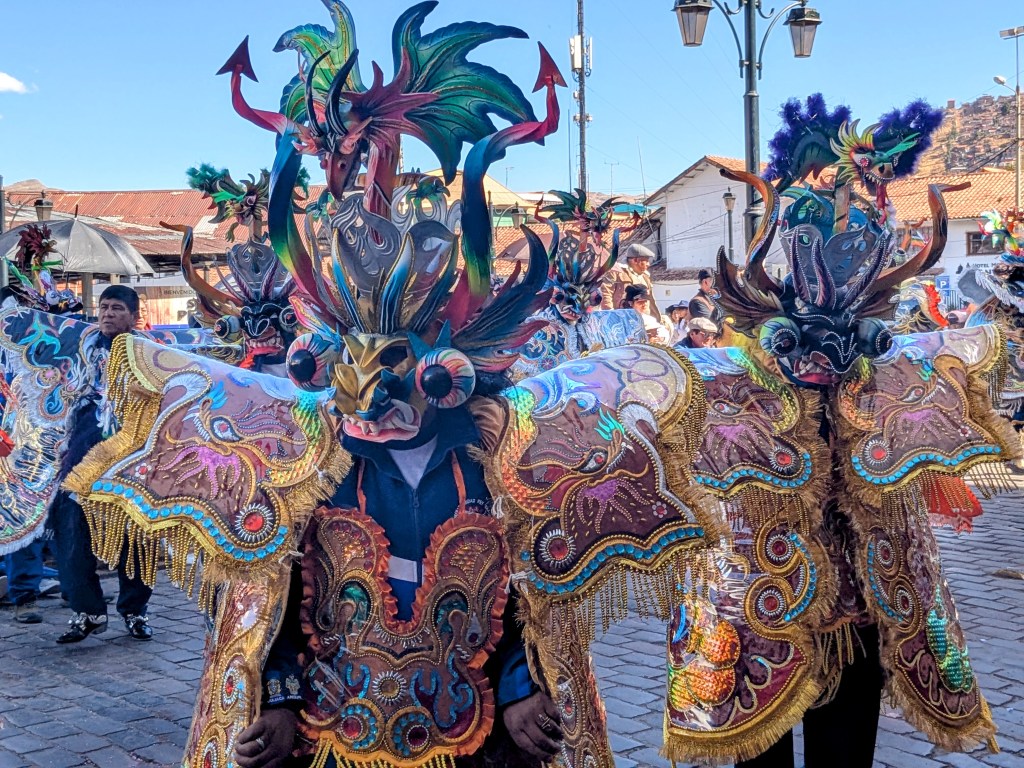
I’ve tried to capture some sense of the variety of costume, but honestly, I’ve definitely fallen short. This trip had so many highlights and so exceeded expectations at every point that it would be near impossible to pick a stand out. But, unexpectedly stumbling into a parade this unique and of this scale was pretty incredible.
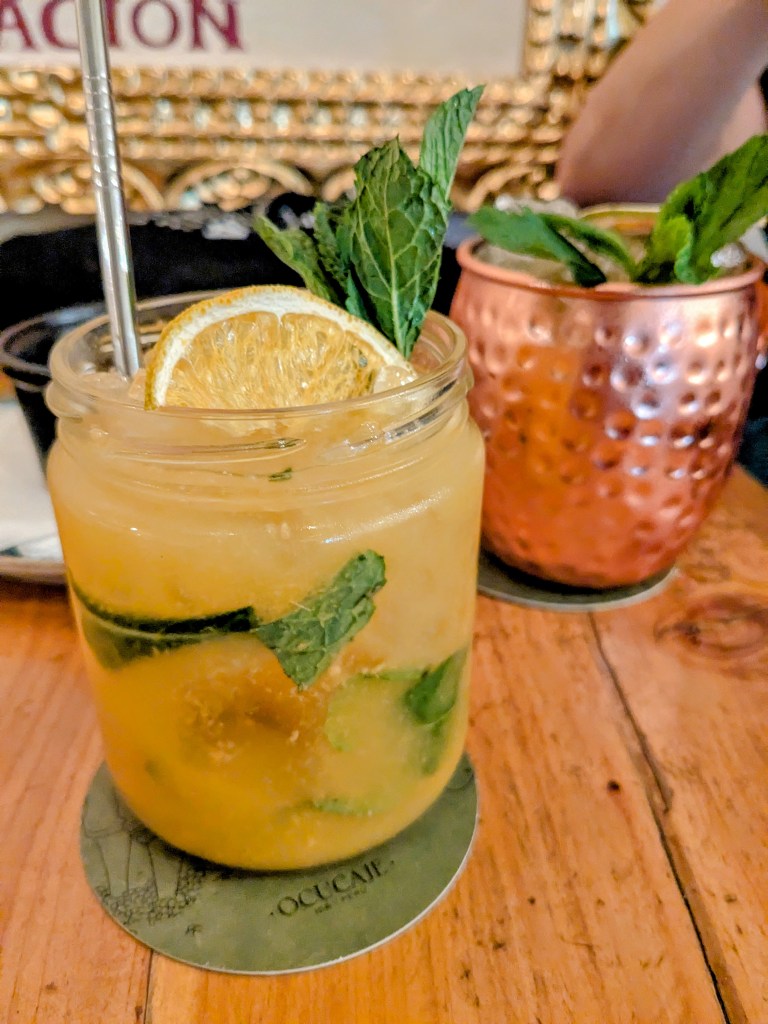
We wrapped up our Monday with a stop at Museo del Pisco and a fun and fancy dinner at Cicciolina (not Italian). Museo del Pisco is a bar where, not surprisingly, Pisco reigns supreme. They offer a variety of flights and tasting experiences. We kept it simple and just grabbed cocktails before heading to yet another delicious dinner. But this was a place I would’ve gone back and done a tasting experience. Lea was bemused at their slant on the history between Chile & Peru, which, as one might imagine in Peru, heavily favored Peru.
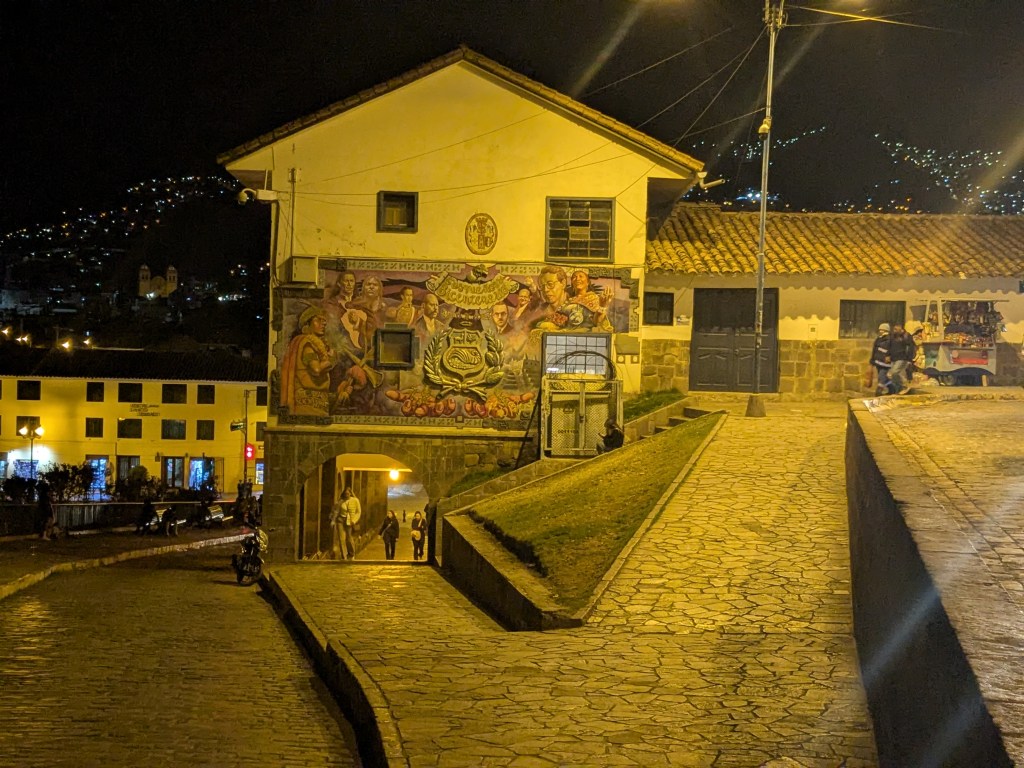
I’m officially getting too far away from these events.
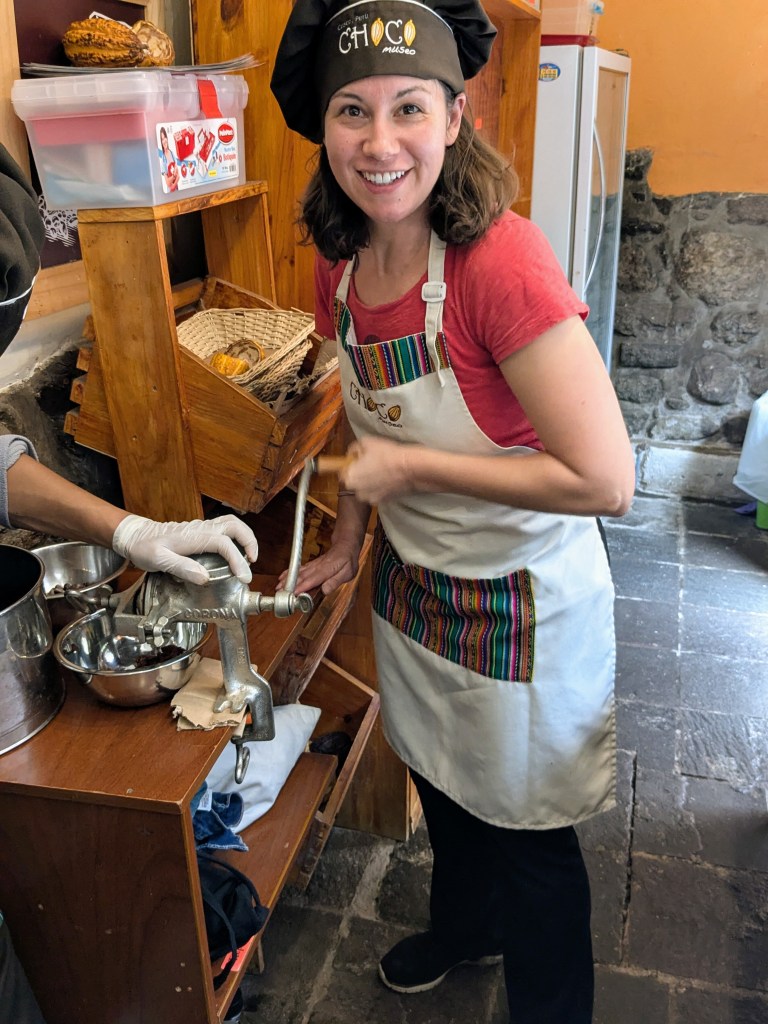
During the day of all the activities, we’d needed to buy a boleto turistico, which allows access to multiple museums, historical and archeological sites within the area. So we endeavored to use it. We went to the tiny basement of a museum that is the popular art museum (think folklore). It was a bit underwhelming. After a snack, we proceeded to the Regional History Museum which I easily could’ve spent more time in, but we had scheduled a chocolate making class. I cannot make chocolate now, but it was fun. We got to toast and grind beans and then our instructor made them into Mayan and Spanish hot chocolates, the former of which we were informed traditional includes human blood. He then went on to VERY CONVINCINGLY ask for a volunteer for a prick of blood, going so far as to have a large knife at the ready and apply sanitizer to said volunteer’s arm. There was a genuine moment of “ummm when do I intervene?” and given the general relief when indeed blood was not drawn, I was not alone.
In the evening we headed over to the Trex Experience office for our debrief on our hike and to receive our duffel bags. There were two groups departing the next day, so after we’d all crammed ourselves upstairs, half of us, including Lea and I, hopped back downstairs for our smaller group of ten folks. A Swedish couple, a Colombian couple, Juan & Ana, Jenny from New Zealand, and 3 Germans boys, and of course me & Lee. Frank, our guide, and Evangelino, our assistant guide, are both from the Cusco area. Frank’s English is very good and his confidence evident. Evangelino is more reserved, very much still learning English (like my Spanish might be better than his English). And this was our group- plus a team of 12 porters who would carry all our stuff, prepare our meals, set up our tents, and contend with the chemical toilet. We did not meet them that night.
The next morning, around 4am, we set forth.
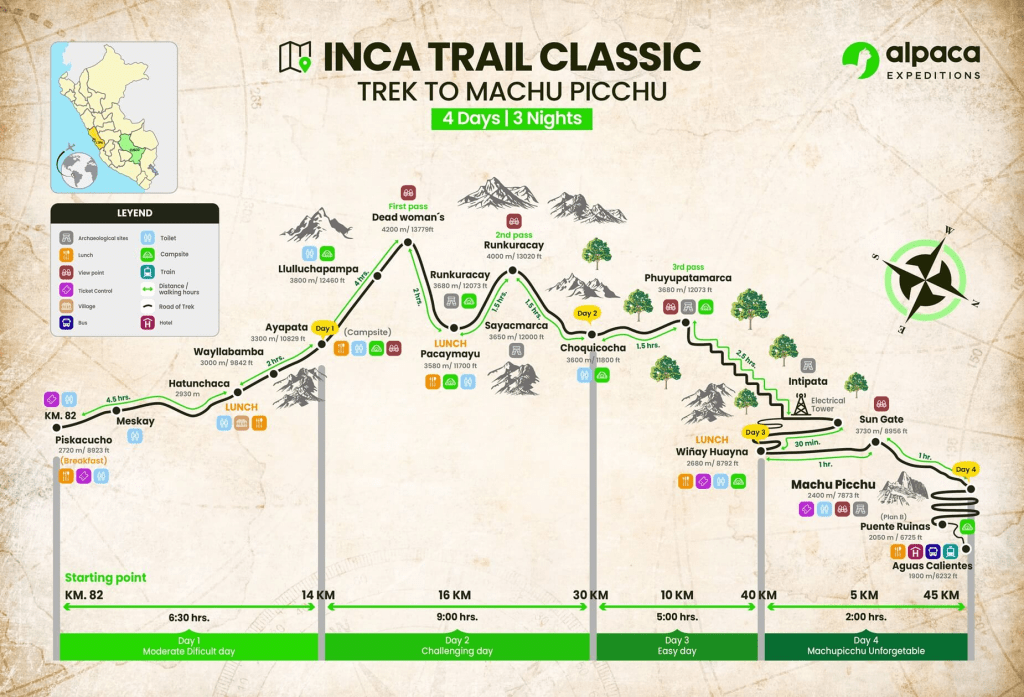
500 hiking permits are issued daily, approximately 200 are for tourists and the rest are for guides and porters. All permits are issued through licensed tour companies which means everyone is part of a group. This massive onslaught of folks gather at Kilometer 82, outside of Ollantaytambo to go through the first checkpoint and begin the hike.
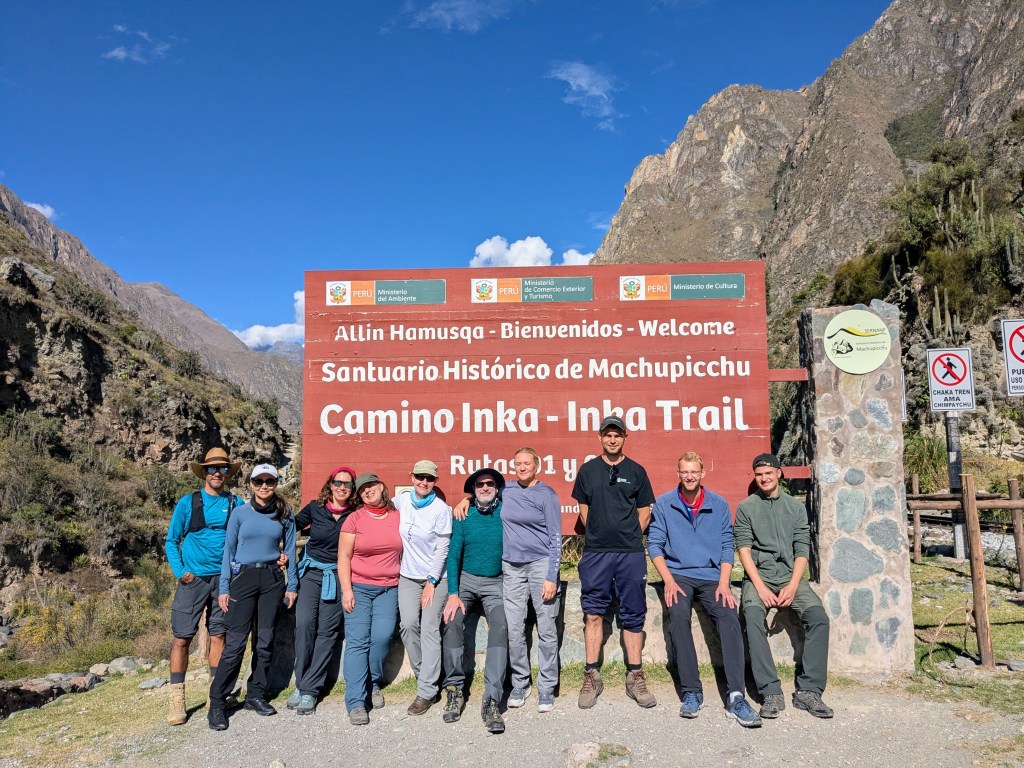
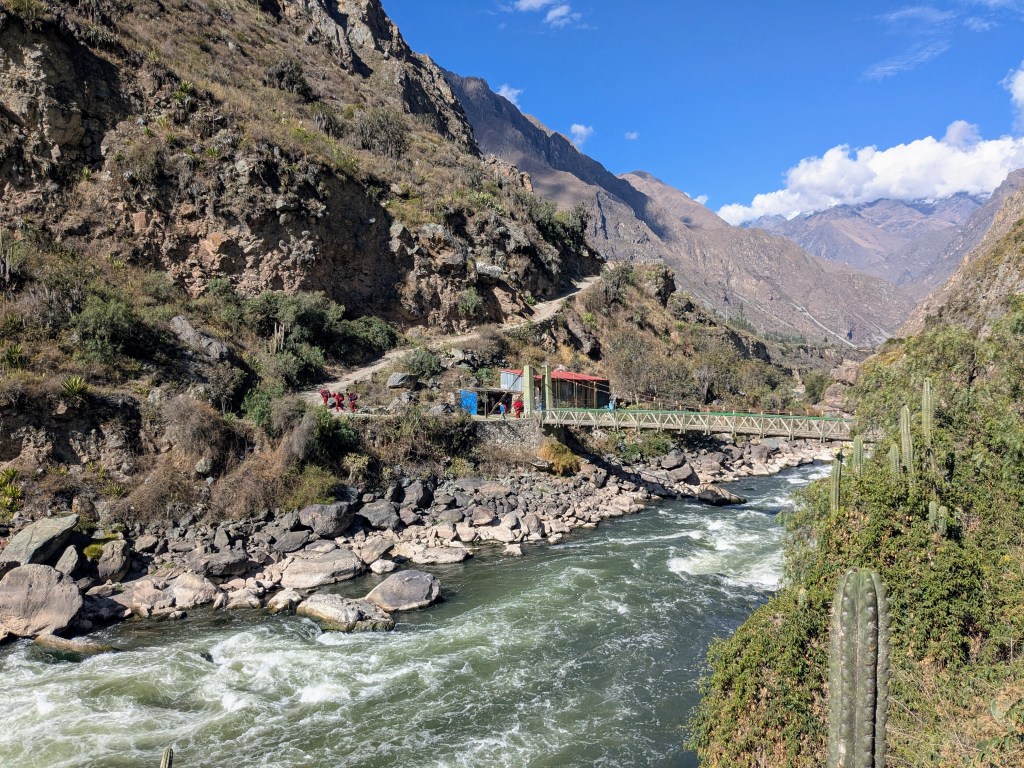
You begin by almost immediately crossing the Urubamba river that sits in the Sacred Valley, the landscape is fully of cacti and dry moss. It’s dusty and brown. While the entirety of the trail is part of the protected Historic Sanctuary of Machu PIcchu, this first stretch is still home to many Quecha who are permitted to live within the sanctuary. After just a few hours of hiking, we paused at one of the homes for a brief rest. This family is relatively new to the area and is trying to create a hummingbird sanctuary. Their garden featured massive hollyhocks, canna liiles, and flowering maple and overlooked the valley we were slowly climbing up one side of, there was a guinea pig home and a water feature.
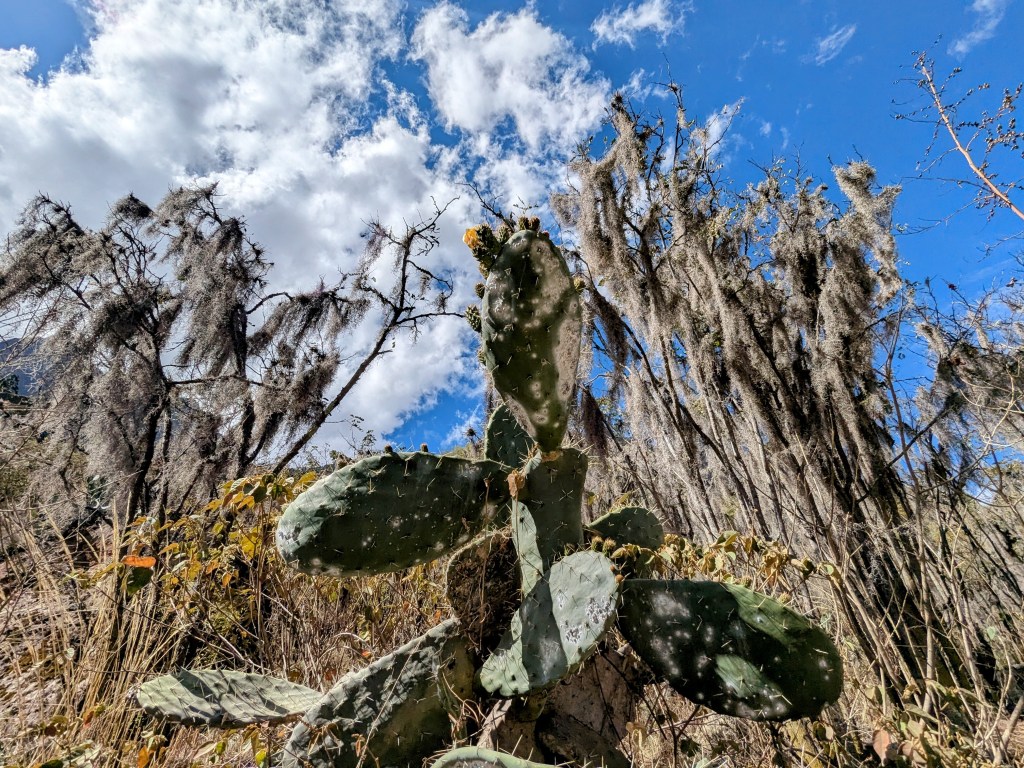
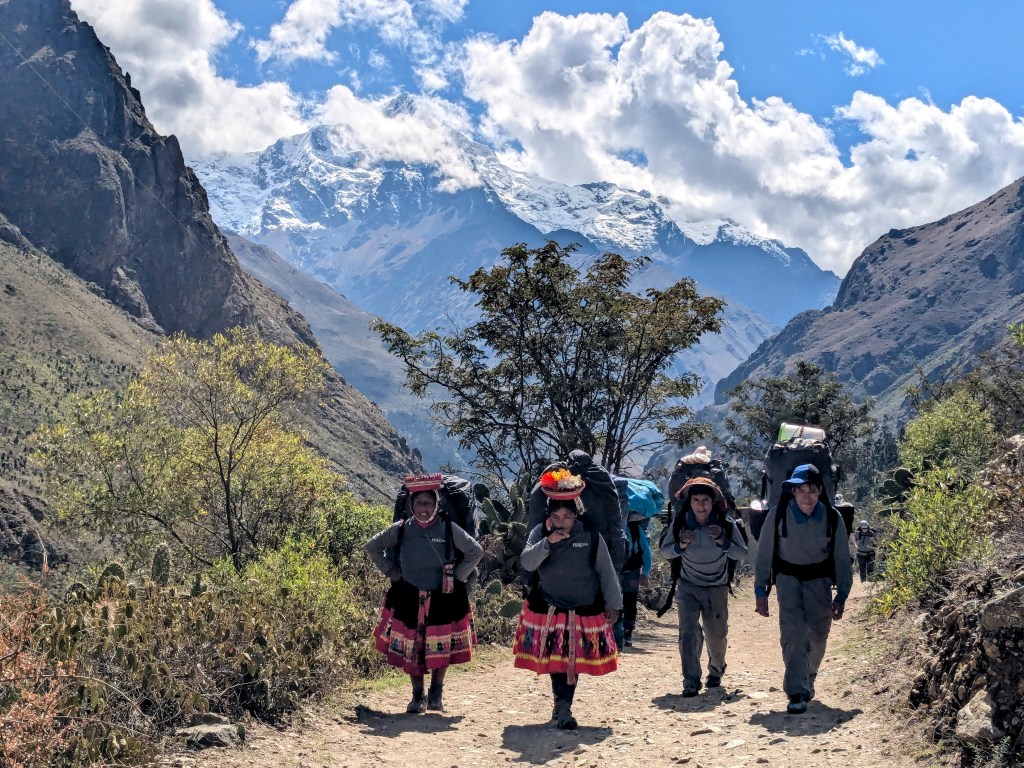
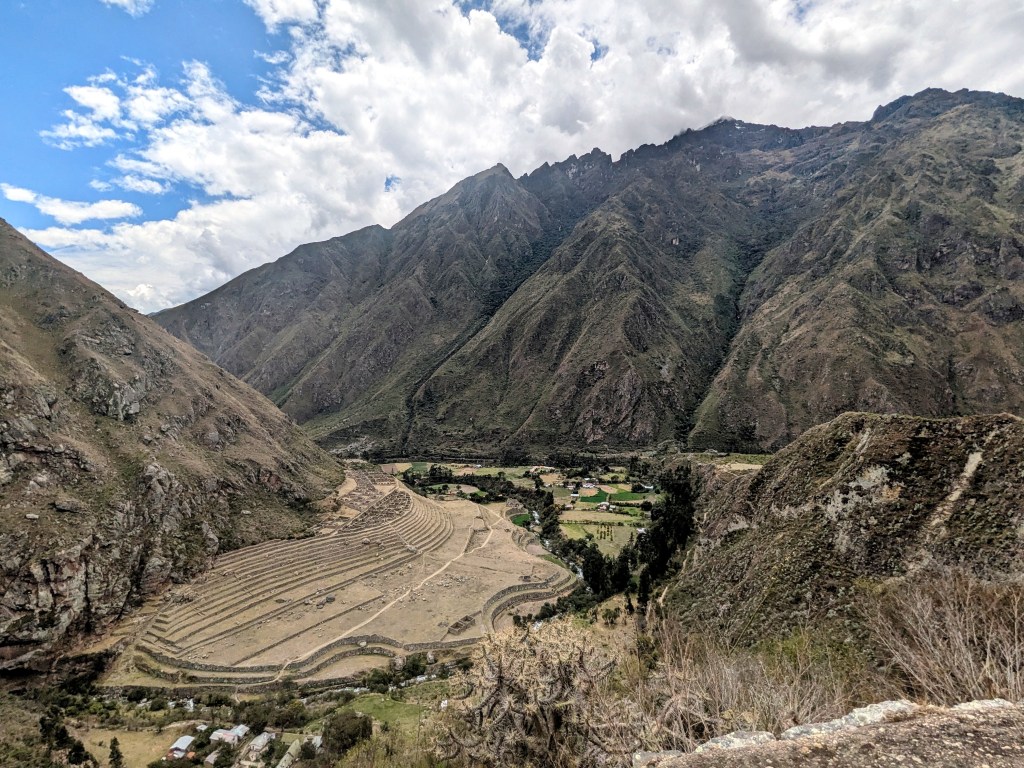
Shortly thereafter, we came across our first Incan site, Patallacta, which was discovered by Hiram Bingham in 1912- suffice to say Hiram Bingham is gonna come up a lot. Not sure there’s much in this area he didn’t discover. The Inca were a well organized people and designed check points to control access to their towns. Like many of the sites, this one also featured homes, a ceremonial area, and terraces for agriculture. On the trail itself is the remains of one these checkpoints with a historic town visible in the valley below.
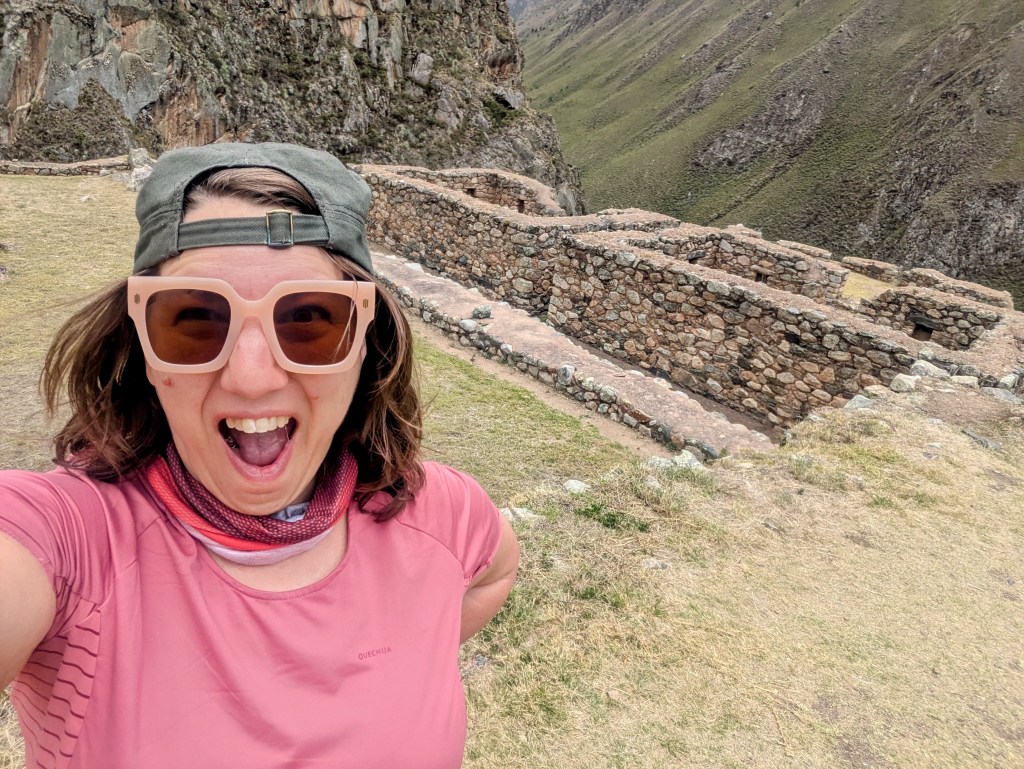
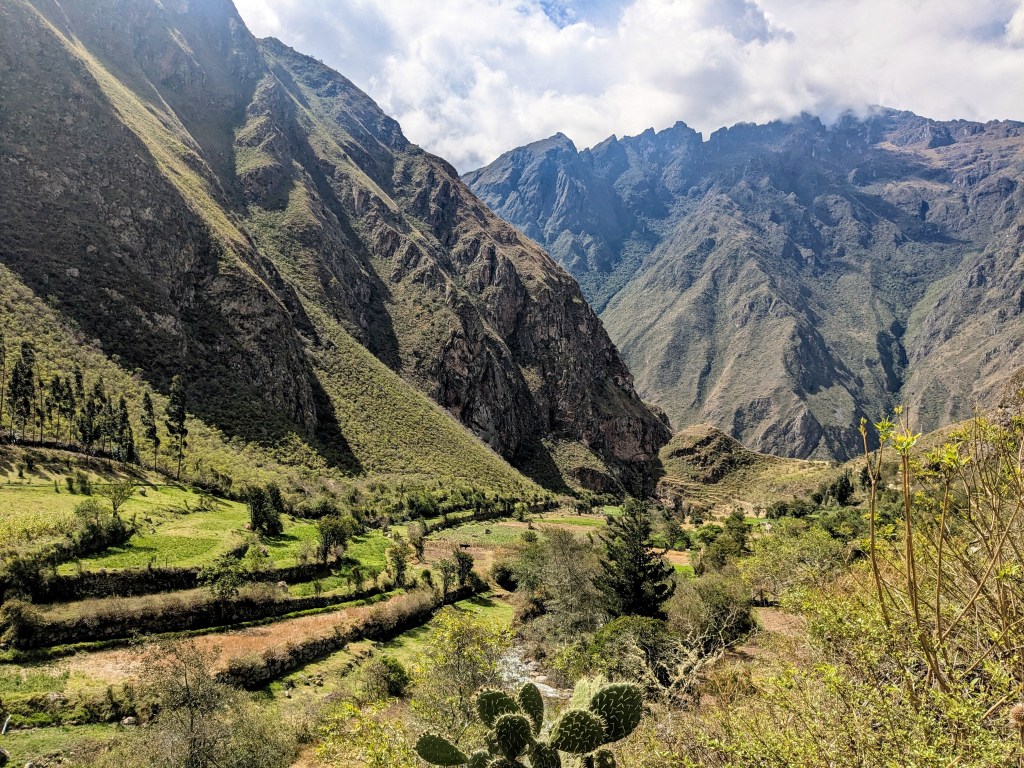
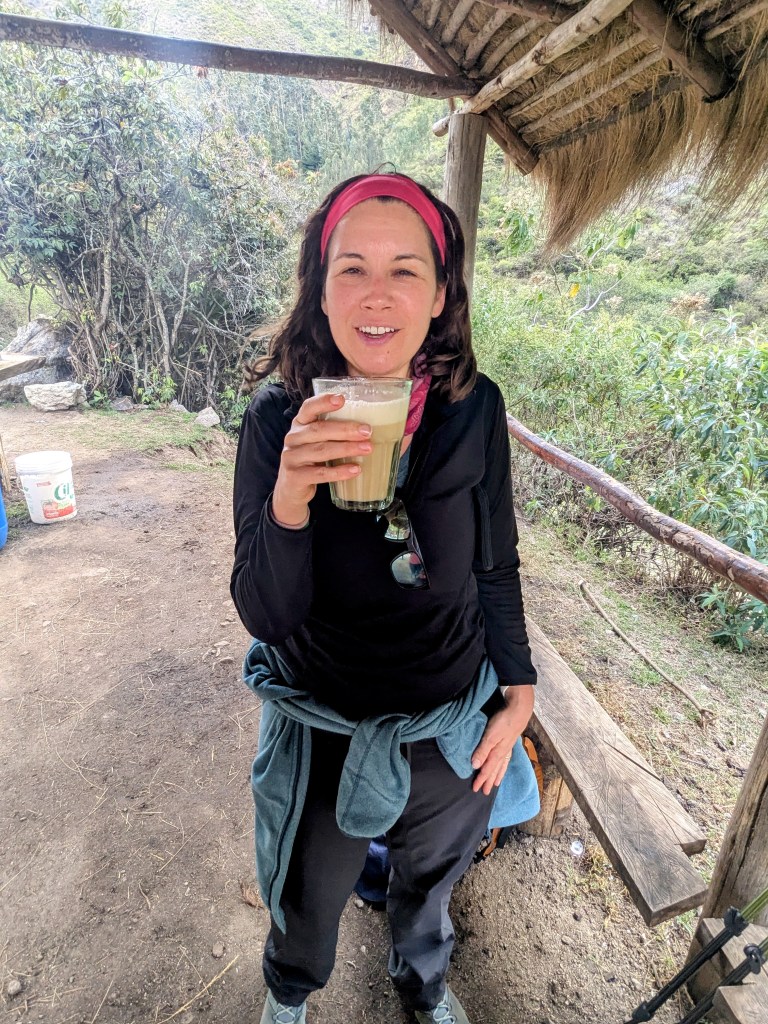
At our next resting point, Lea tried a big old glass of fermented chicha. The women who sell this hang red flags outside their homes and then fish out a glassful from a bucket. This is a corn based drink that involves sprouting corn and then smashing it into a paste that is mixed with water and fermented. I believe in some cases the paste is strained out, however this particular sample was a thick beverage with an almost kombuchay taste. The guides quickly advised Lea to not drink the whole thing due to the potential effects of alcohol at elevation, having already down an entire glass each themselves. Lea graciously shared with everyone. Then we hiked more before reaching our campsite at Ayapata.
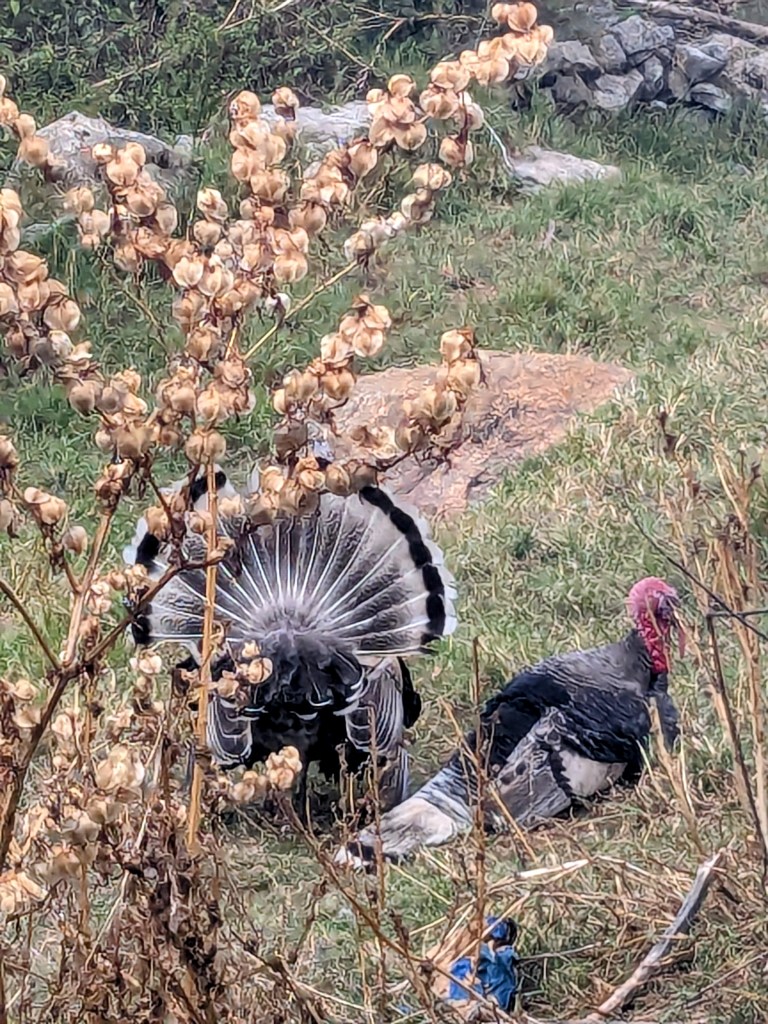
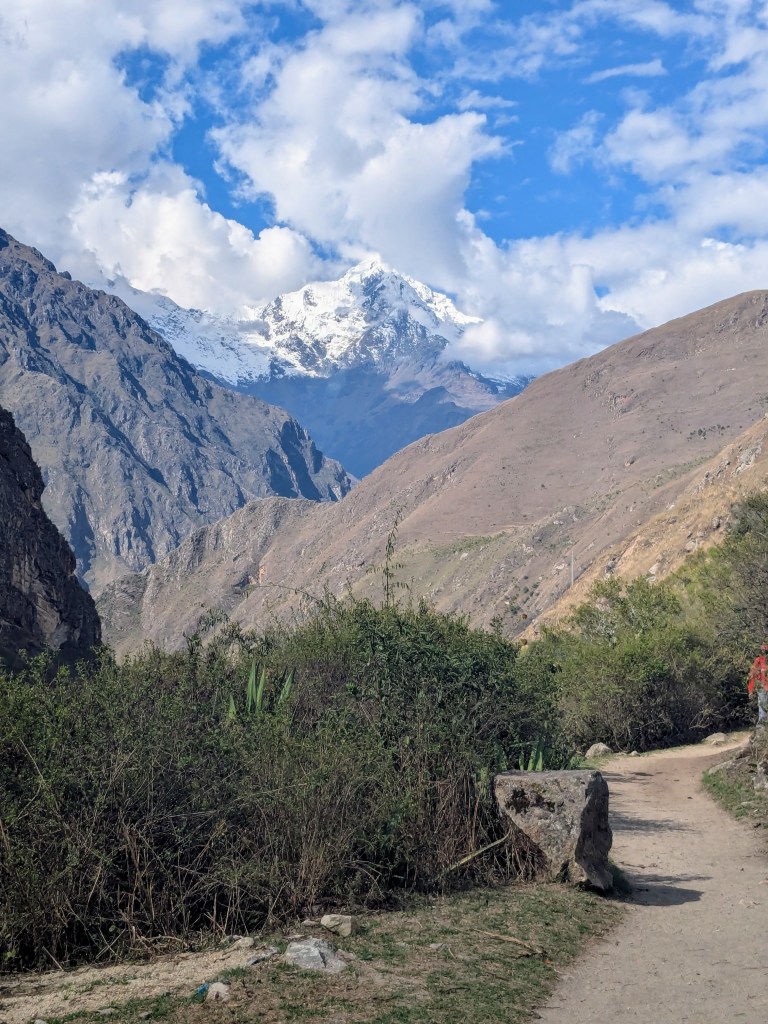
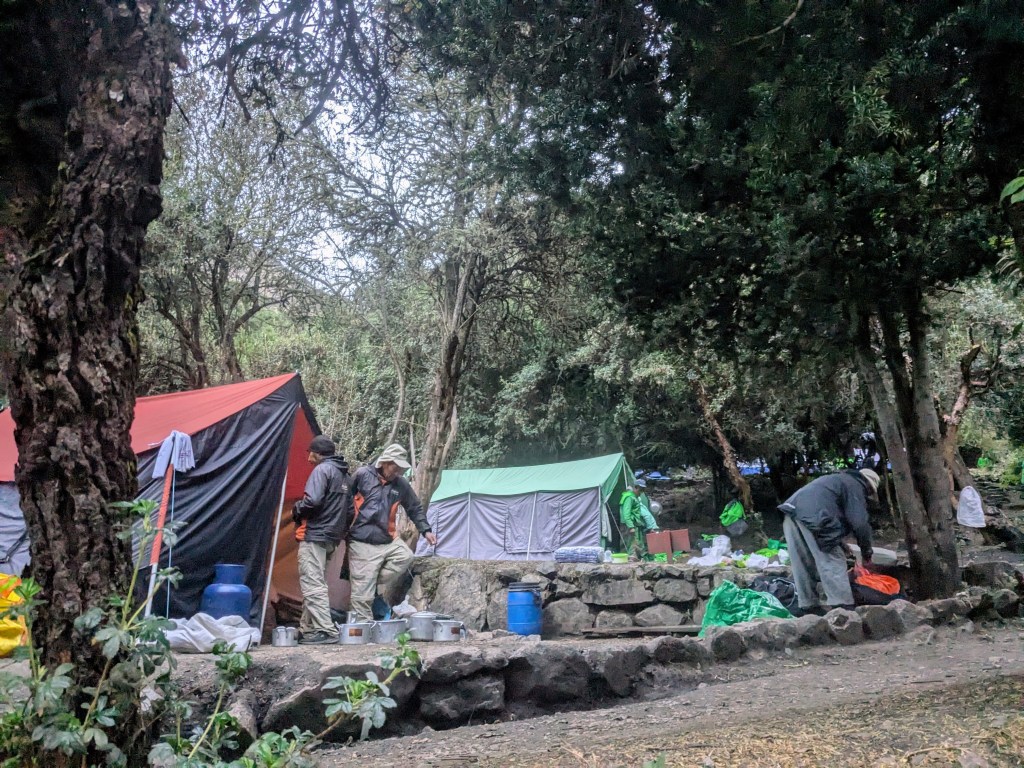
Our porters, carrying up to 25kg (55 lbs), run ahead to have camp prepped upon our arrival. This seems like an insane enterprise to me, but clearly it’s been working. Our tents are set up, the dining tent and kitchen tent as well, even the chemical toilet tent. At this point in the hike, we still had acceptable bathrooms- all western style toilets and reasonably maintained. I think we all saw the chemical toilet as a middle of the night kinda option.
The campsites are large spacious areas with incredibly level, root & rock free, areas, equipped to support 500 people a night. Most had a few different levels and sorta sub areas, each with it’s own bathroom and sink situation. Porters also boiled water for us, both to wash our faces, to refill our water bottles and offer us coca tea to help combat altitude sickness.
Every evening we sat down at about 5pm to “happy hour” which usually involved hot chocolate, popcorn and various other snacks. We then stayed in the dining tent, precariously perched on collapsible 3 legged stools, through dinner. The amount and variety of food given to us felt really excessive. After snack, there was soup, and after soup a minimum of 4 dishes were put on the table to be followed by some kind of dessert. I suspect they find it easier to prepare abudance rather than accommodate everyone’s taste, but it was hard not to feel like it was a bit unnecessary when you saw these small Quecha men shouldering loads extending well over their heads up and down the stair laden terrain that is the Inca Trail. You go to bed early, almost immediately after dinner, tired and to be awoken early the next day.
Day 2 is considered the most challenging. You both go the most distance and the highest, going over two of the three passes found on the trail, all the way from Ayapata to Chaquicocha. This is also the day where one begins to take the stairs situation a bit more seriously.
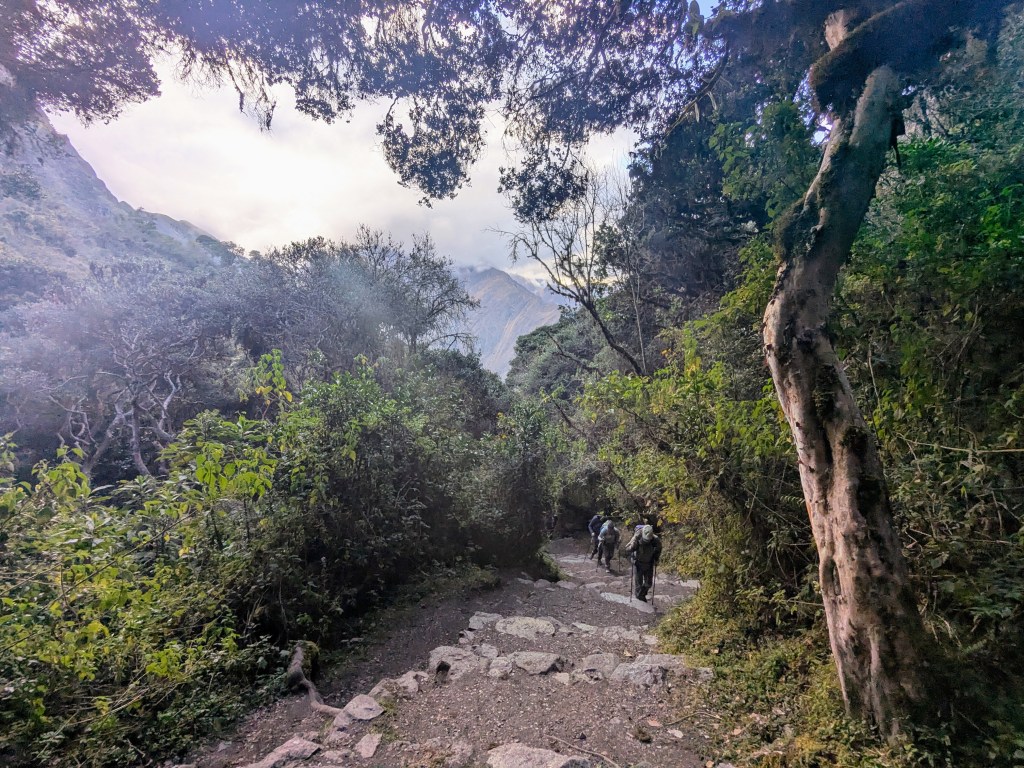
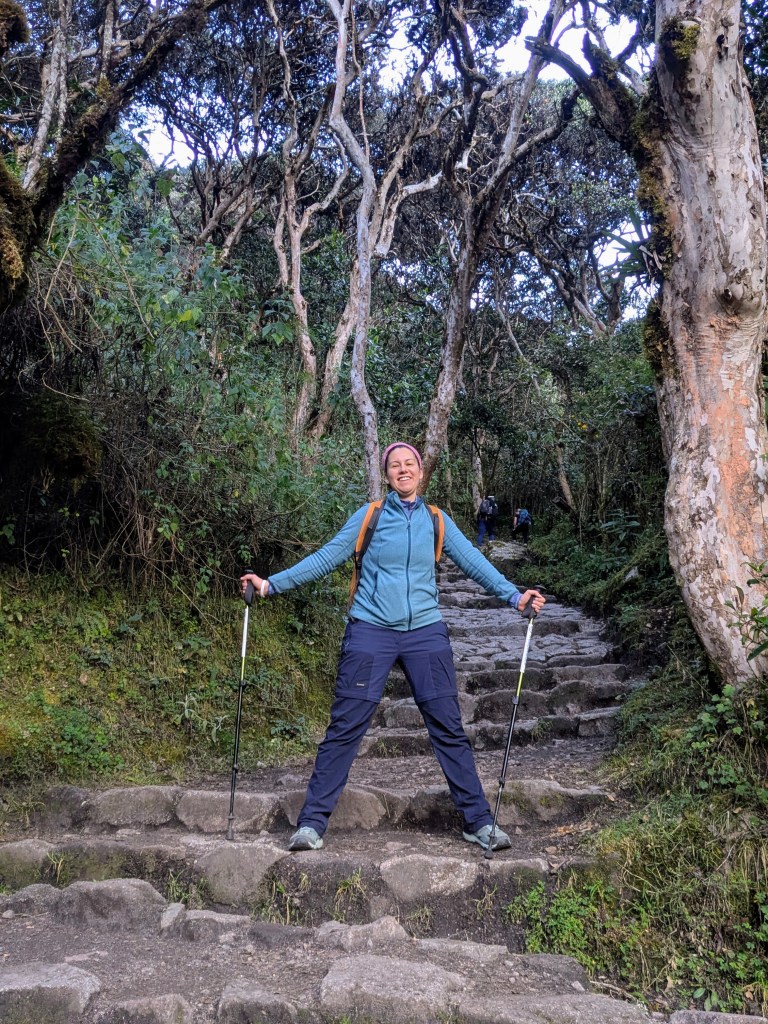
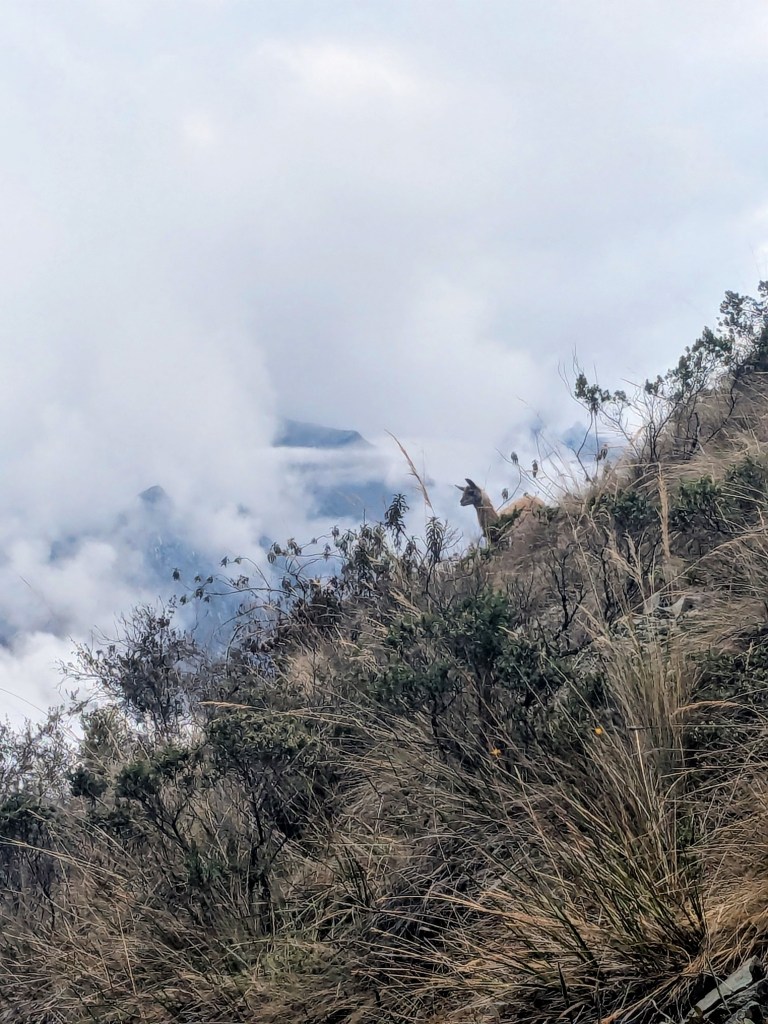
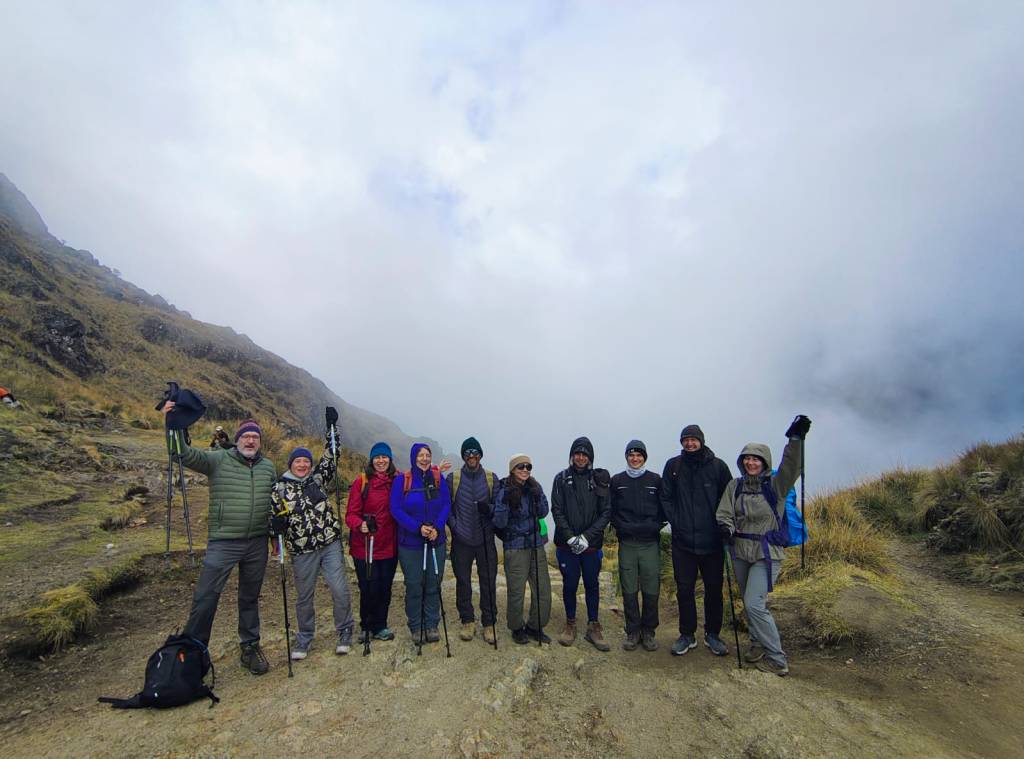
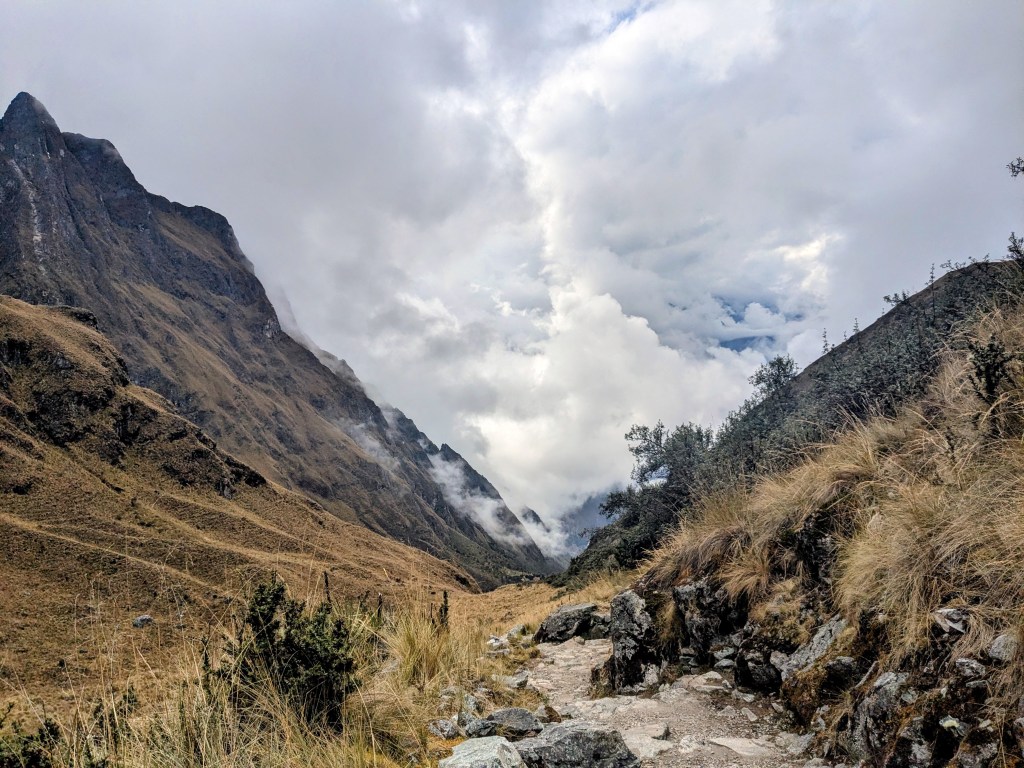
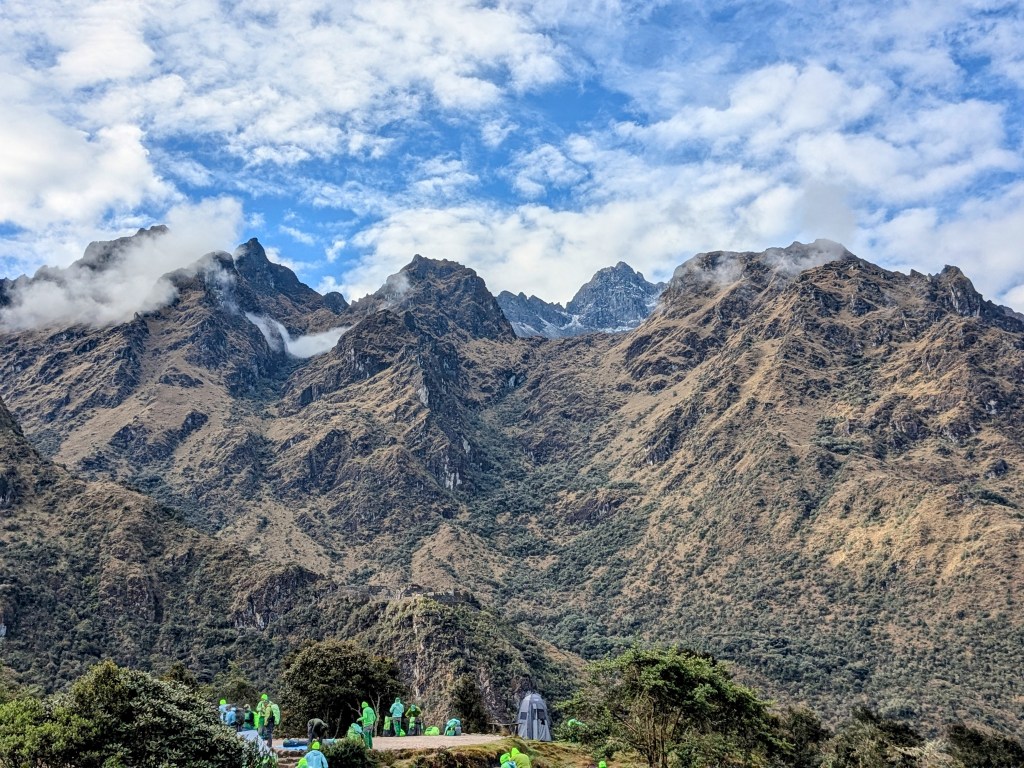
And you leave behind the desert like landscape for a sparse, high altitude plains like environment as you climb up to Dead Woman’s Pass (Warmiwañusqa) at 13,828 feet. We started early so it was still hazy and the only view at the pass was the stairs down into the valley below. It’s beautiful. While I wished for a clearer view the sound dampening effect of the fog was kinda magical. Aside from which, I decided I was grateful that the sun hadn’t been beating down on us.
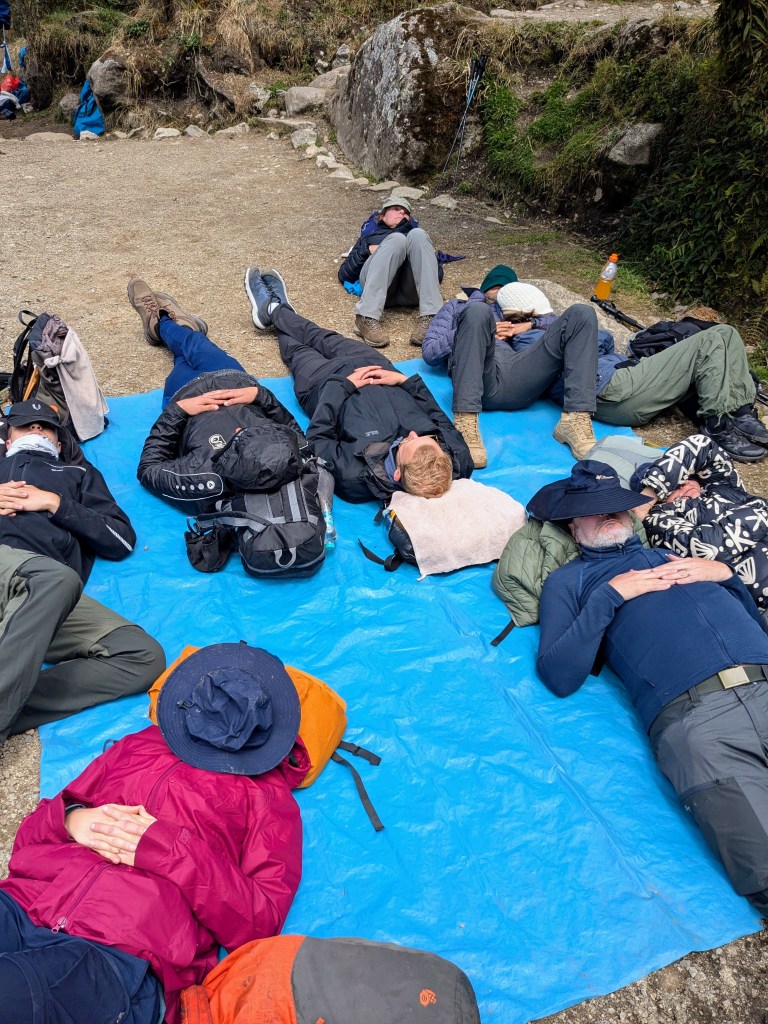
We descended down the stairs, and then some more stairs, into the Pacaymayu Valley at which you partially regret cause you know you’re just gonna have to go right back up. But waiting for us below was lunch and nap time. A similarly elaborate meal was prepared and more coca tea ingested, and then we all slept on a tarp on the ground.
In the afternoon, we climbed up the second pass, Runkuracay, explored two Incan sites) Runkuracay and Sayacmarca), passed some alpine and has just sweeping views of the mountains around us.
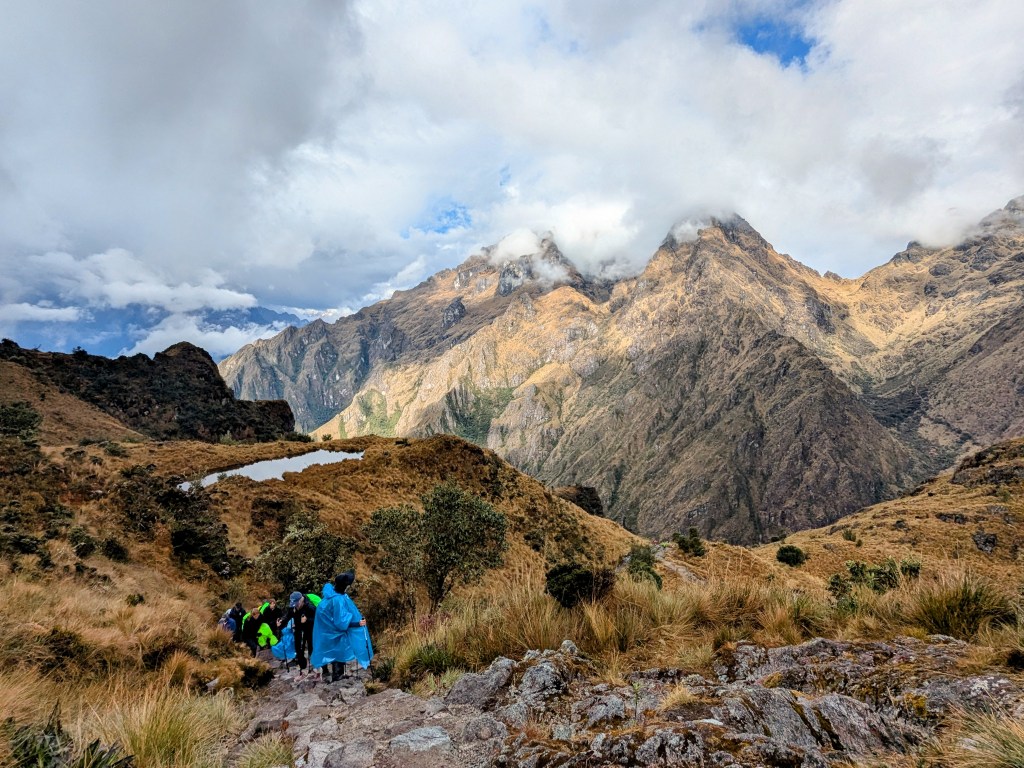
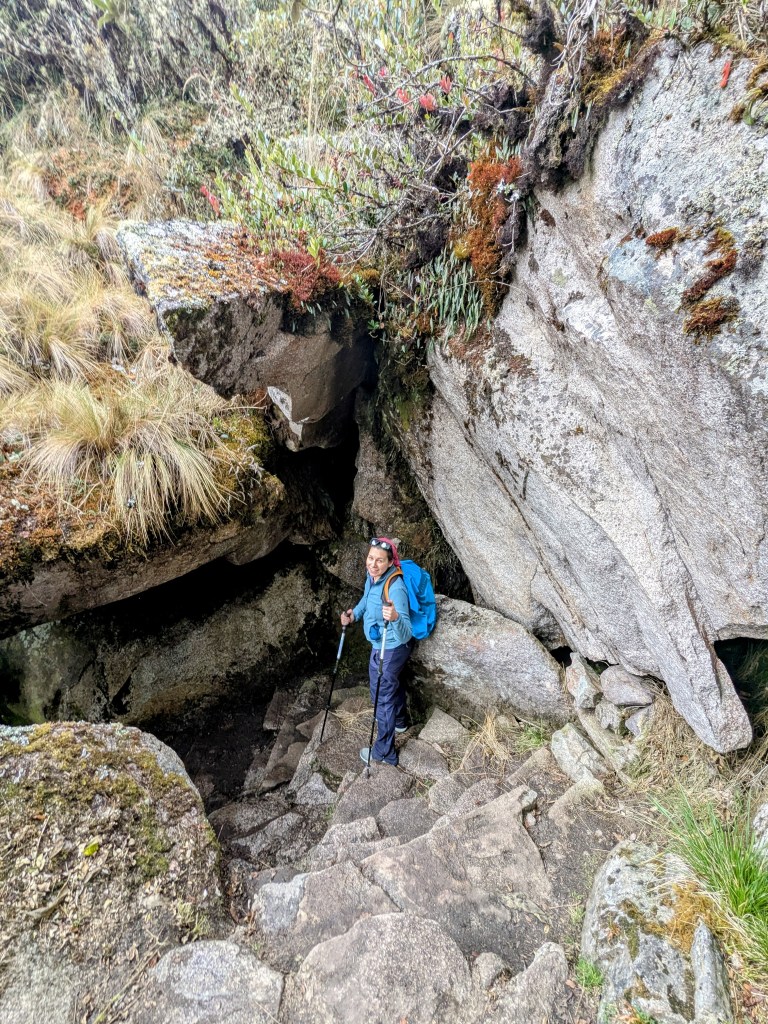
As I go through all my photos, I keep thinking every day was the most beautiful. This day was the one that I had the least frame of reference for. At the onset, I recognized the landscape of the desert, the third and fourth days we’ll be descending into cloudforests not unlike Costa Rica. But this day, I didn’t have that kind of comparison at hand.
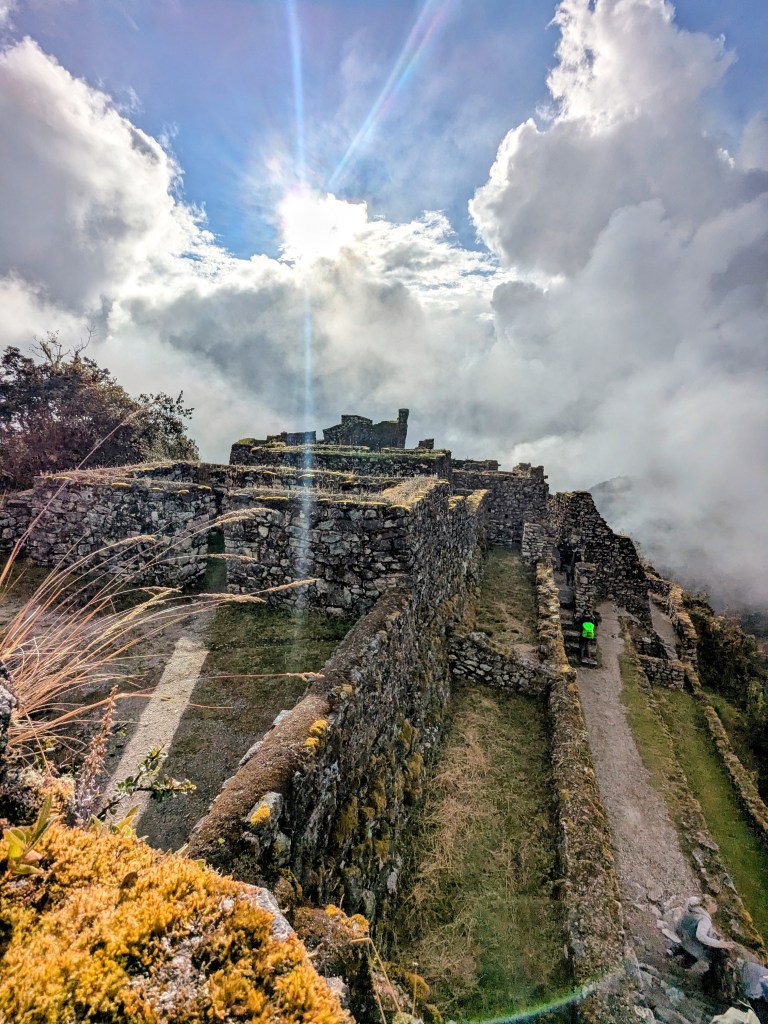
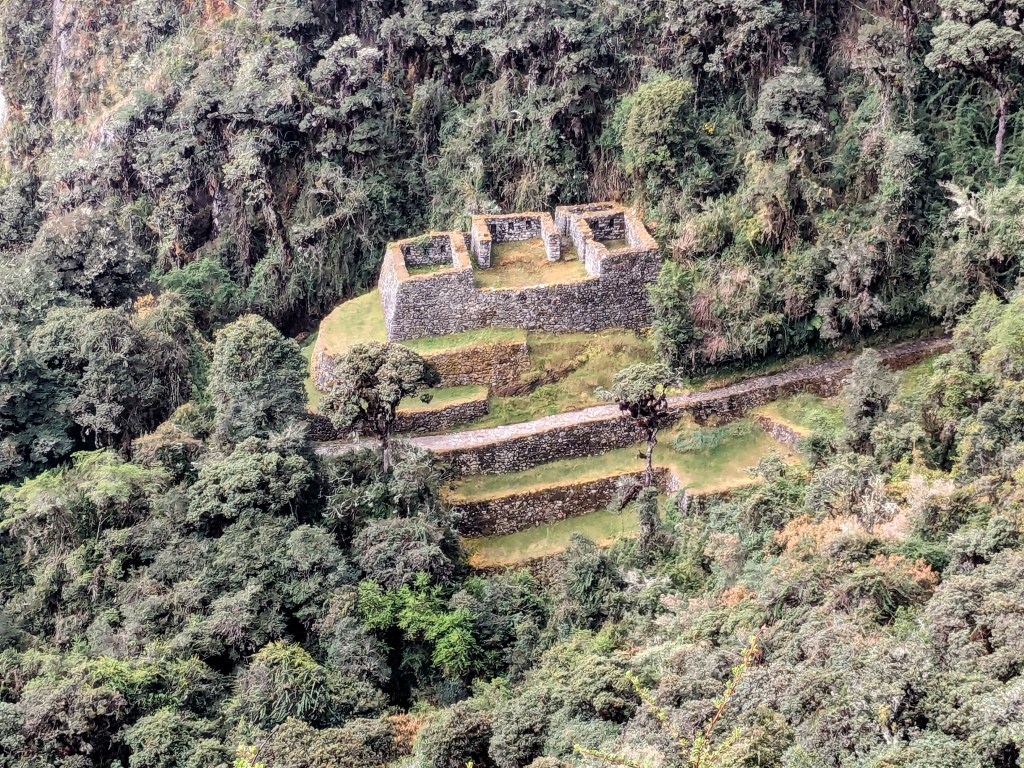

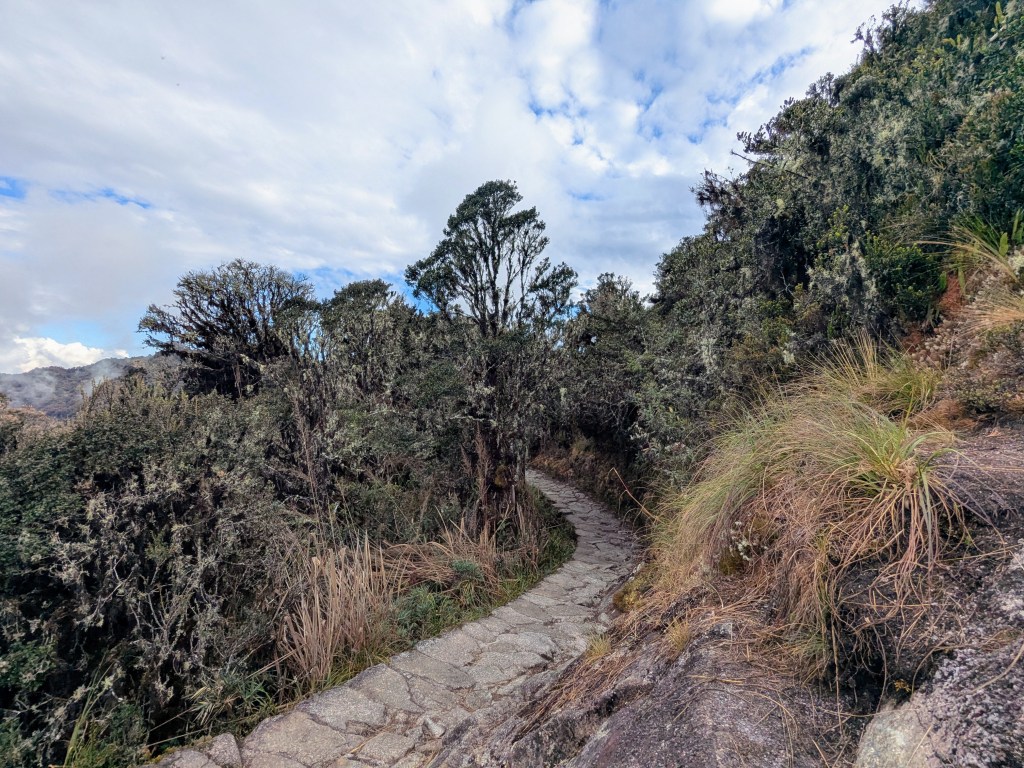
So let’s talk about stairs. There are over 10,000 of them on this trail. There are the stairs you likely expect, ones that are like ruins, stone, higher than they really need to be, slightly uneven, but with some consistency, then there are the stairs that are like sideways speedbumps, more like slopes, and then there are the “monkey stairs”, otherwise known as rock ladders which require both feet and hands. They go up, they go down, they lead you to question why a such a short people built such insane stairs. And they provoke serious gratitude for hiking poles.
The second night’s campsite at Chaquicocha is the highest at just shy of 12,000 feet and is colder and more exposed than the others, but it also affords some incredible views. We finally were introduced to our support team, 2 chefs and another 10 folks to lug all our stuff. This also felt like when we kinda settled in with each other. And the oldest of the German boys, none of whom had great English, finally started talking to the rest of us a little. We also officially hit squat toilets and all of us began to view their relationship with the chemical toilet in a more positive light.


Day three we went up to the third pass, Phuyupatamarka, before going down a lot of stairs while the landscape around us shifted once again, this time into lush cloudforest. Fortunately we were still high enough in elevation that it wasn’t particularly hot or humid.

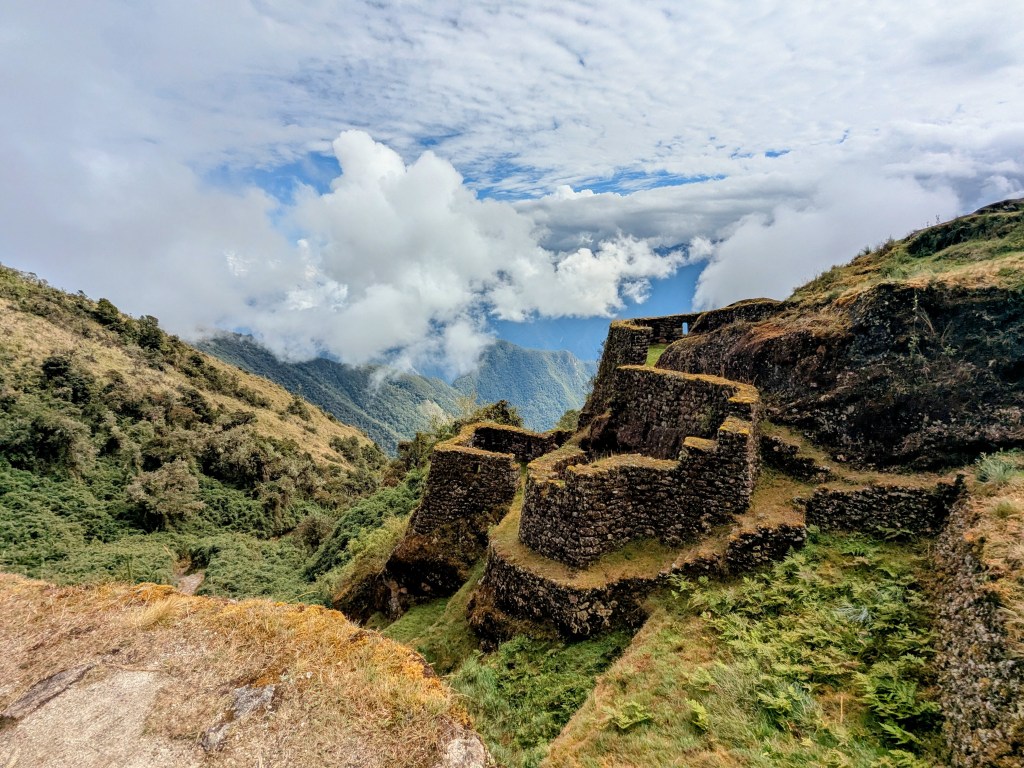
I definitely did not understand the scope or volume of Incan sites that would be seen on the trail and that have no other access point. I knew there was some, but part of me thought “oh yeah, they tossed this in as an attraction cause it happened to be along the trail.” But this was this day that Jenny, our New Zealander, commented that Machu Picchu had a lot to live up to. The scope and the beauty of this sites was really breath taking and they’re cared for. Spoiler- Machu Picchu did not disappoint, but it was kinda magical about having these sites more or less to ourselves.
And then we went down more stairs and probably up some and then down some more. The guides stayed toward the back, running ahead on occasion, and we all just went at our own pace. I hiked with Lea for a bit, with the Swedish couple, and with myself for a bit. I muttered pinche escaleras and then sang “one step, then another. I’m gonna get there, I’ll get there, I’ll get there, get there, get there” (thank you Blondie). And kept going up and down.
We stopped next at Intipata, an large, partially cleared Incan site, but on other side you could easily see more stonework in the jungle. With extensive terracing, it’s clearly another agricultural endeavor with a helluva view.
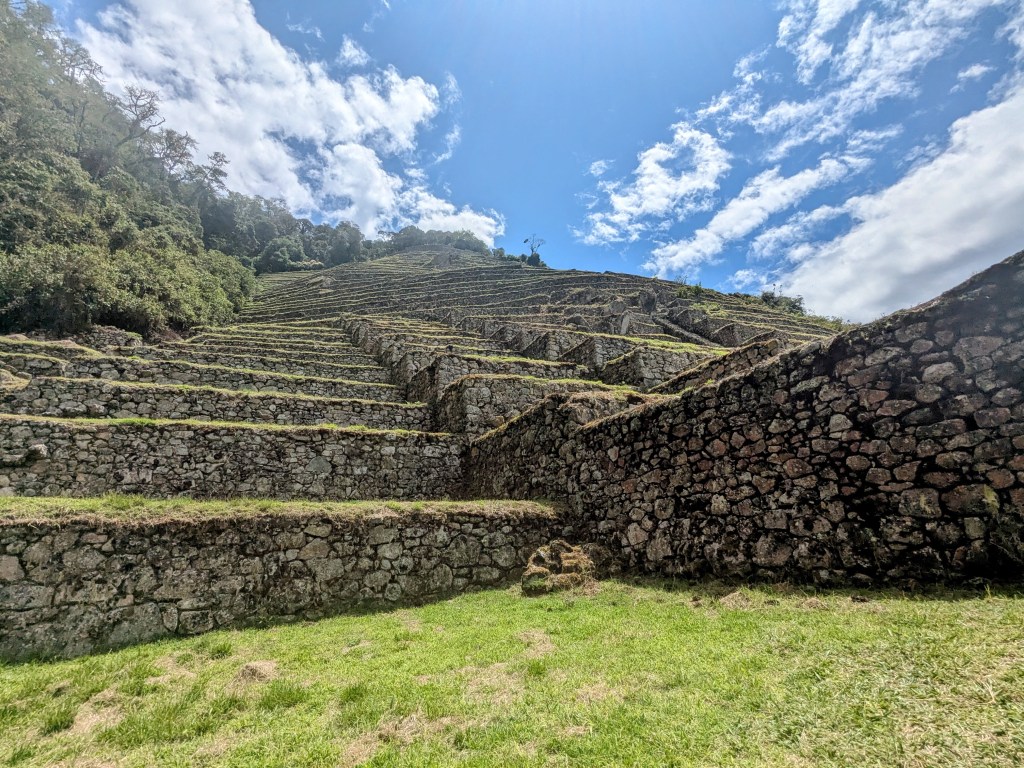
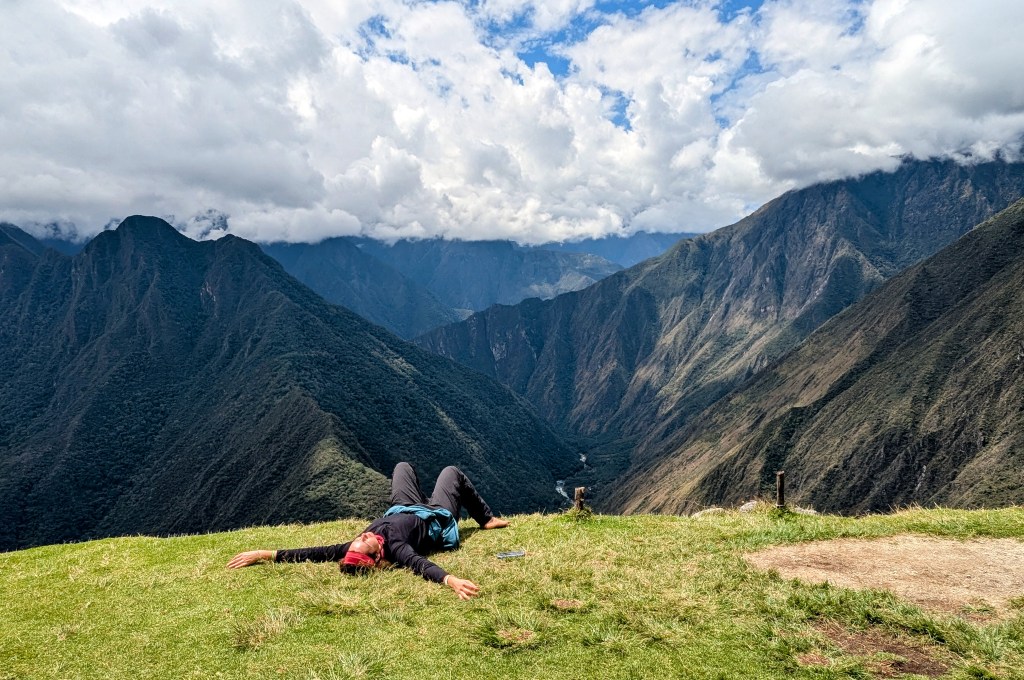
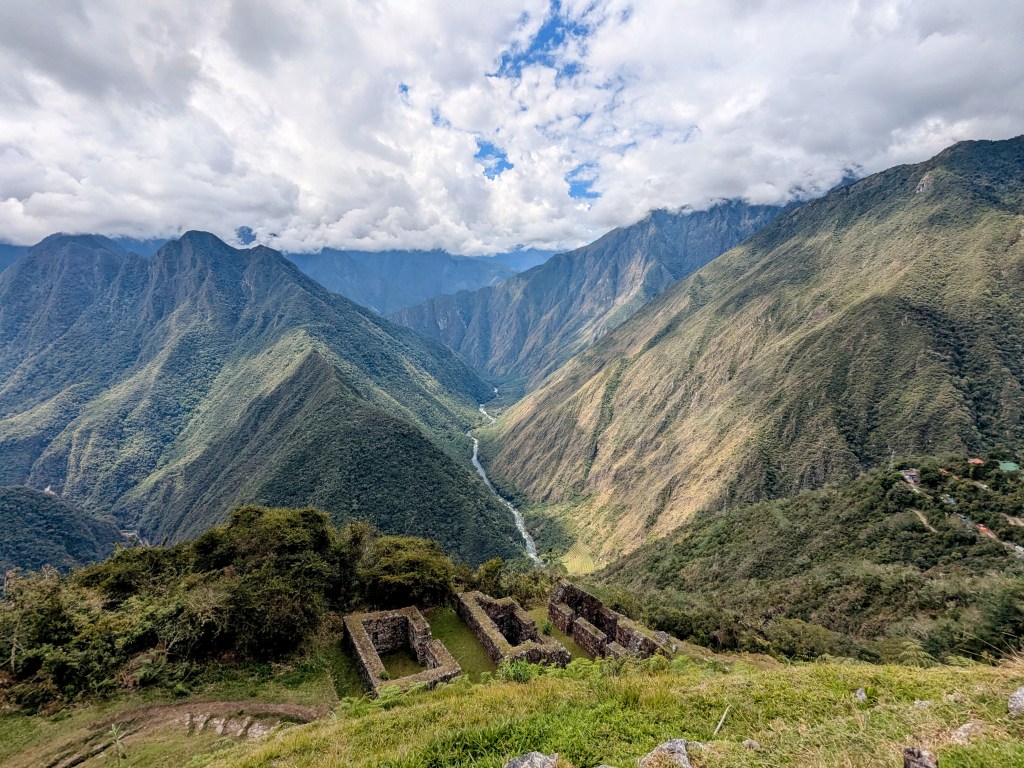
We hiked another few hours and arrived at our final campsite, Wiñaywayna, in the early afternoon. We ate lunch, had some downtime and queued for the long awaited cold shower. And it was so fucking cold. Each new showeree gasped and most cursed at the first touch of this water. Personally, I am immediately jumped out of the water flow and proceeded to splash myself clean, rinsing my hair with head flipped over as though I was using a sink and keeping my body at a distance from the glacial water. But oh it did feel nice.
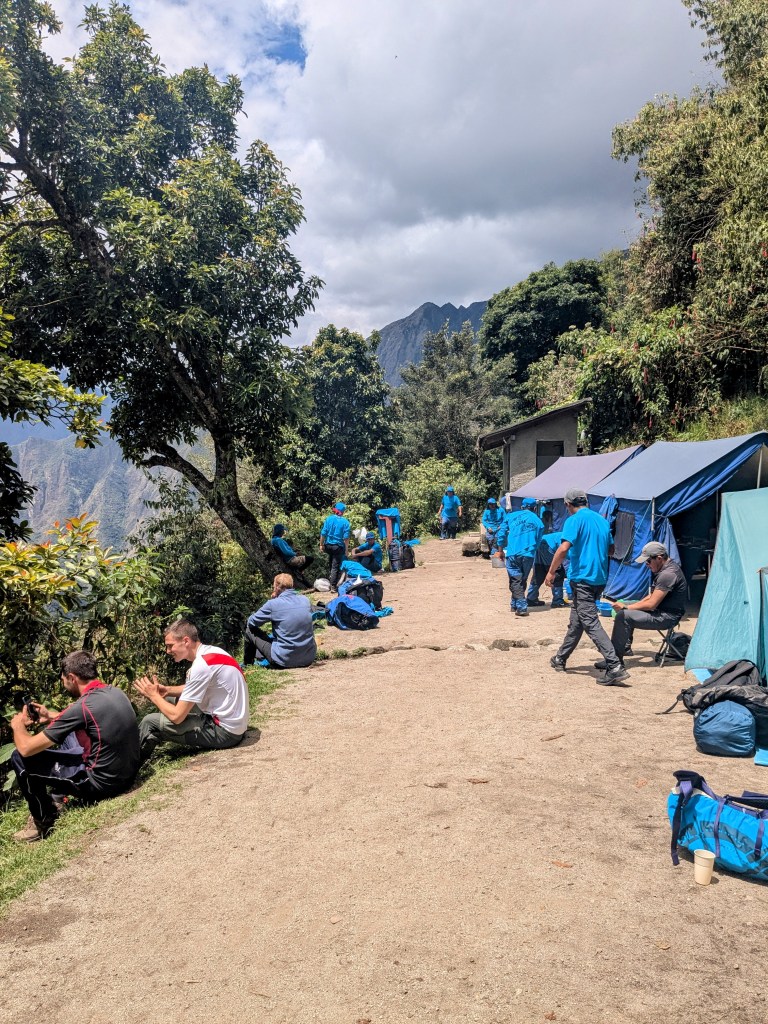
This camp definitely felt considerably more crowded than the others. I’m not sure if it was a smaller area, if our group chose straws poorly and were in a more high traffic area, or if it was due to everyone arriving so much earlier. But it had all the hustle and bustle of a summer camp.
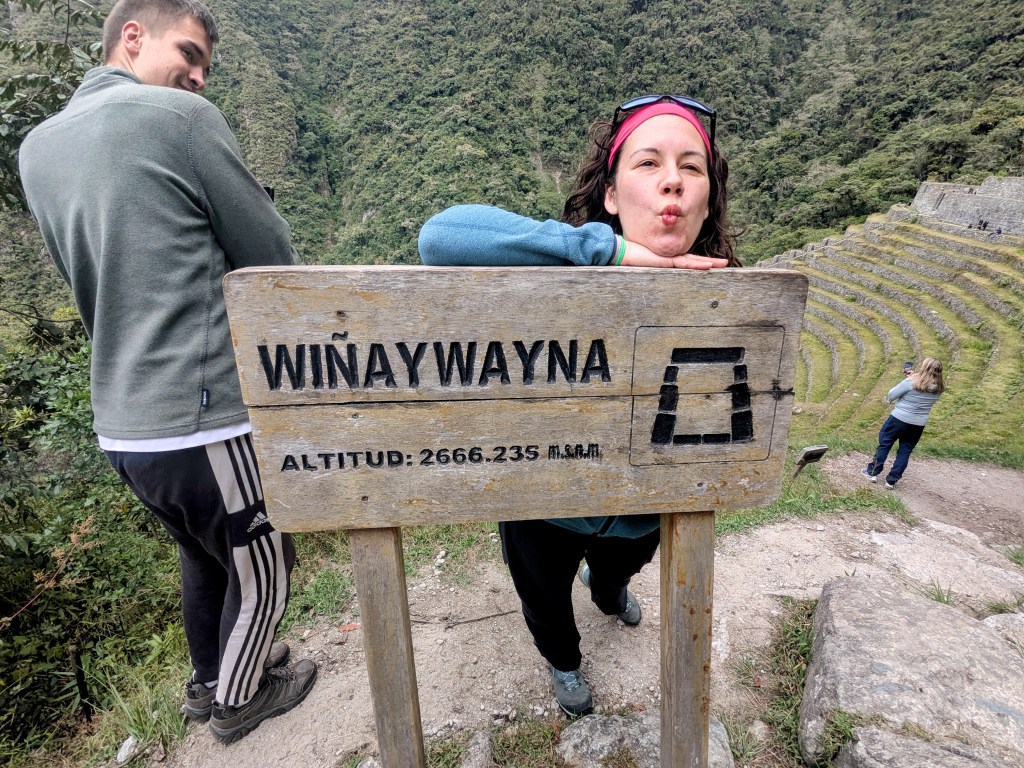
In the later afternoon we were led over to the Wiñaywayna archeological site for which the camp is named. Bizarrely you go behind a somewhat abandoned building that used to be a bar and restaurant till someone (someones?) drunkenly injured themselves.
This site features both upper and lower housing complexes, mostly for royalty we were told. And again more terraces. It was a really peaceful and lovely site. It also was nice to just enjoy knowing that it was a short tromp back to camp.
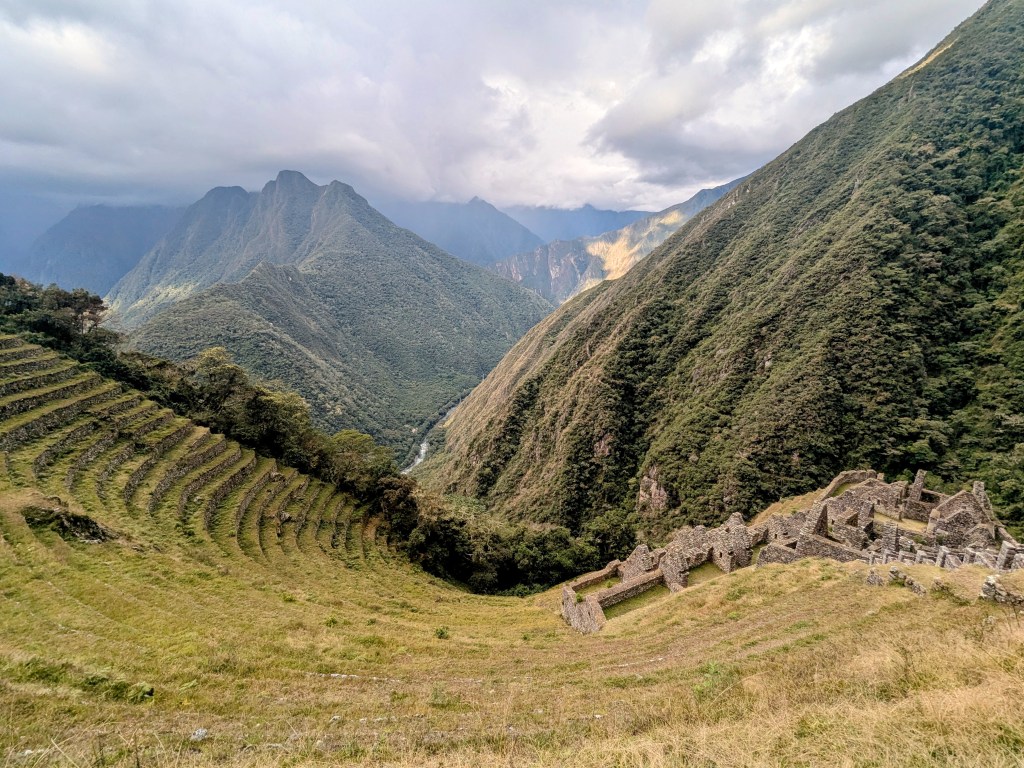
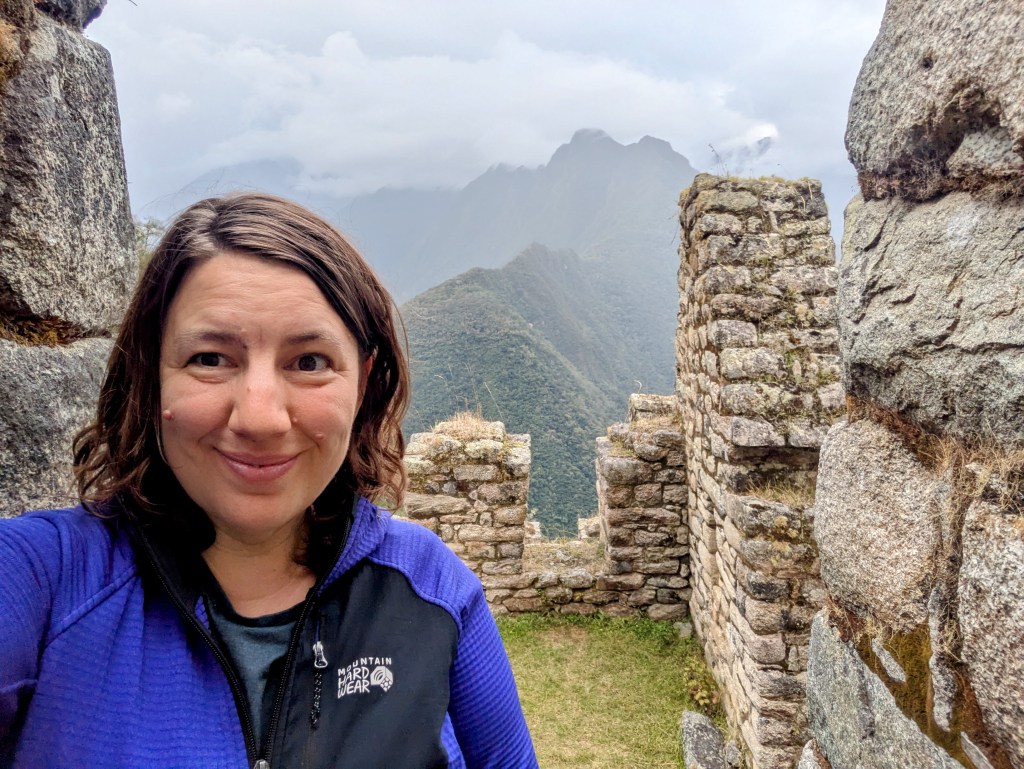
We also go a rainbow on the way back.
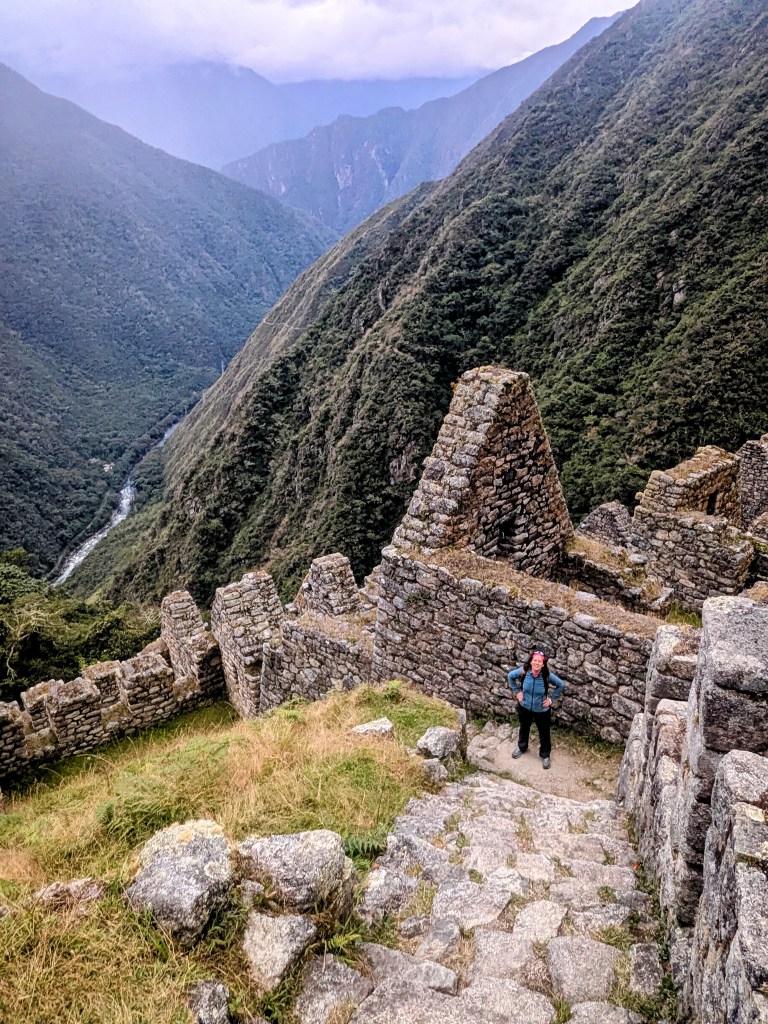
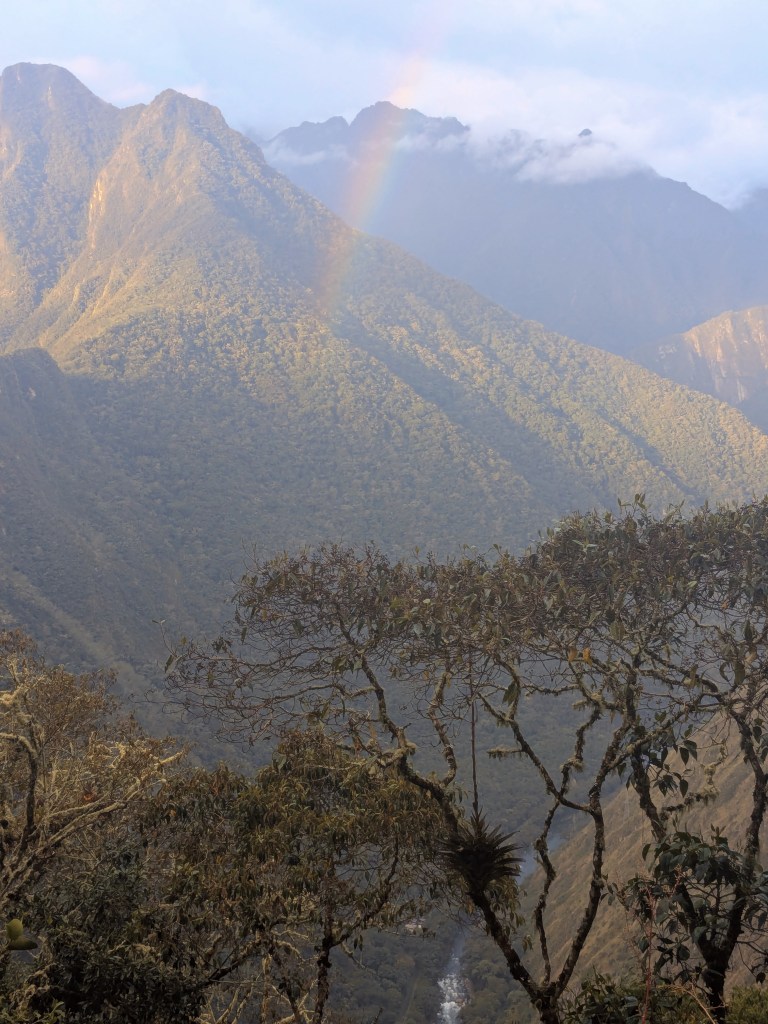
After dinner, we all went to bed pretty immediately in preparation for our 3:30am wake up time.We had a little more of a time crunch this day, I think predominantly because the porters needed to pack everything up and run down and catch a train by 5:30am, but also because we had to go stand in line at the last checkpoint with all the hikers. I have to say Evangelino was so sweet every morning, gently calling “Good morning, Lea, Kerry, I have your tea” and politely ignoring our grunts and chaos. However 3:30am meant a couple things 1. Other groups would be up earlier and 2. so would our porters.
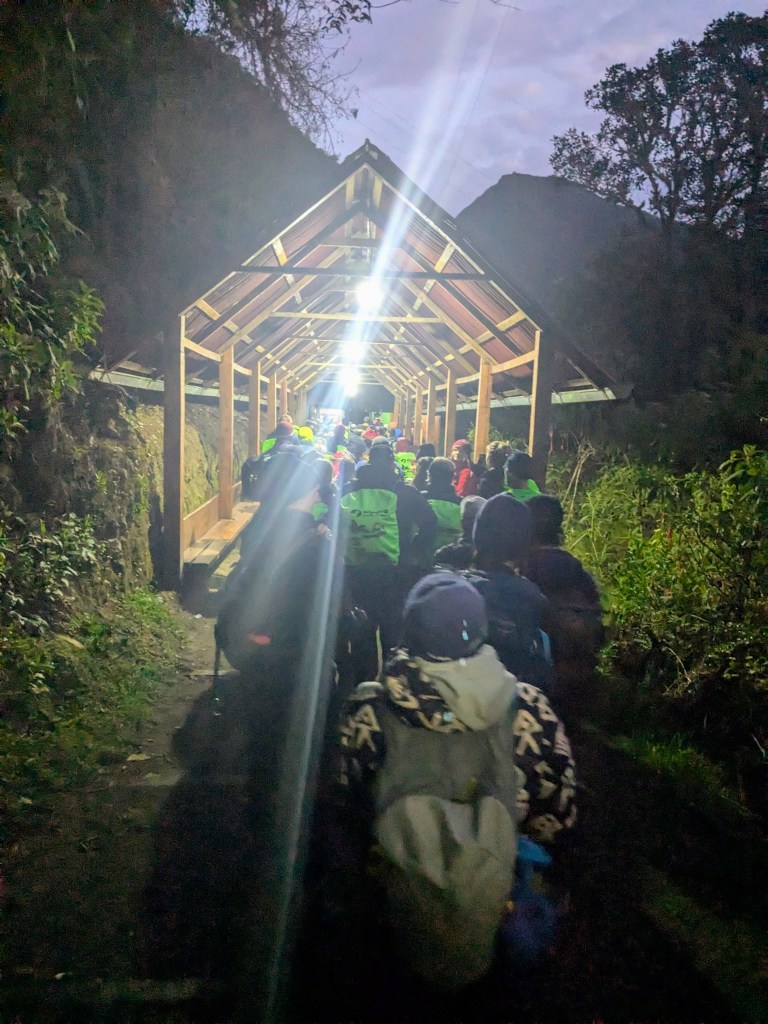
2:30am quickly came and the bustle in the camp meant we were awake. At 3:30 Evangelino brought us coca tea. We were on the trail by 4am with boxed breakfasts in our daypacks. We hiked in the dark for about 15 minutes and then sat in line for about an hour and a half till the checkpoint opened at 5:30. This part remains inexplicable to me, but did it a lot to address my earlier confusion around timing that wasn’t adding up in my head.
We were definitely not the first nor the last group there. And we sat on the ground eating our breakfasts quietly in the dark. By the time the check point actually opened, we really no longer needed the headlamps or extra layers we’d all bundled into. For all that we had to wait for it to open, there was virtually no hold up getting through. It did however mean that all 200 hikers and however many guides were in a tight pack to get to Machu PIcchu. This was also a pretty short hiking day, just 6 km to Machu Picchu.
This day was Inca flat, which seems to means you go up and down constantly over relatively short distances in each direction rather than dramatic climbs. But the major shift was that all 200 hikers + their guides were departing from the exact same place at the exact same time on what is not a narrow trail, but definitely not a wide way. You’re not walking side by side comfortably. It resulted in a very different vibe. Where everyone had previously gone at their own pace, groups tried to stay together, shoelaces went untied and water undrunken. After a mile or so the urgency wore off, although we were still all pretty tightly packed. It was almost a shame because the views were stunning. Rather than through a valley we were hugging a cliffside and heading down which really altered the view. But the pace did not afford opportunities to take a moment and look.
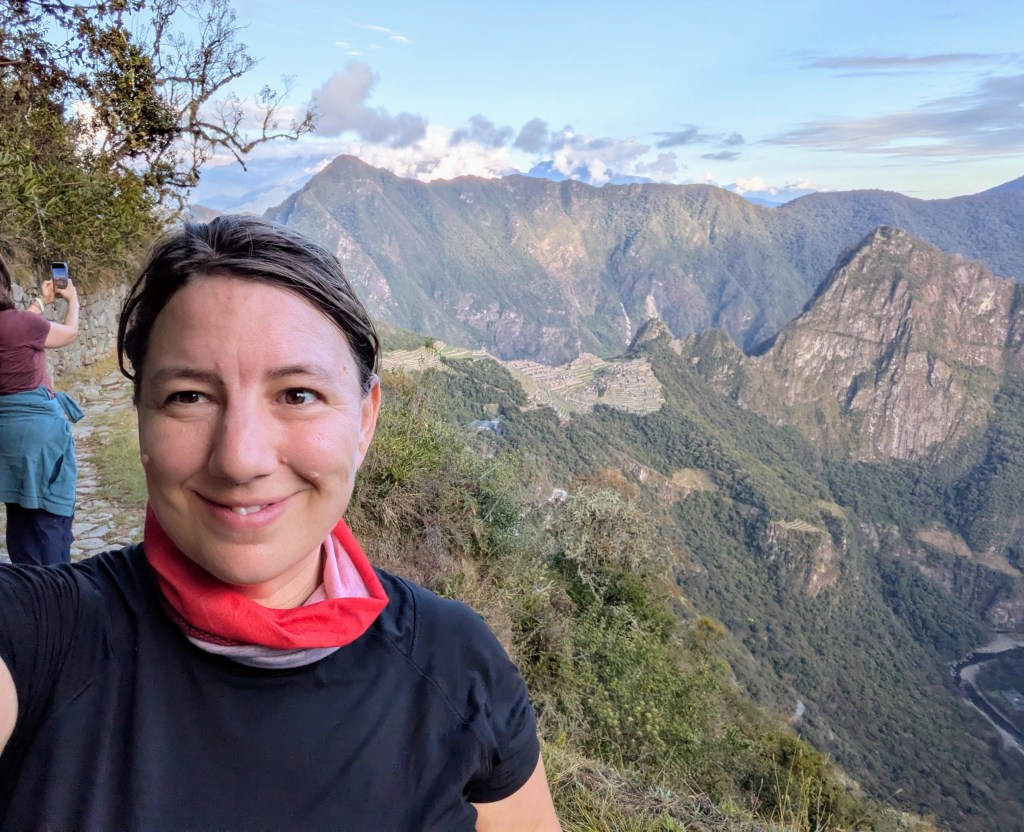
Excitement built as the Sun Gate (Inti Punku) came into view. In many ways, this marks the official start of the Machu Picchu site. A day ticket to the site extends to the hike up to the viewpoint. The Inca used it to control access to Machu Picchu and it bore some astrological significance. But for us, it was our first view of Machu Picchu. Which was really tiny from there. Also it was packed, so we trekked down a little further to have more space. The Sun Gate was a bit underwhelming in that for whatever reason I’d been under the impression that we’d see the first rays of light hit Machu Picchu or somehow be there for sunrise, or just generally something exciting would happen with the sun. This was not the case. But across all the hikers there was a sense of excited camaraderie and a touch of competition. It was pretty cool sharing the experience with all these people who you’d encountered in brief moments, maybe shared a smile or a grimace at stairs, or gasps of shock at the frigidity of the shower.
From that first viewpoint we descended down another 1.5 miles before entering the upper section of Machu Picchu.
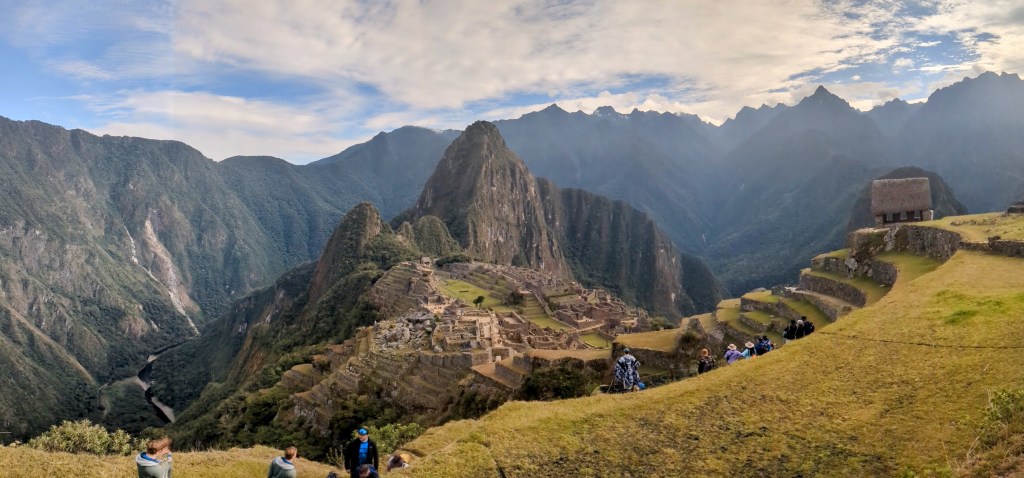
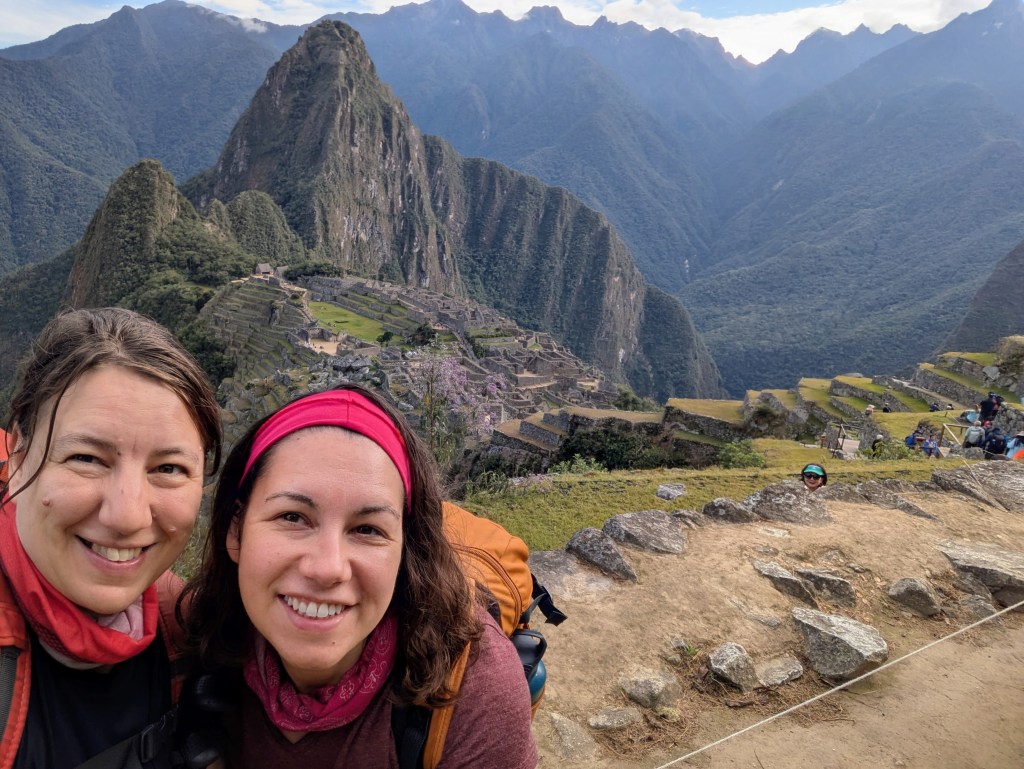
Machu Picchu was initially constructued in the early 1400s at the orders of Emperor Pachacutec as a royal estate. Most estimates place the population around 750 people, largely support staff. This is not a city, but more akin to an English countryside manor (ala Downton Abbey), complete with chapel & religious staff, and an agricultural area. Much like almost all the surrounding sites, it was “discovered” by Hiram Bingham in the 1910s. Embarking from Cusco and funded by Yale, Bingham set out to discover Vilcabamba, the lost Incan capital. He was never to find it. However, by eliciting the support and help of local Quechua people, he did find Machu Picchu and an unbelievable number of other Incan sites. Vilcabamba, the last stronghold of the Inca against the Spanish, wouldn’t be unearthed until 1964 and is only accessible via trekking. A brief note on for those of you who might be wondering- Quechua is actually a language that pre dates and was adopted by the Incan empire, so when people are referred to as Quechua, it describes a larger group united by a common language, nowedays often learned along with Spanish or even as the first language by native communities in this part of the world.
I have to admit, I had been so focused on the hike and then so enchanted by the sites along the way that I hadn’t actually given much thought to Machu Picchu. And it has never been some of kind of pie in the sky dream for me, like I’m not sure I would’ve gone without the hike and certainly the hike was beautiful regardless. But you sit above and it’s almost like a bowl of mountains cradling this one mountain that houses Machu Picchu and it is quite simply breath taking.
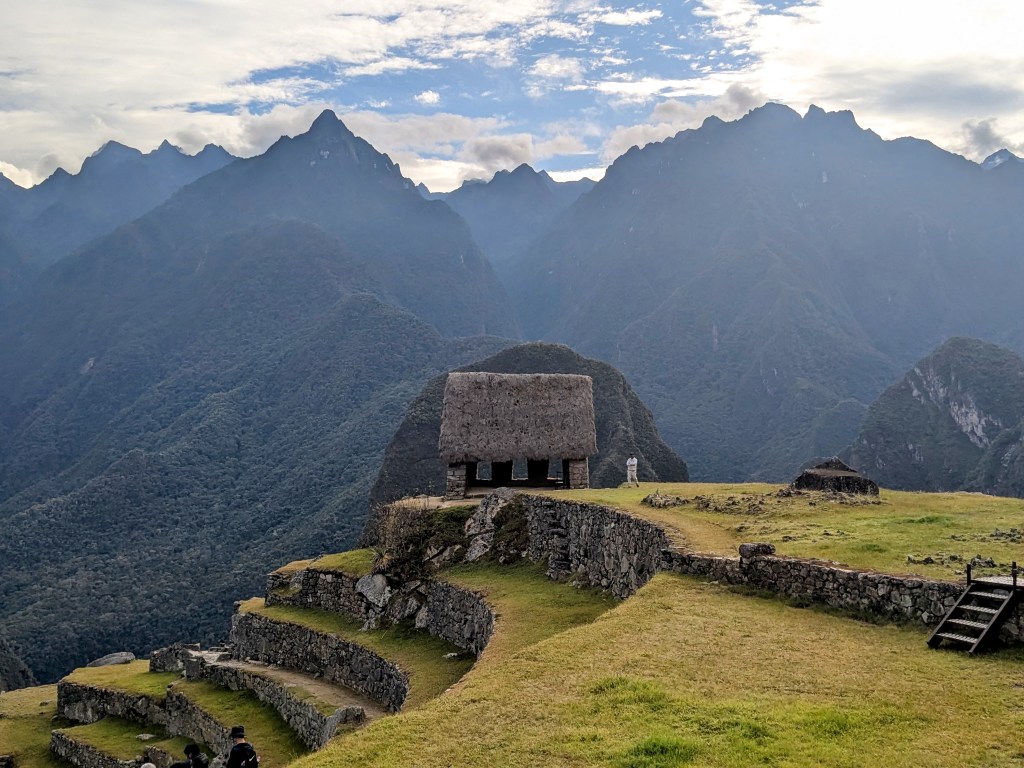
You begin up high in one part of the agricultural terraces. It’s an excellent viewpoint for pictures and to marvel at the mountains around. Apparently when Bingham arrived some locals were living thatched roof huts that dotted the upper areas. A number of were in dire need of the restroom at this point, so we clamored down more steps and walkways and new kinds of more modern steps before passing out of the checkpoint to the commercial part of the site, featuring restrooms, shops, a restaurant and a 5 star hotel just a few steps away. It was a bit jarring to be around such a crowd so suddenly and so dirty. But the toilet. Oh my god, what a lovely toilet that was.
I cannot emphasize the intense and wild beauty of the site sufficiently. There really didn’t need to be a massive and well preserved ruin for this to be a stunning location.

After having taken care of the basics (the German boys pounded beers), we trekked back into the site for our official tour. I felt a bit like a child as Frank handed out things like our entry tickets as required and not a moment before. First we went back up part of the way we came to go through the urban section. Almost immediately there was a perfectly posed llama. A live one. I’m unclear on how they got him to do this, but clearly he felt it was worth his while cause he stayed there quite some time.
Most Incan structure are made of a stone called andesite, a dense volcanic rock, and granite. The Inca were able to quarry both locally and the seismic activity of the area actually made access to both stones much better. The Inca, like the Egyptians & Greek, used ashlar masonry which is a technique of cutting and honing each individual stone to fit precisely in place without the need for mortar. The Incas were so adept at this practice that not even a blade can slide through. One added benefit of this masonry was that in this earthquake prone zone, it allowed stones to move without breaking or dislodgeing. Some structures employed further earthquake resistant strategies, such as trapezoidal windows, inward leaning walls, and elaborate drainage systems under buildings.
The Inca were incredible engineers of water systems with narrow, small aqueducts running through out the city, supplying many, if not all, homes with a direct source of water.
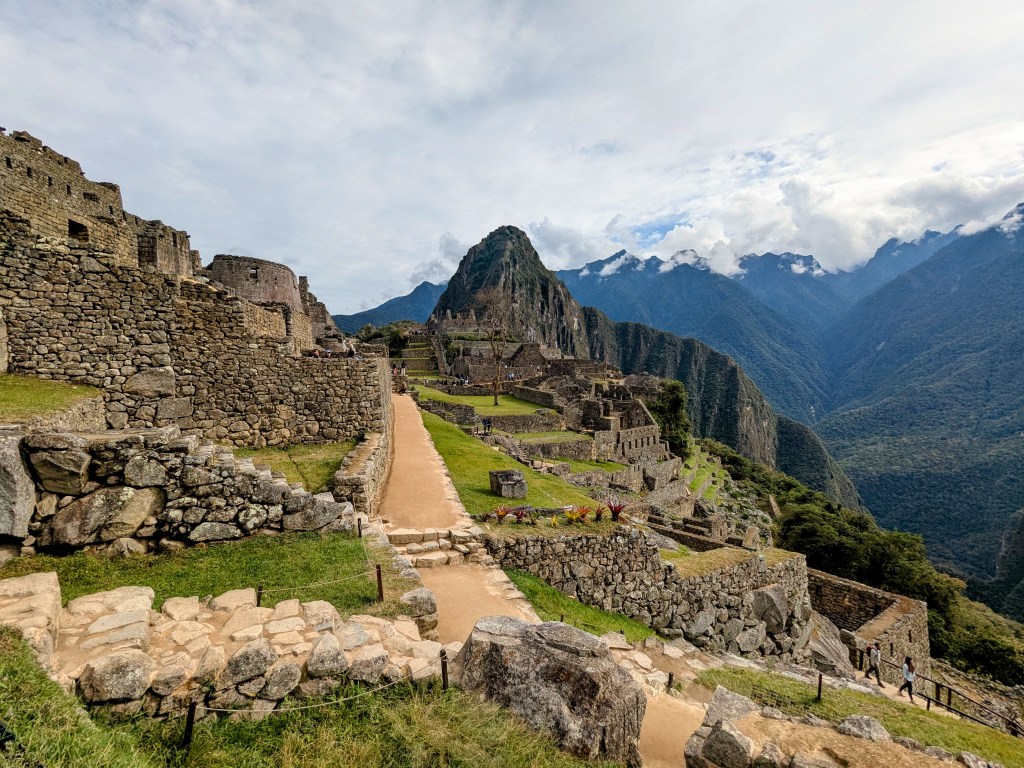
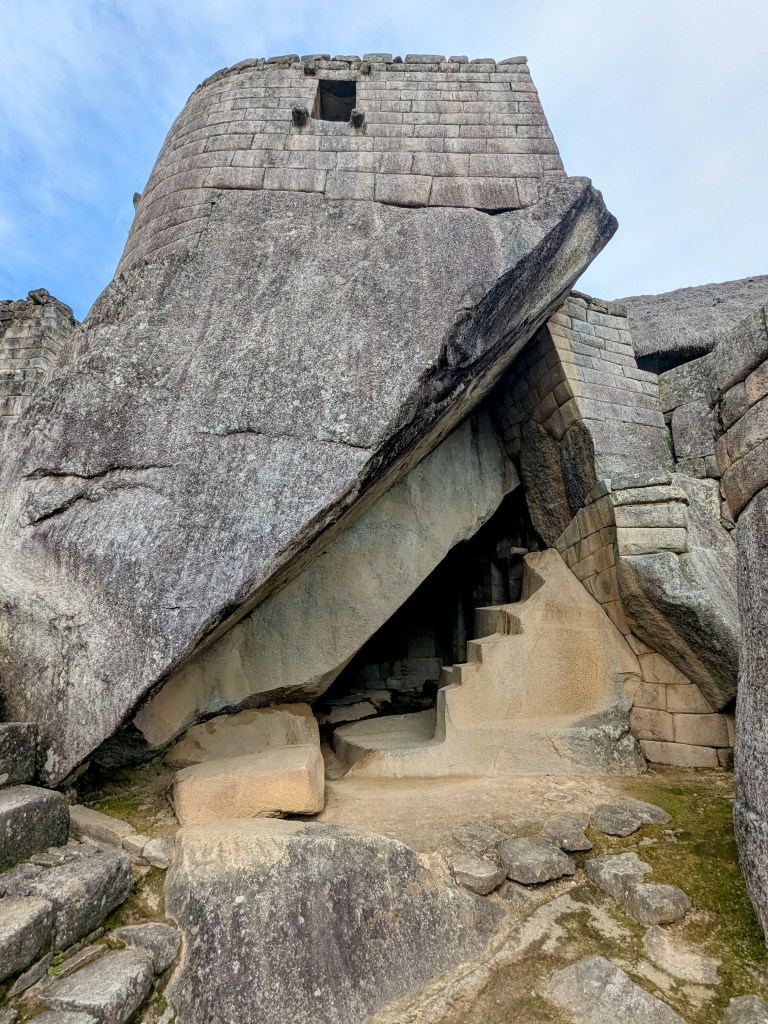
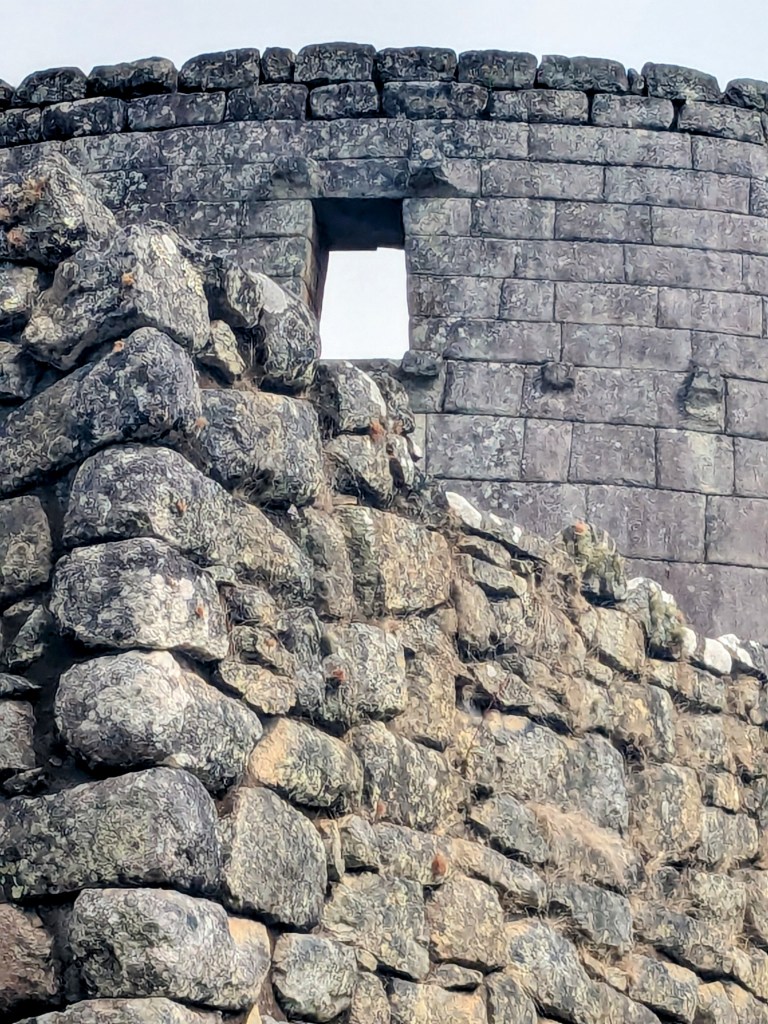
The Temple of the Sun served both astronomical and religious purposes, the site of prayer and sacrifice. The Inca engaged in both animal and human sacrifice, the former of which exclusively involving black llamas (I did not see a single black llama), the latter is a bit more interesting. Children were selected for looks, regardless of gender, with the belief that only the best and purest could be given to the Gods. It was considered an honor and most frequently they were children of nobles seeking to curry favor with the emporer. They were brought to highly sacred areas, like Machu Picchu, and attended school. Some would be chosen as priestesses or priests, some would be sacrificed, and some of the girls offered as concubines or second wives to the noblesse.
The Inca had divided their empire into 4 regions and annually each region would produce their sacrifice in Cusco. After ceremonial consecration there, the regiment would trek back to their home. Near the highest peak, the sacrificial would be given psychedlic drugs and other intoxicants to ideally slip peacefully into their resting place to serve as an eternal link between the Inca and their gods.
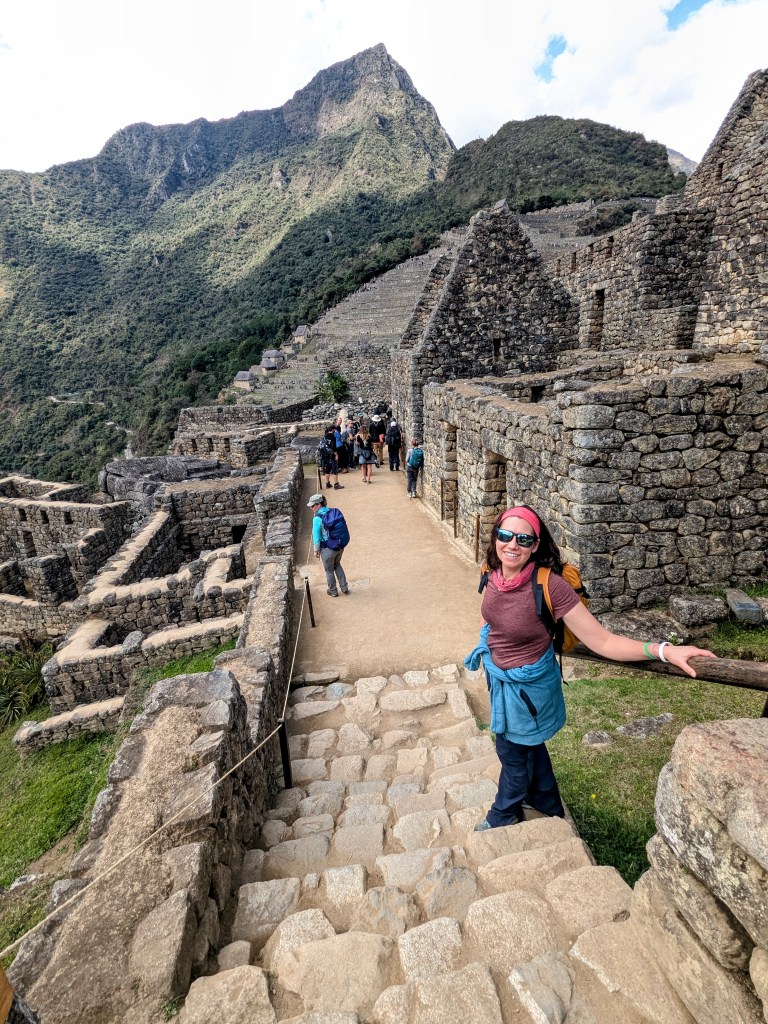
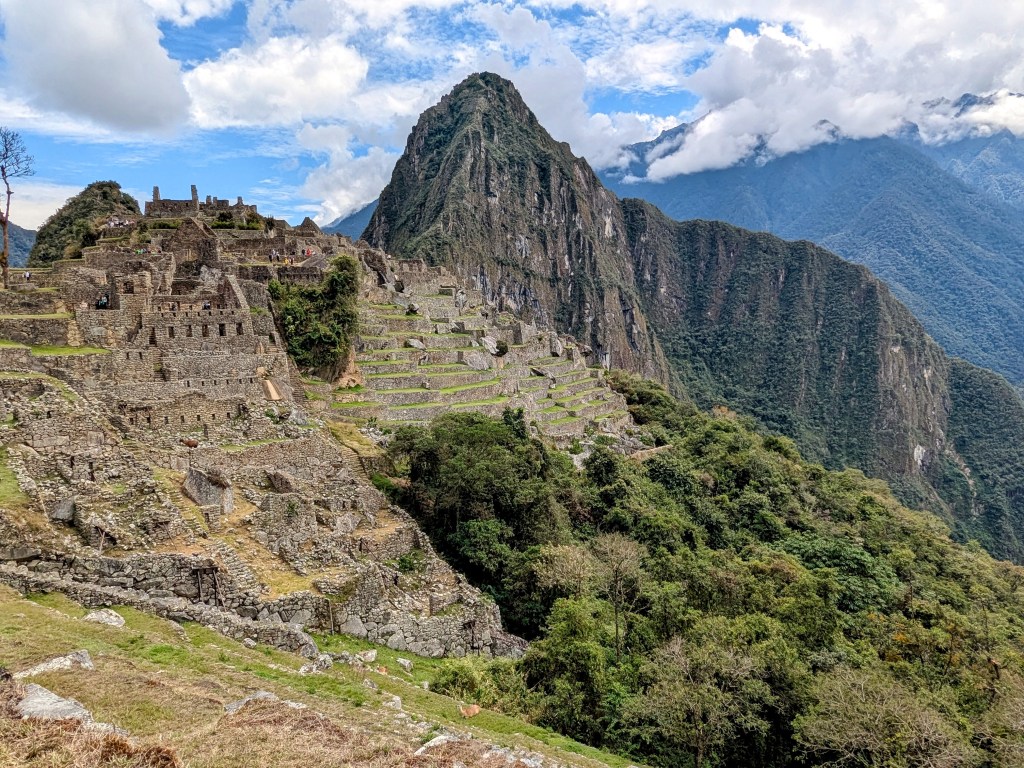
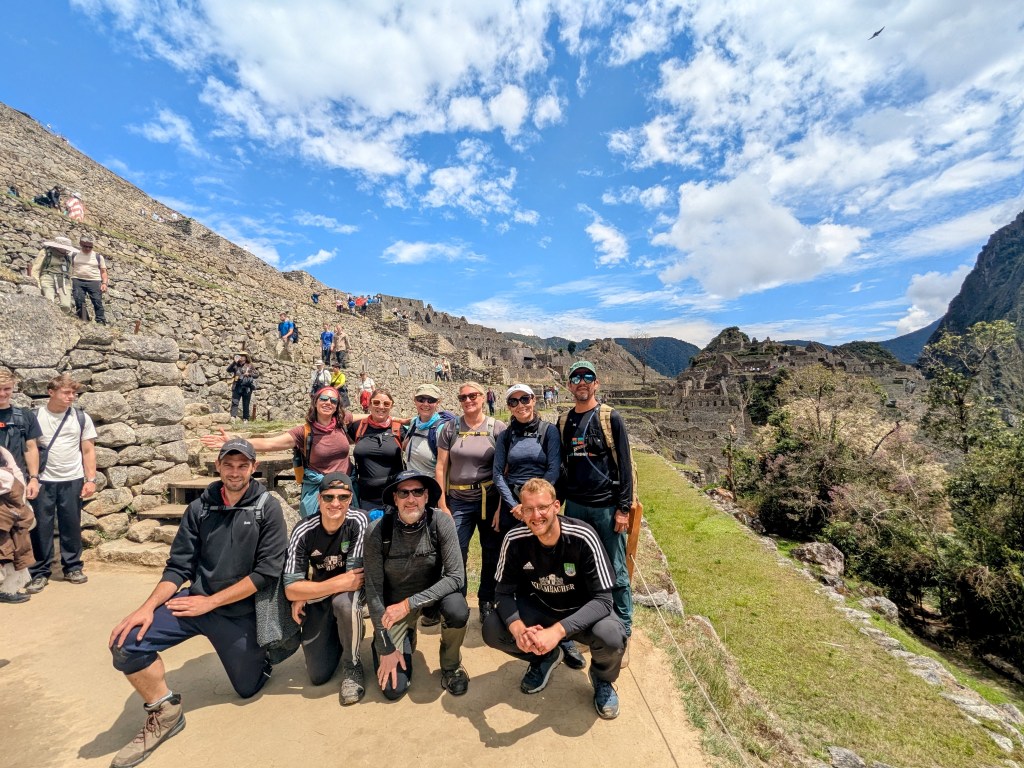
Our tour lasted two or three hours and I had definitely started to fade well before that. Wrapping things up, we climbed into buses to head down the hill to the town of Aguas Calientes for lunch and to catch the train. No cars are allowed up the mountain, and it’s probably a good thing, cause it was a kinda narrow, definitely windy road down. But it was also a proper seat, with a back! The group of us lunched at a reasonably nice restaurant with a solid maracuyá pisco. We still had several hours to kill before our train left and Lea and I had planned on investigating the hot springs there. So we walked through town, passing a charming church, and starting follow the road up the hill. It started to rain. After a bit we paused and asked about how much further. Seven minutes we were told. After at least 7 minutes later, we asked again. Seven minutes we were told. After much more than an additional 7 minutes we finally arrived at the entry point to the hot springs, where we saw a road continuing up past the ticket office. After paying, we inquired once more “How far to the springs” and once again we were told “Just 7 more minutes”. Ok, this one I actually think was reasonably accurate.
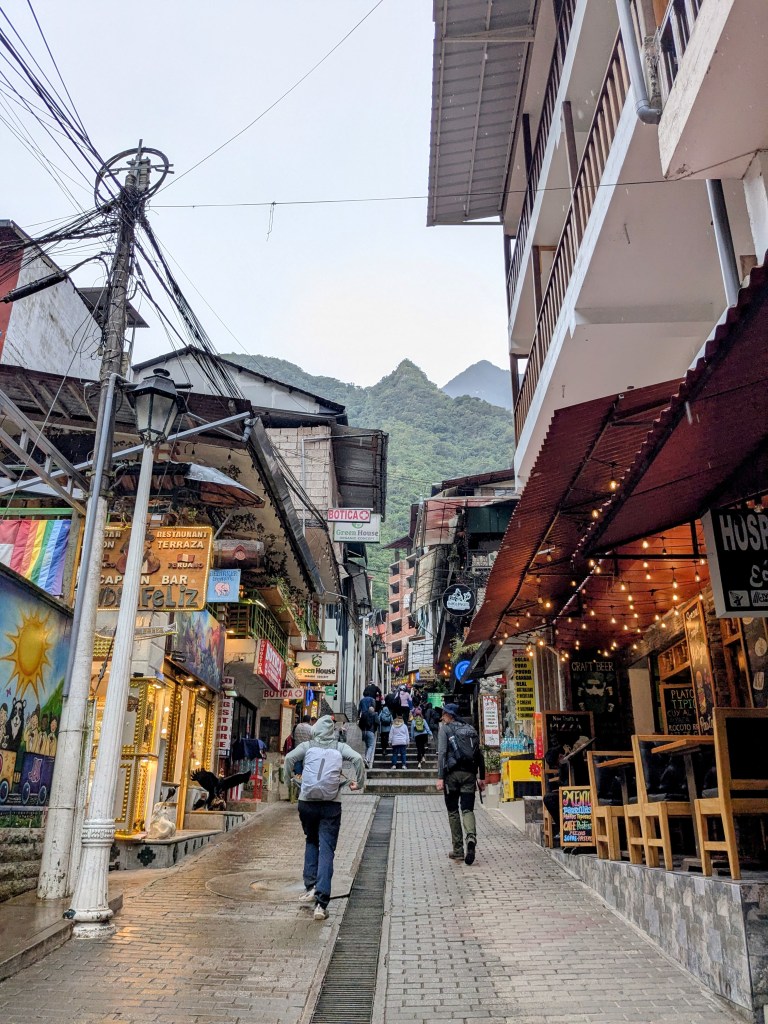
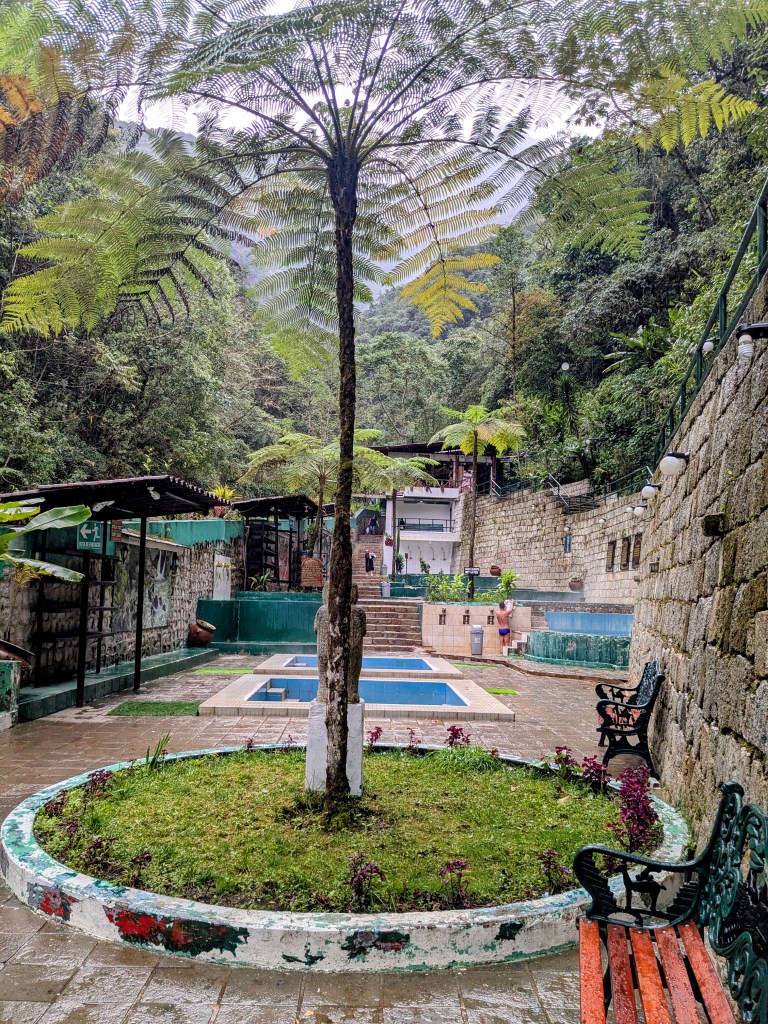
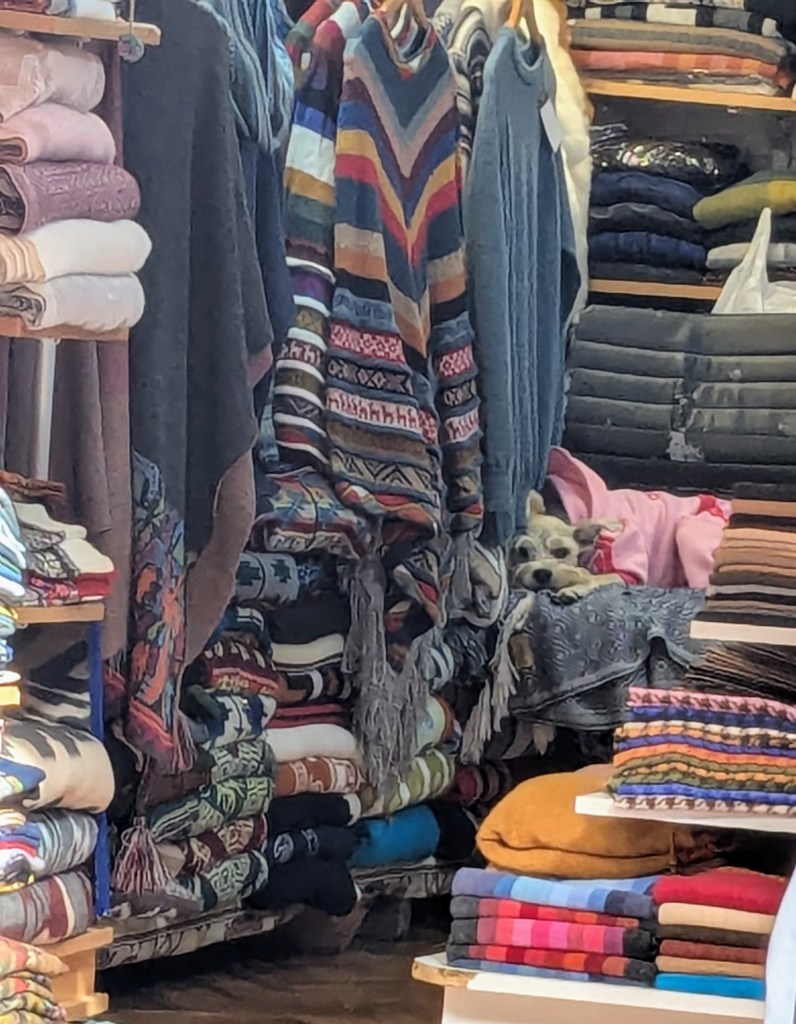
The hot springs were warmish and underwhelming, with less than clear water that you told yourself repeatedly was most definitely healthy mineral content. But it was nice way to pass the time. We were joined by the Swedish couple and chatted a bit and the rainfall was actually a welcome contrast. On the trek back down, we grabbed a coffee and encountered an adorable clothed dog who slept on the textile wares of a tourist trap. Then we waited at the train station awhile.
The train was charmingly old school, with viewing windows overhead as well as to the side. Each table had 4 seats sitting around . We were treated to a musical event and a fashion show, which actually featured some gorgeous pieces, although at prohibitively high prices. It should be noted that nearly all visitors to Machu Picchu arrive and depart via this train.

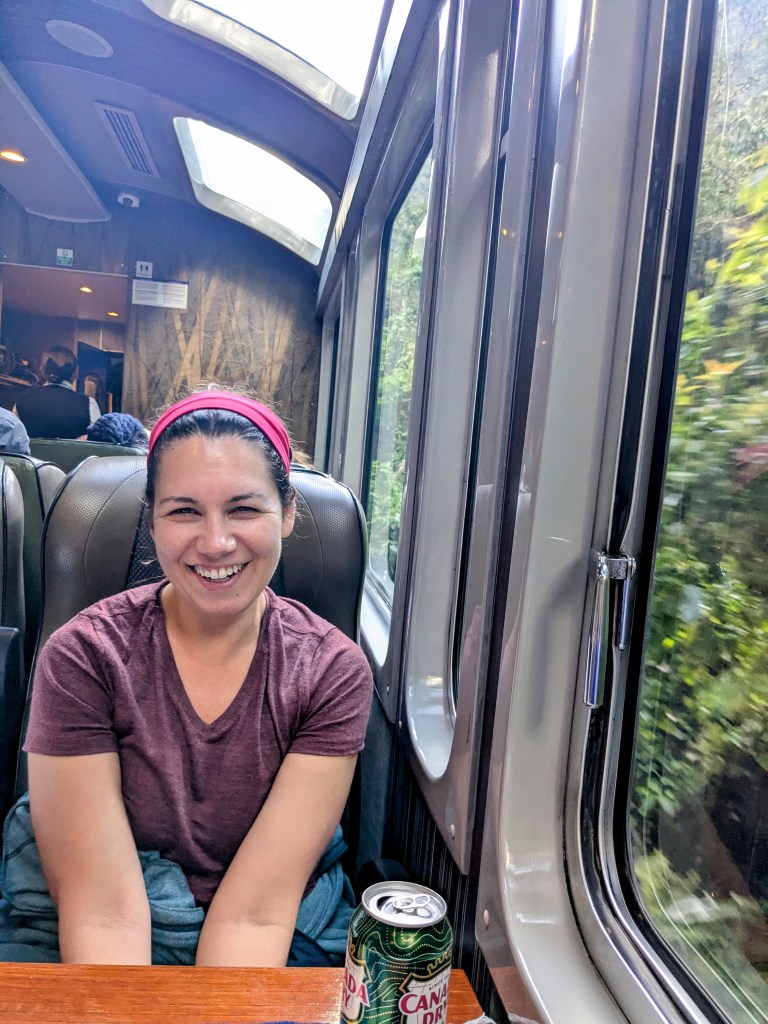
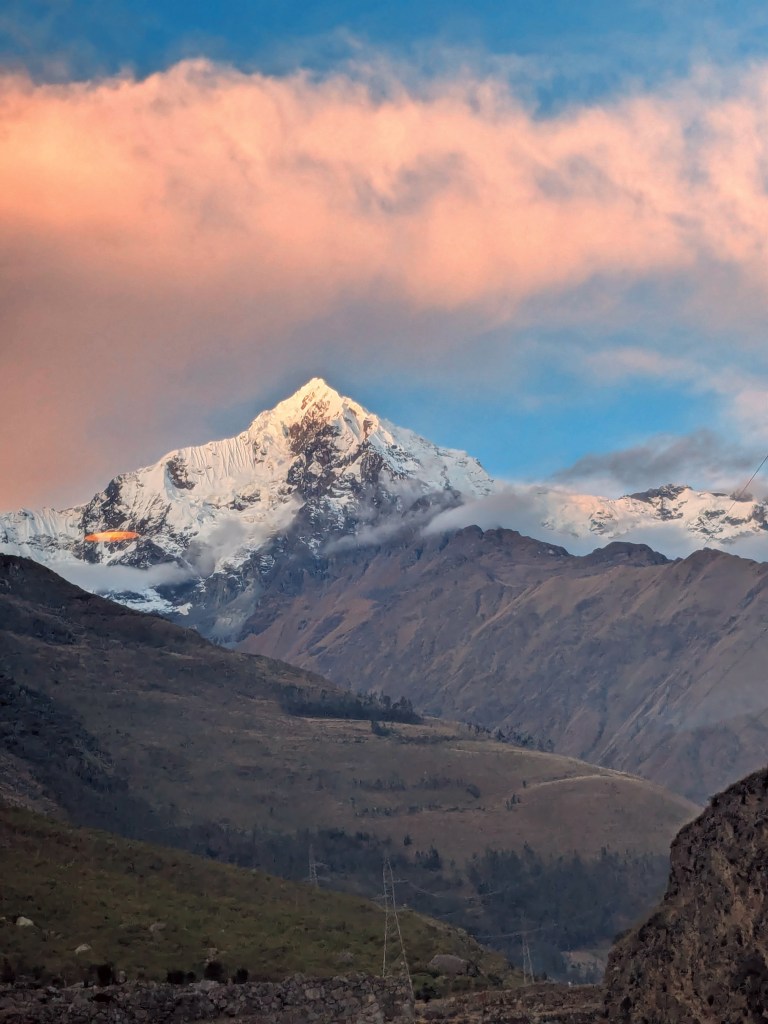
The train left at 4:28pm and was really slow. And while it was a beautiful train ride, cruising through the valley with the Urubamba river at our side, so peaceful and unspoilt, I was quite ready to be back in Ollantaytambo to hop in the van for the long drive back to Cusco.
By the time we pulled into Ollantaytambo it was dark, but the scene was chaotic! Everyone is exiting the train, more folks are getting on the train and for whatever reason they placed the artisan market in the middle of this. Evangelino was there to grab us all and shove us in a van in some haste in an attempt to beat traffic. But somehow we lost the German boys. We found one, then another and finally the third showed up having stopped to buy a beer. This is when Lea got cranky. It should be stated in no uncertain terms that Lea is both less judgmental and less cranky than me, but that beer and the subsequent music they played, and whoever the hell used the vape in the van, combined with a 2:30am wake up call, broke her and she whispered to me in fierce and furious tones all the evil she could impute to these certainly not very considerate German boys.
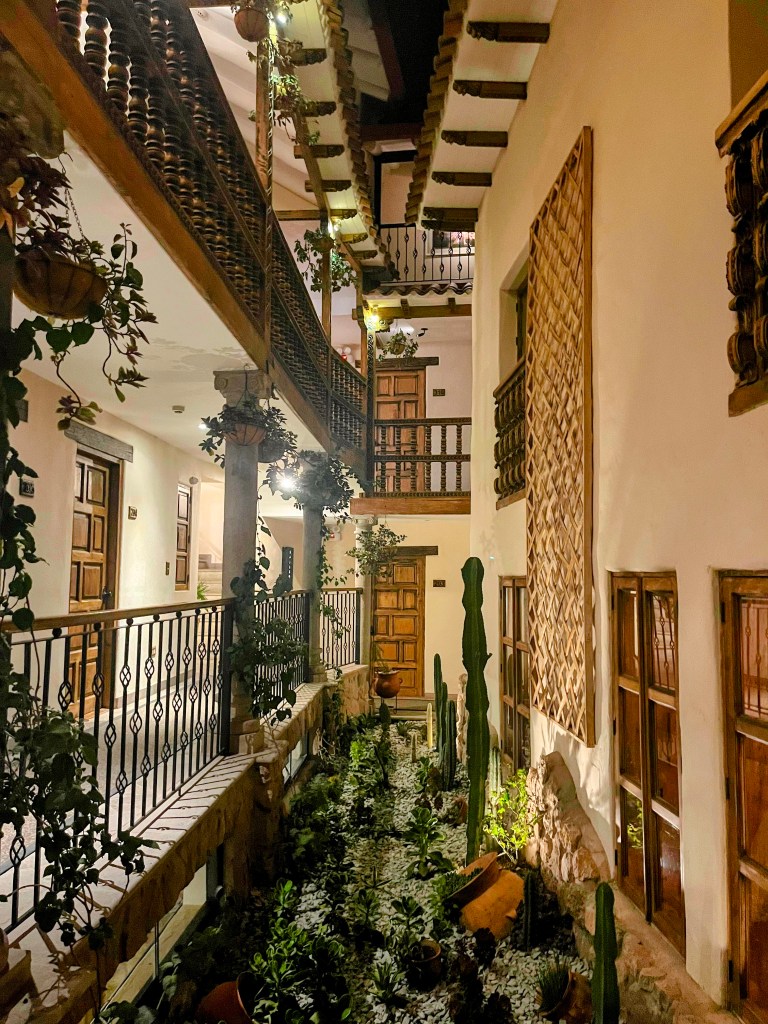
We finally rolled into Cusco about 2 hours later, maybe around 8:30pm, dirty, tired and irritated with EDM music. Lea and I were then taxied to our very lovely, somewhat fancy hotel, Casona Antigua San Blas (everyone should stay there). Upon our arrival, a gentlemen sprinted out to grab our bags and escort us to the front desk where we were immediately handed hot towels. We looked at each and began laughing with collective joy. The staff proceeded to validate our every experience, telling us how strong we were nd how hard the Inca Trail trek is, assuring that these were the last stairs we had to climb, while they struggled with all our luggage. The room in which we found ourselves was a loft with one bed upstairs and one downstairs. And a fucking fantastic shower with no regard for water waste.
We grabbed a late dinner and drink and crashed early and deeply.
Our flight the next day was quite early, so we’d set alarms which turned about to be extra useful since I then discovered I had not received all my belongings from Trex Experience. After a whirlwind in which Lea spanished logistics and I raided the buffet, we found ourselves in an Uber headed to the office where we banged on doors and buzzed alarms until I was finally reunited with my things and we made it to the airport in good time. Because it was the morning of mishaps, I also accidentally shoved (and then promptly forgot) my external battery into my checked luggage. In case you didn’t know, this is a no no. The upshot was that I once again leaned on Lea’s Spanish and abandoned my battery. But then we were aloft en route to Santiago.
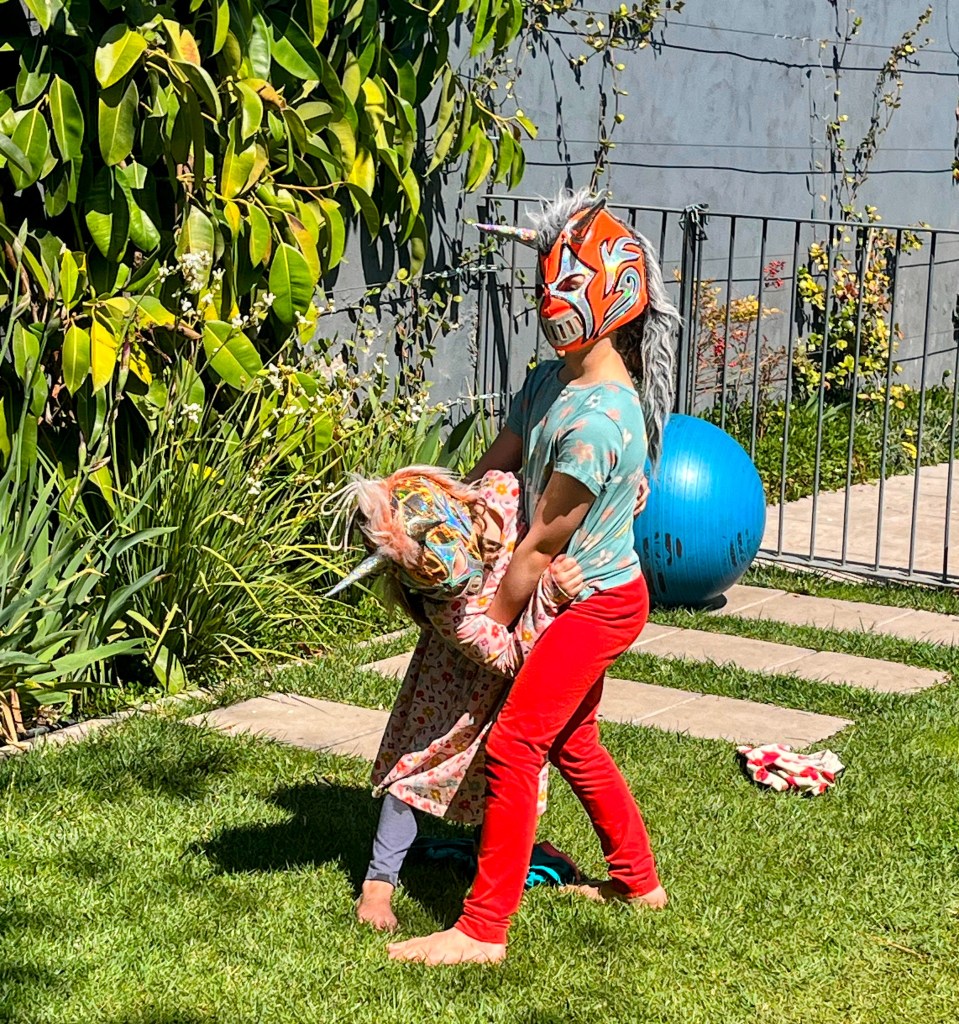
Mono & the girls collected us from the airport. This was a very nice, very family week. Lea’s kiddos are at such fun, interactive ages and the lucha masks went over very well. Their home is in an area of town called Ñuñoa, which is a neighborhood kinda hood, but still very much in the city. And you’re just immediately immersed into their life. It’s really very warming. I also know a lot of the songs from K Pop Demonhunters now. In English and Spanish. And I’ve definitely seen the movie. It also happens to be a beautiful time to be in Santiago. It’s their spring and skies are clear, the Andes are out (I realize it’s supposed to be a Northwest thing, but Santiago could totally swing “mountains are out”, albeit in plural). Extra bonus, Lea’s parents arrived late Wednesday, so I got to see my aunt and uncle.
It also happened to be the week of Chilean Independence Day, which I actually had experienced before. In celebration, which always require 2 days off work, neighborhoods put on fondas, which are kinda like fairs, except there are a bunch in one city and you can just wander about with the alcohol. In particular, the terremoto. This cleverly little named staple of Chilean Independence features pisco, white wine, grenadine and pineapple sorbet. You typically purchase these in reusable cups and can get a discount on your second, or third, or fourth, by presenting said cup. A terremoto is an earthquake. The second of these beverages you imbibe is called a replica, or aftershock. I’ve done it before, but never again.
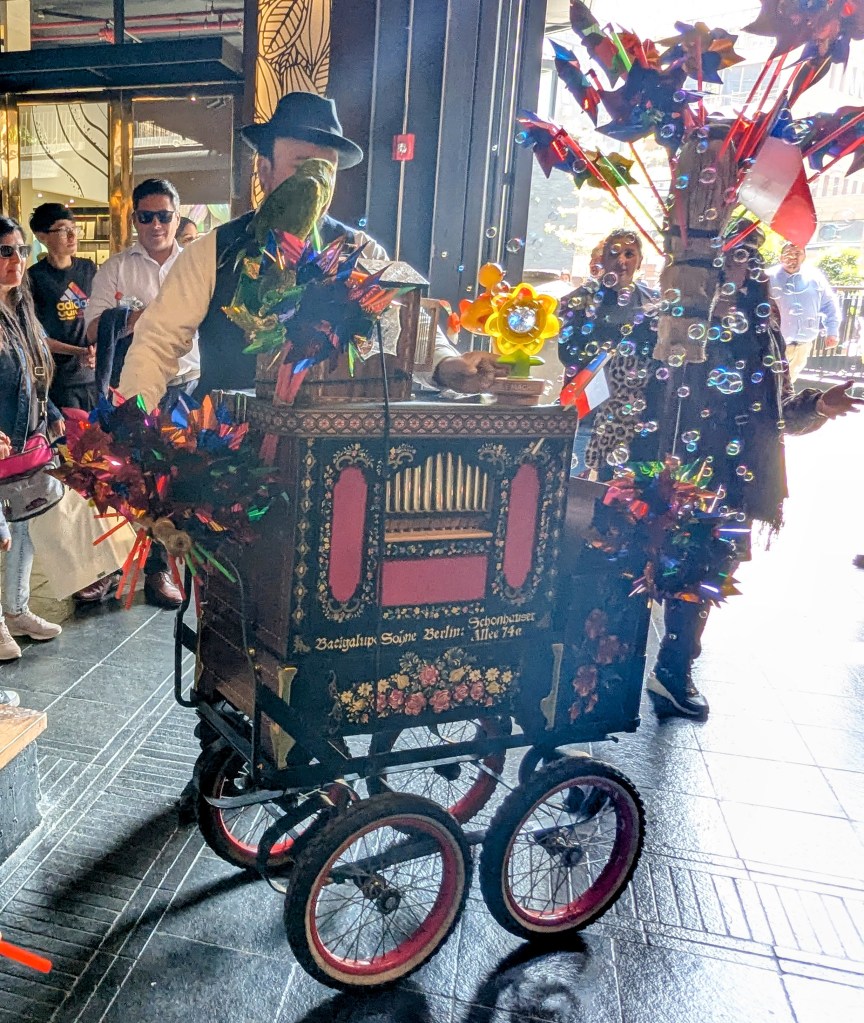
The fondas feature rides, a rodeo, exactly what you expect from food vendors, some quasi cultural dances, music and chincheros who play portable organs, generally wear hats, have birds, pinwheels and bubbles. We had a hyper intense moment when the girls were in the bouncy house enclosure, featuring maybe 10 bouncy houses (ok did everyone know these are called moon bounces on the east coast?!! And less romanticably, inflables in Spanish) had a power outage that caused all bouncy houses to immediately begin deflating. The staff had clearly trained for this and rapidly exited all children from the structures before panicking parents could invade them. Both girls escaped quickly and completely unharmed, though the oldest had a few qualms post event.
Lea and Mono hosted a big asada on Friday with a number of their friends, many of whom I’d met before, and I got a few Latino punk band recommendations off a teenager wearing a Nirvana hoodie which actually seems like probably the most credible source of information on this front.
The week passed very quickly. And I was ready to go. It was delightful being there and seeing family and seeing their life, but the domesticity, the hosting of events, the deep sense of belonging and place was in hard contrast to my current, albeit chosen, uncertainty. And I missed my dog.
And now I’ve been back a week and you have this far too lengthy and long delayed post.

 Year One Project
Leave a reply to Anonymous Cancel reply