He is timeless and consequently there is no date on this one. With one quick trip, I am now a Gaudi junkie. His work feels like what we should all aspire to, why live any other way than surrounded by beauty and whimsy?
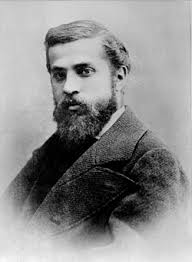
Antoni Gaudi was born in Catalonia in a coastal town south of Barcelona in 1852. He was the youngest of 5 children and the only one to survive past 35, a bit ironic as he suffered from rheutism and chronic bad health in his youth. He was a vegetarian with a deep interest in nature, utopian socialism and God. I suspect one might consider him a Jesus following Christian.
Over and over I heard this man described as religious, hard working, and reserved. And I don’t understand how. Like his imagination was too big to allow for words or human connection? All he ever did was read Alice in Wonderland and no one wanted to hang out with him consequently? Honestly, I know people who have been to Barcelona and I’m extremely unclear on how this isn’t the only thing you talked about for like a year. Gaudi is revolutionary architect and a critical figure in the modernisme movement.
His first project as an architect was a lamppost. It was a good lamppost.
The majority of his works are in Barcelona, which has made a concerted effort to elevate Gaudi’s reputation, justifiably in my humble opinion. Heidi and I were able to check out three and pass by a 4th. But even more than that, we saw the influence he exerted in other buildings use of whimsy, mosaic and general flights of fancy. Building as art.
Parc Güell sits on a hill in the Gracia neighborhood offering stunning views of the city. Gaudi was commissioned by Eusebi Guell to design a nature based high end housing estate for the elite in 1900. He designed roads and community spaces, walkways and water features. The housing project flopped, but left behind an amazing park.
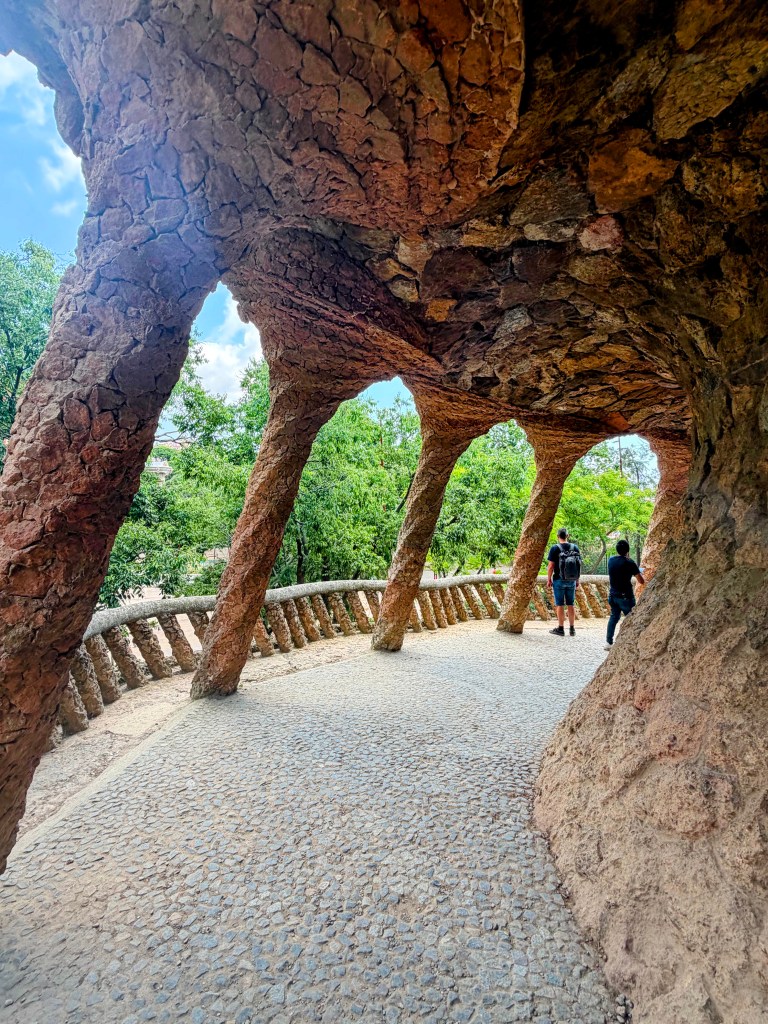
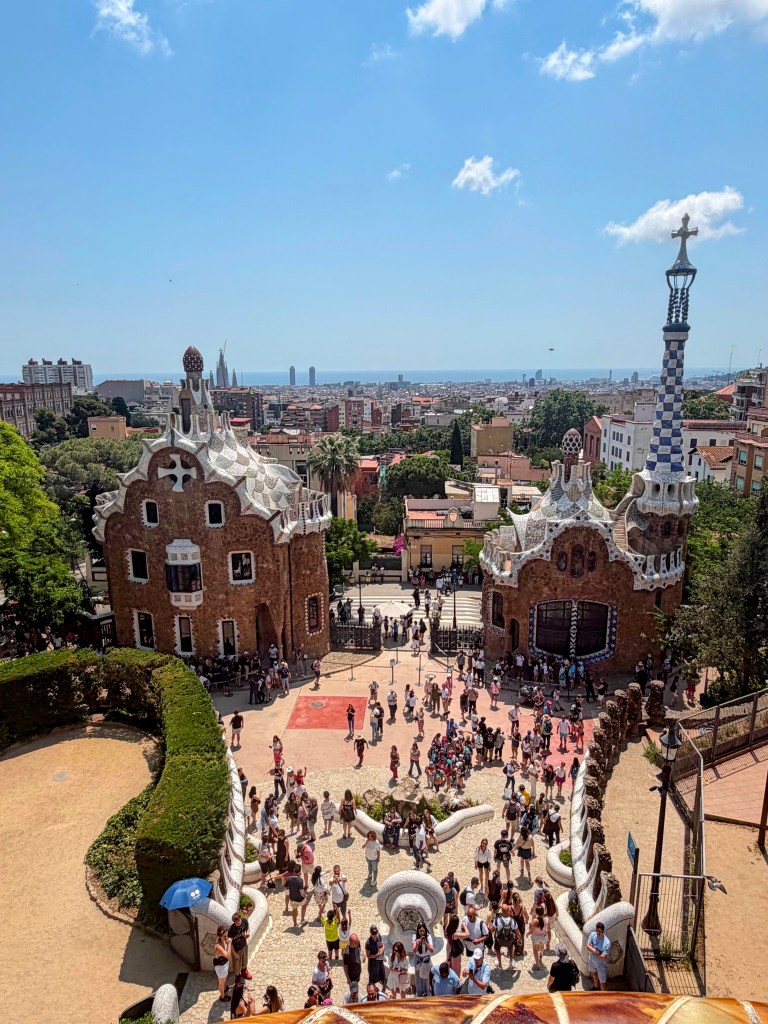
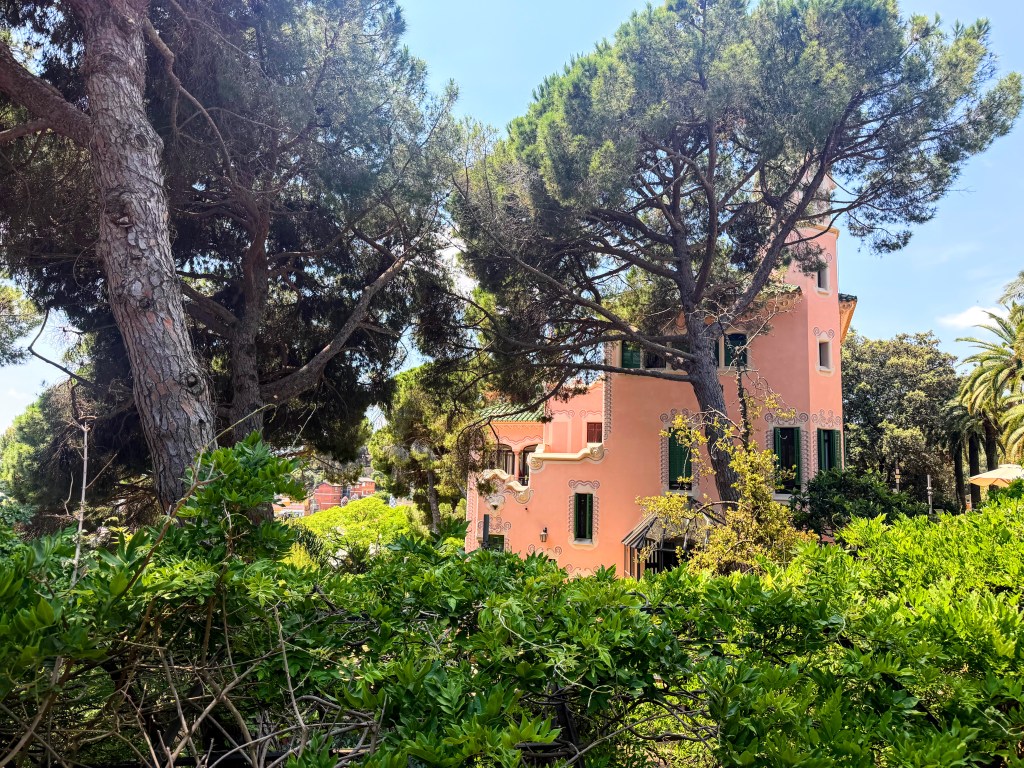
The park covers about 47 acres, winding down the hill with the 30 acres being in the “monumental zone” toward the bottom. It would be ideal to walk early in the morning on a crisp spring day, before the crowds. But alas, we were there at noon on a weekend. So it was hot and it was crowded.
We had the fortune of being dropped off at the Carmel entrance which sits a little up the hill and while crowded for a park, lacks the intesity herd-of-sheep effect of the Mosaic dragon and terrace But it starts off peacefully enough. In nature, with these stone walkway constructions winding about you, creating arches and mystery.
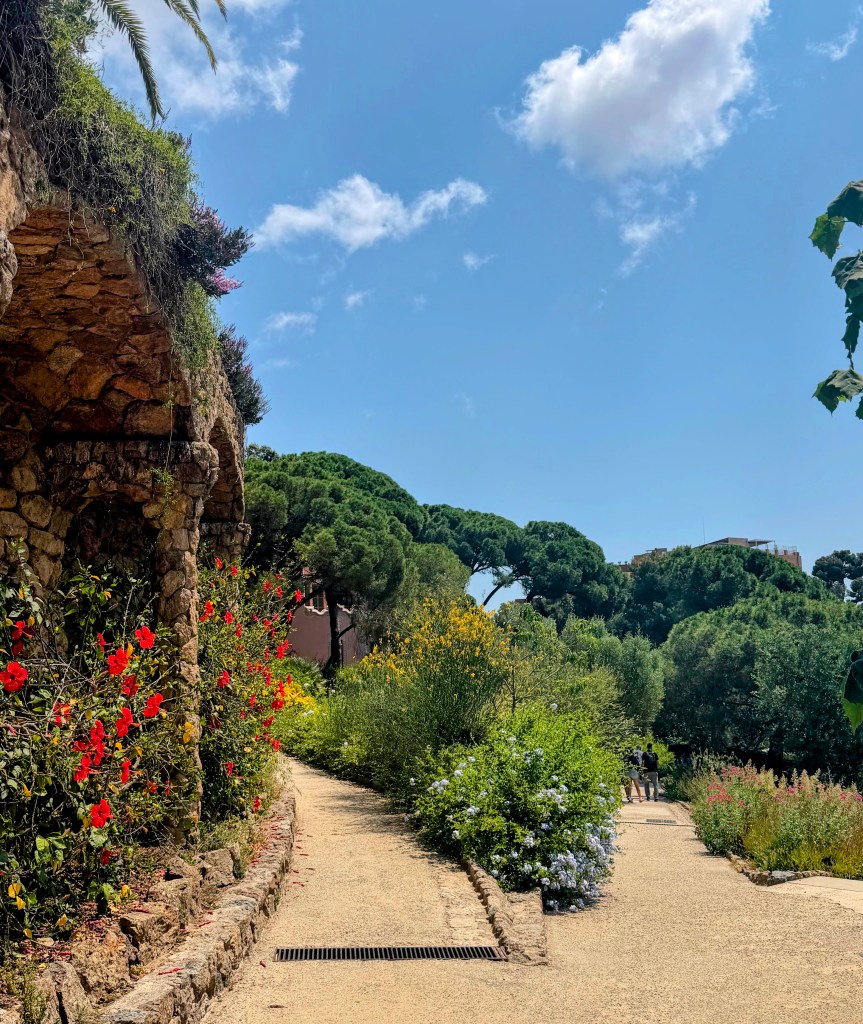
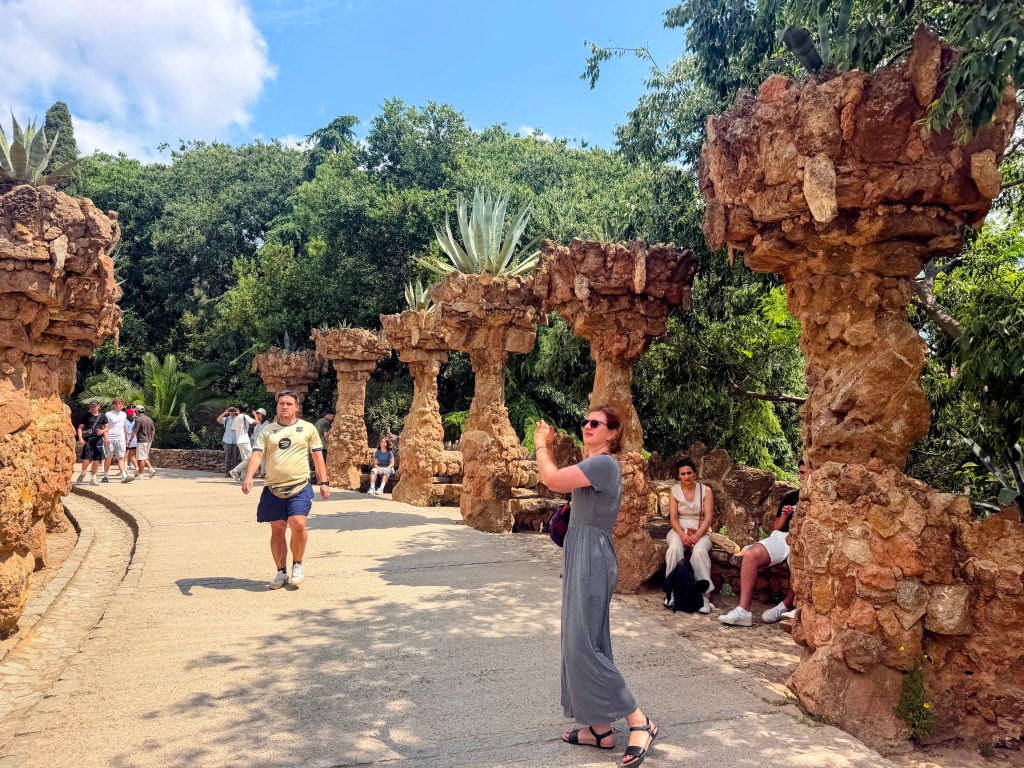
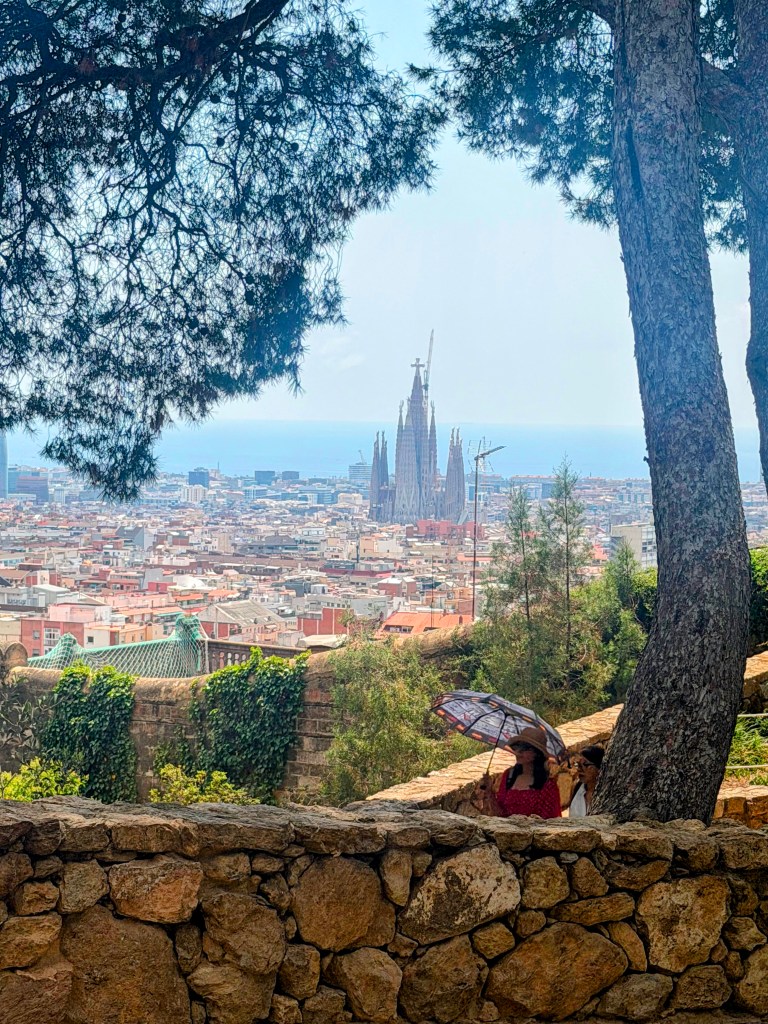
This man has a knack for somehow blending nature and absolutely outrageous architecture. There’s nothing subtle about his design, but somehow it’s deeply harmonious with its surroundings. We meandered through this upper area on paved walkways, the plants in this part are minimally curated at best, so you have pine trees, mimosas, olives, and magnolia with vines climbing their trunks. We found an ancient looking wisteria that was sadly not in bloom. The sun was hot overhead, so we started heading downward encountering rosemary and lavendar, fan palms and the occassional agave. And of course bourgainvillea. And we caught our first glimpse of Sagrada Familia
We saw it from afar over and over and over, always with a crane looming over it. As you can tell, it’s head and shoulders above neighboring buildings. It was likely circling a potential lover, you’d spy through new angles and different times of day, dancing around it, in the end I’m glad we went the final full day we had.
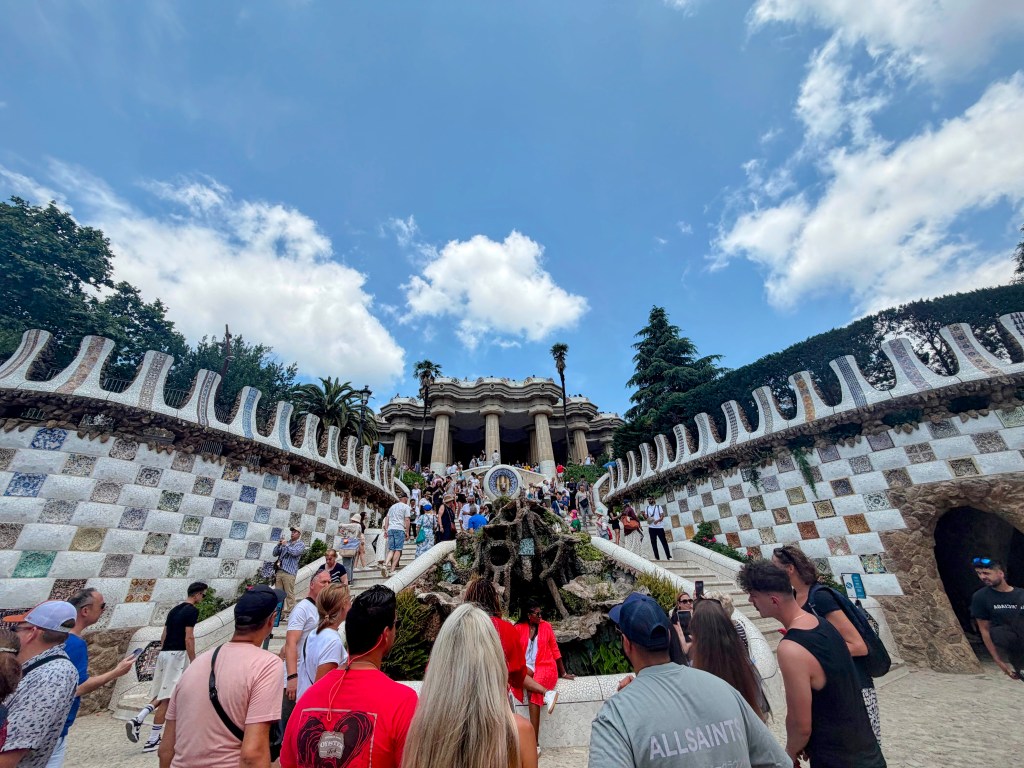
At the lowest and most popular entrace of Parc Guell, you are immediately in the thick of it and are confronted with the Dragon Stairway, which is guarded by a mosaic dragon that bears a closer resemblance to a salamander. This needs to be full size and represents my absolute best attempt at getting not too many people in the photo, and honestly given the crowd, I actually think this represents success. Having been in Florence immediately prior, I was much more inured to the crowds than Heidi. So we escaped up the staircase pretty quickly.
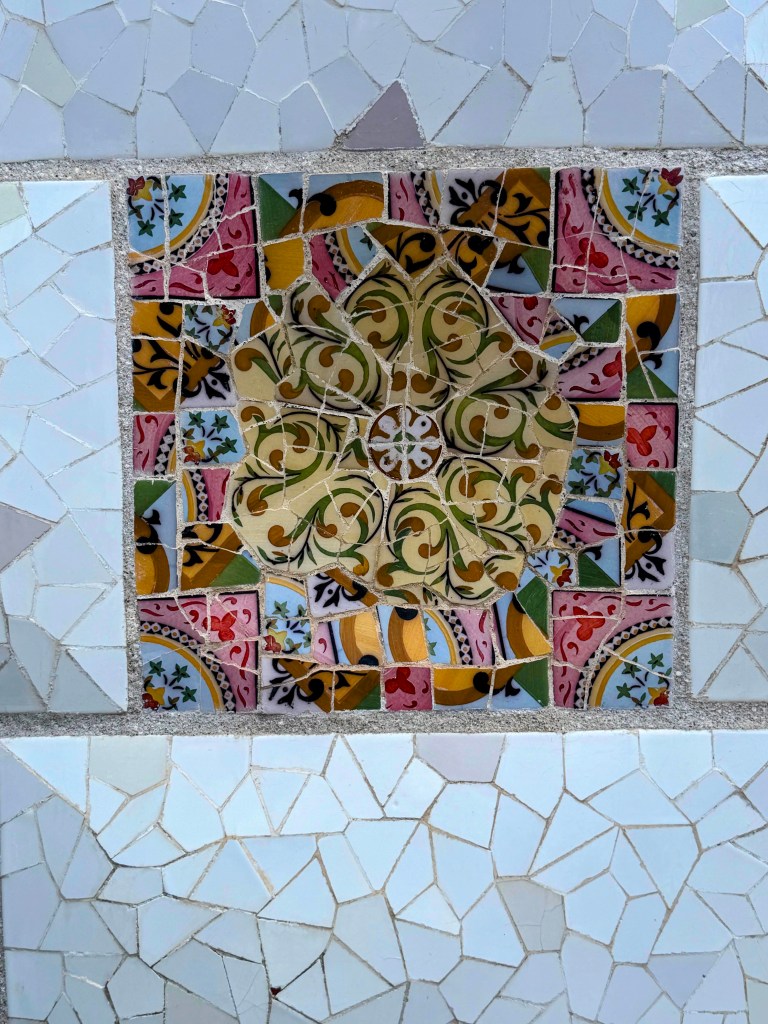
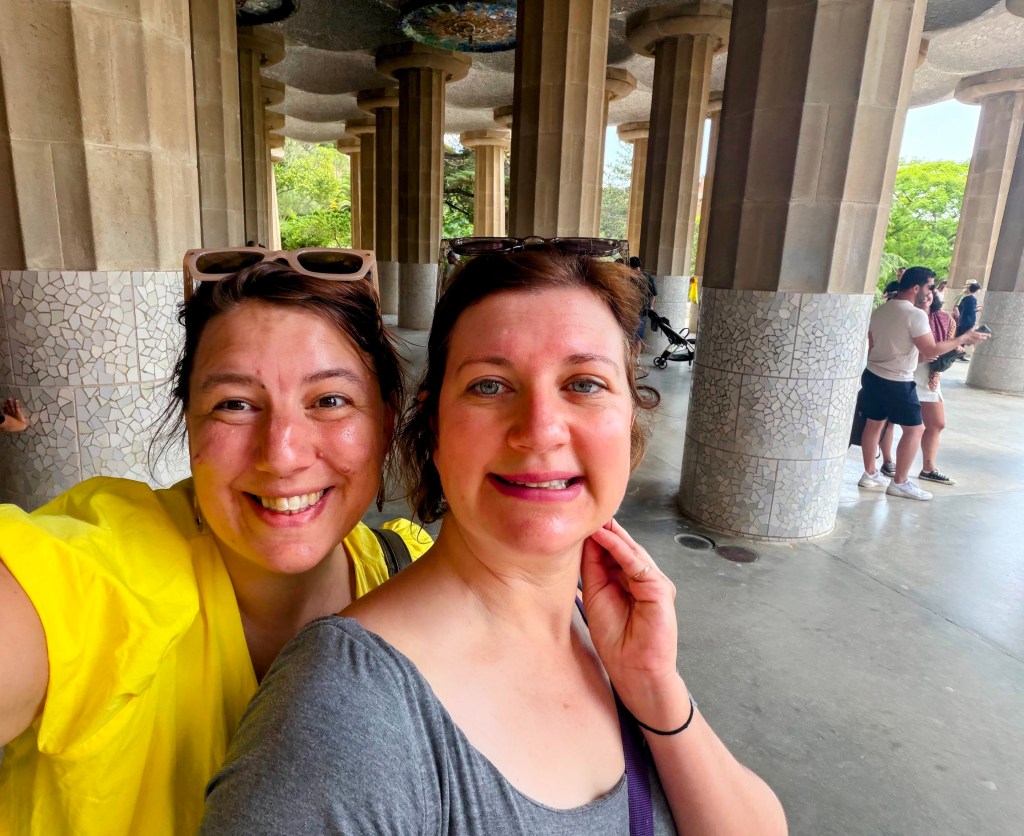
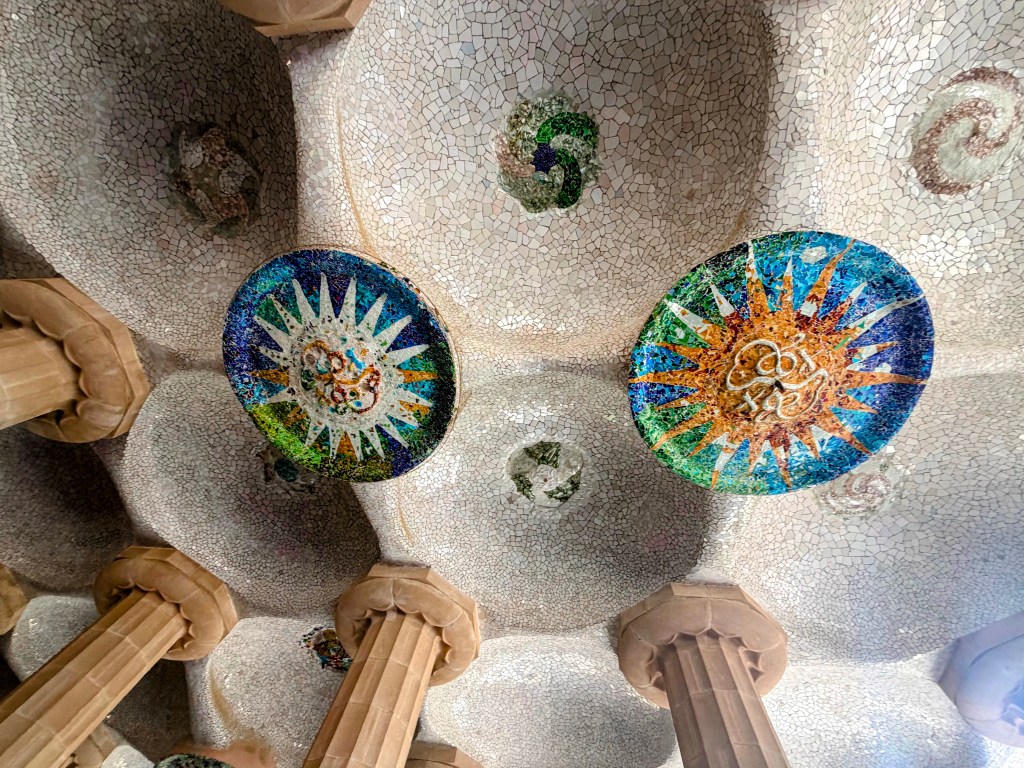
At the top is a large open landing, called the Sala Hipóstila, filled with 86 columns, the ceiling pock marked with concave circles and mosaics. Gaudi, obviously, did not literally physically build all this, but he designed and pioneered the technique of reusing broken tile pieces to craft mosaic. Throughout his life, he worked with a team of dedicated craftsman and other architects to realize his vision. But y’all, that whole freakin’ ceiling is mosaic.
Even a cursory google sweep tells me that I’m missing the true architectural splendor of Gaudi, not being an architect nor particularly knowledgeable myself. But perhaps the wonder of Gaudi is that you absolutely do not need to be. You don’t need to be told this is special, one of a kind, beautiful and inventive, that it defies what we know about buildings, it’s there for you to see. It’s almost like when you watch a movie and regardless of whether you like it, the love and craftsmanship of whoever made the movie just shines through.
While work was still being done on Parc Guell, Gaudi took on another project, Casa Batlló. The house sits on Passeig de Gràcia which to this day maintains status as a well to do street to see and be seen. Wanna pick up some Gucci? This is your street. Wanna see and be seen? Here ya go. Wanna promenade with a parasol on your shoulder and a top hatted gentleman to your left? It’s gotcha covered.
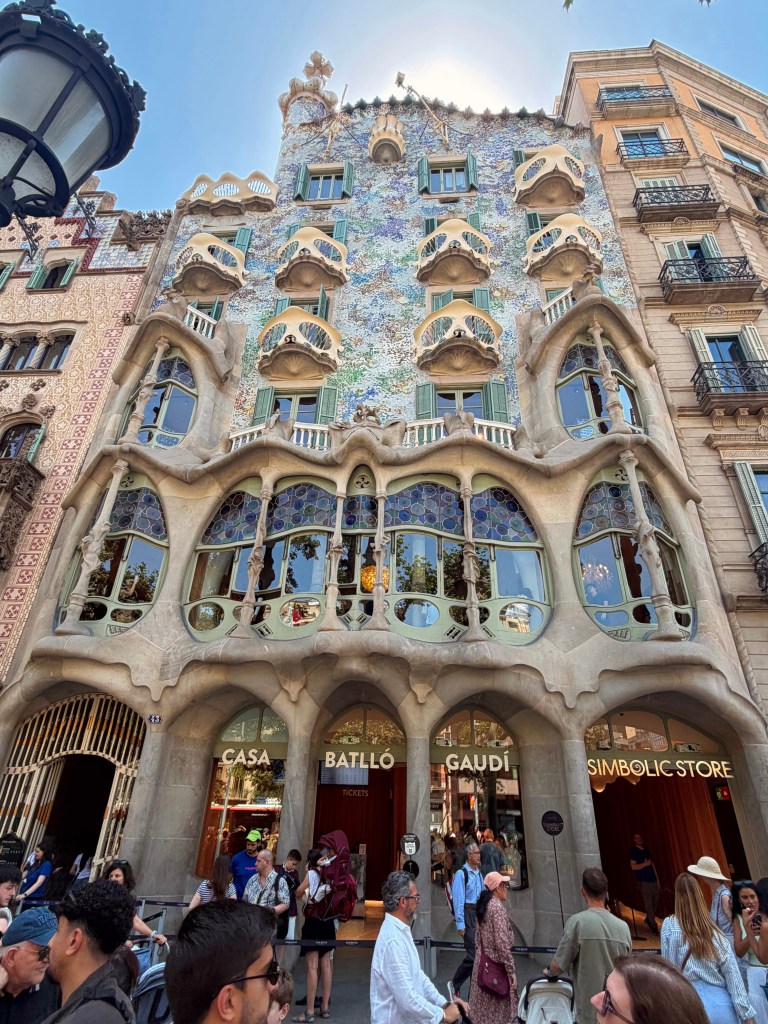
In the late 1800s it was also an important, sophisticated and wealthy thoroughfare. Rich Barcelonians demonstrated their wealth in their homes and in 1904, Josep Batlló, a wealthy textile industrialist, commissioned Gaudi to complete renovate his home, giving Gaudi full creative license.
This was also a time of fierce competition between newly wealthy industrialists. And their favorite form of competition was through their homes. They supported new modernist architects and this particular block of Barcelona is legendary. Out of the 5 recognized gems of modernist architecture, 4 are currently museums. And yes, they are all right next to each other. But… while you look at the others and think “Wow that’s a really lovely building”, this is the one that sweeps you off your feet.
The Bernat family purchased the building in the 1990s, restored it and opened it as a public museum in 1995. Thank you Bernats.
We got the spendier tickets to get access to some of the temporary exhibits within and then we got there late, which worked out remarkably well, cause they just jumped us past the line and right on in. With our fancy tickets we were routed to the right and descended a dark stairwell. Then you step into a dark circular room onto to a platform that slowly spins you round the room.
The inspiration for Batlló was water and this was actually a remarkably smart way to get one in the mood for what follows. Regardless of your ticket, all admissions include an audio guide which includes a tablet. You click on your language, the icon matching the room you’re in and a deeply soothing (like probaby does meditation videos too) voice talks to you lovingly about what you’re seeing.
This is a meticulously executed museum.
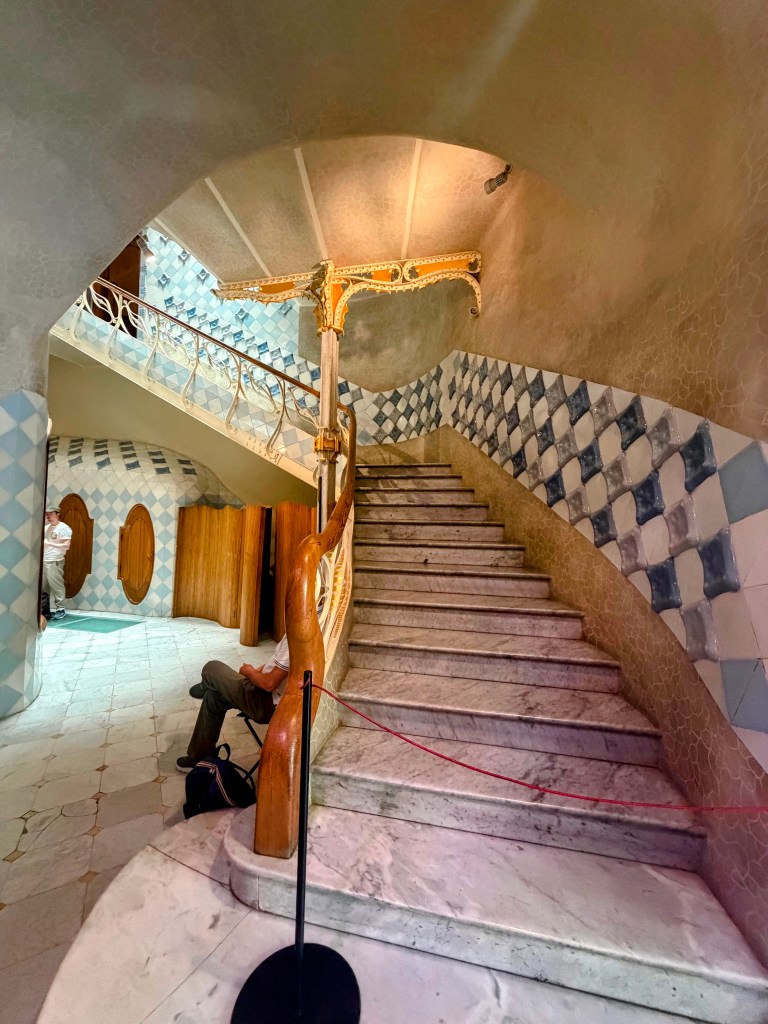
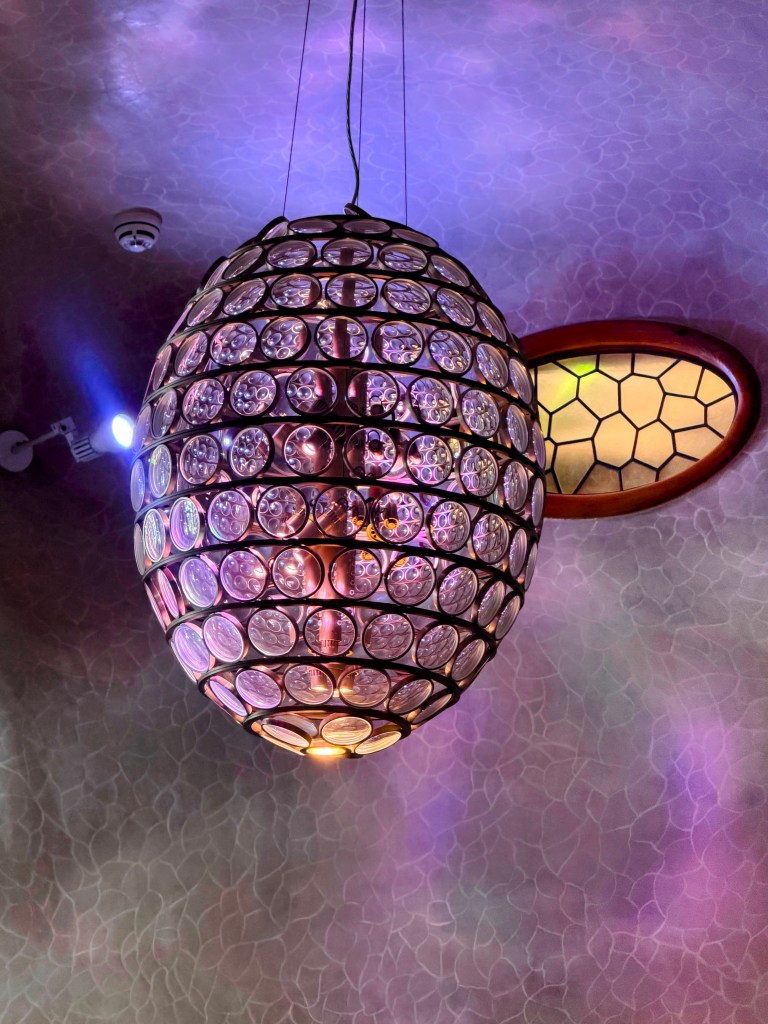
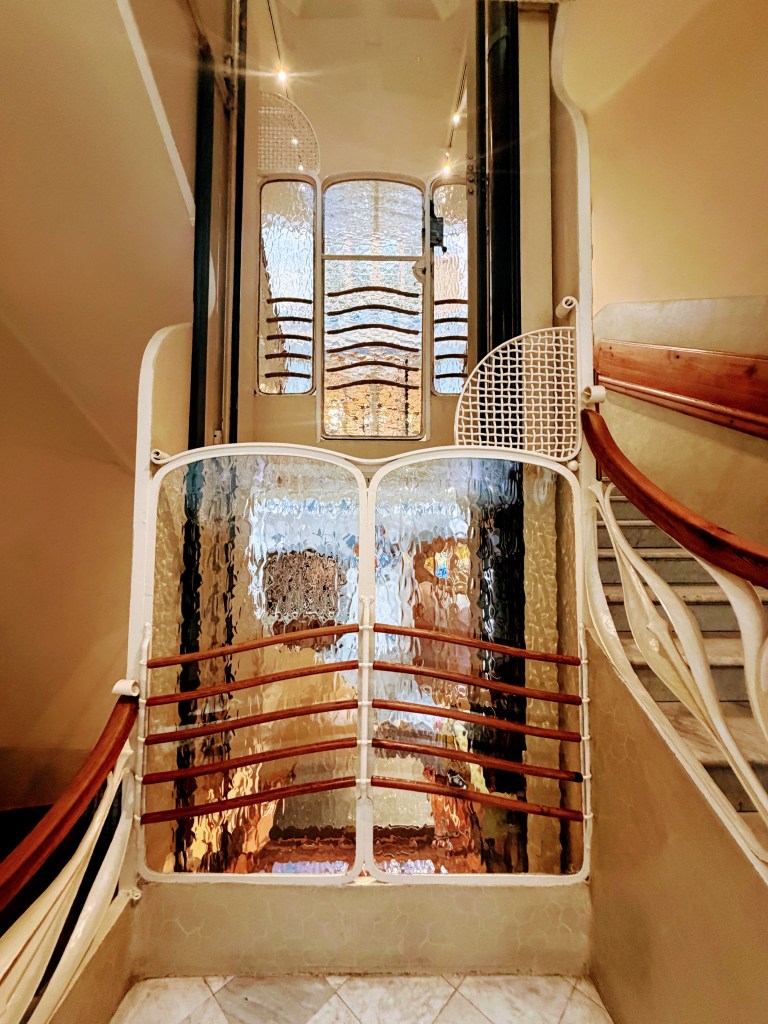
The house was actually divided into apartments and now you can wander through many of them. I think particularly being from the west coast, this flies in the face of every apartment building I’ve seen or any thoughts I ever had about apartments.
Everything here is curvy, nothing is sharp. Wood is warm and smooth. walls bend, ceilings wrap round themselves, doors are not squares. And light, oh my god, the light. It filters through in the most amazing of ways, reflecting back all the warmth and the whole space feels like a ray of gentle sun, maybe from underwater?
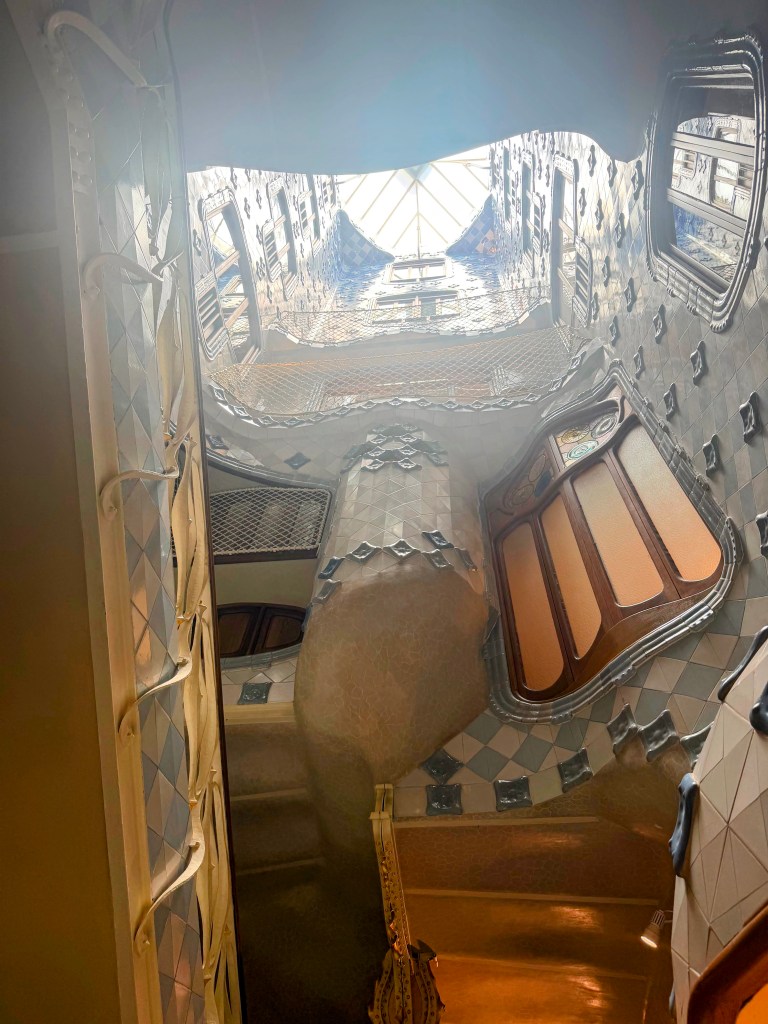
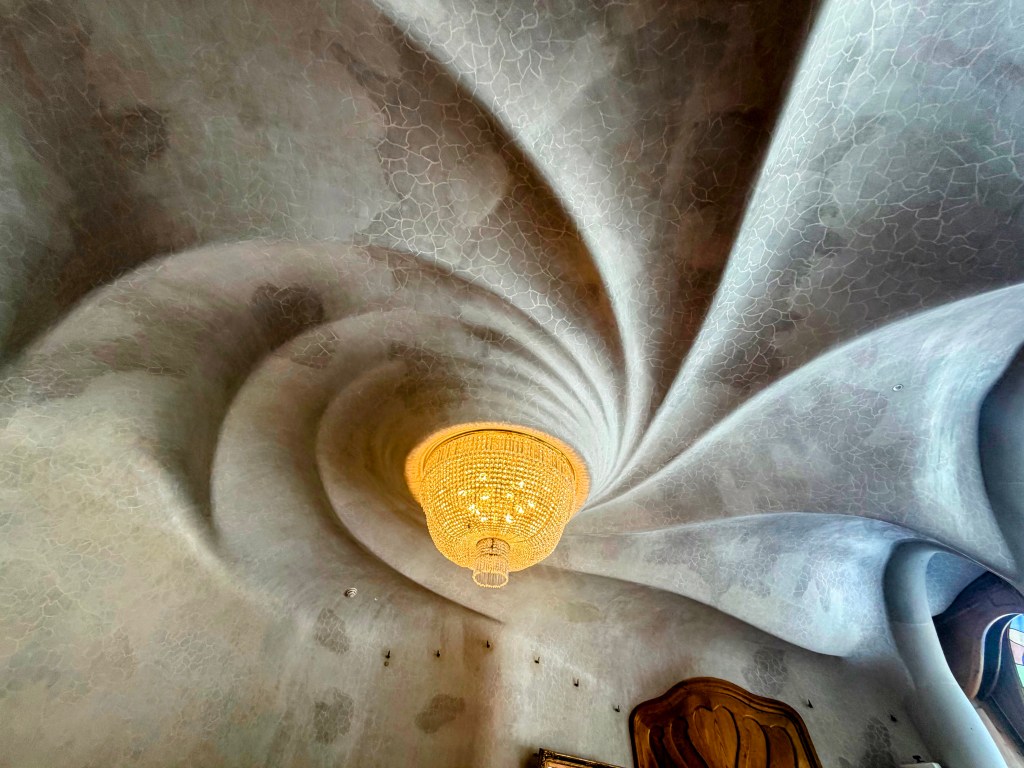
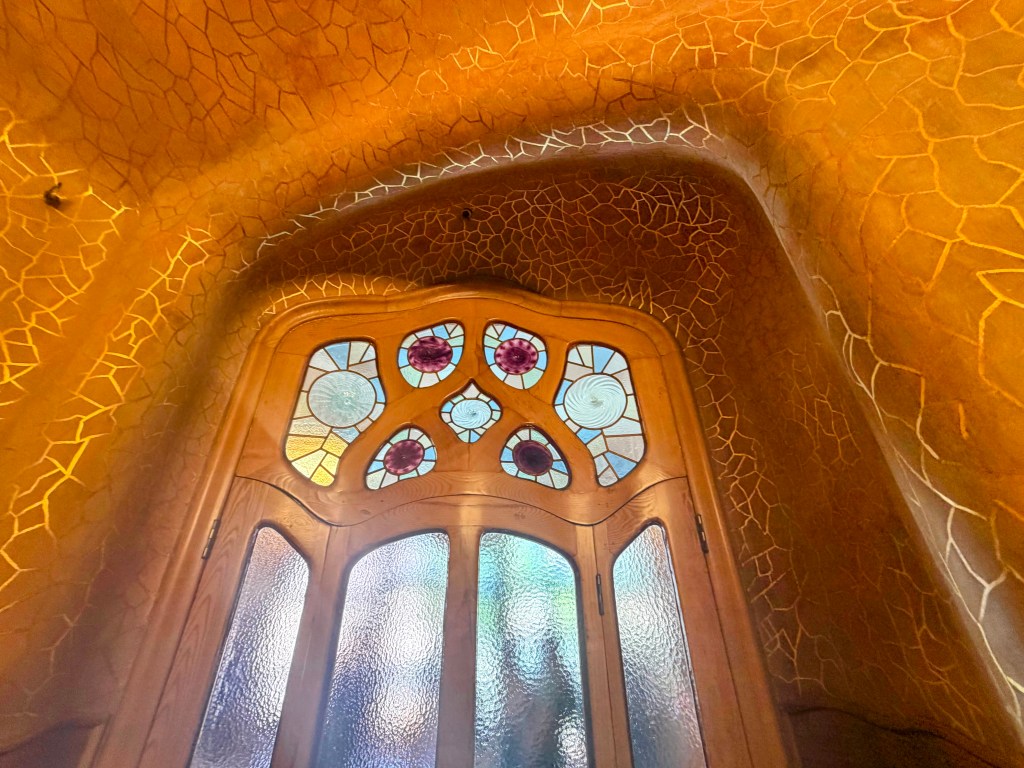
It sparkles. This building is an experience. It’s crazy that people just like lived in it. Gaudi makes me feel illiterate. I cannot communicate the magic.
Off the the first floor (aka the second floor in the US), is the back courtyard extending immediately off the Batlló’s dining room. I think every inch of this thing was ceramic. You can also grab a glass of wine.
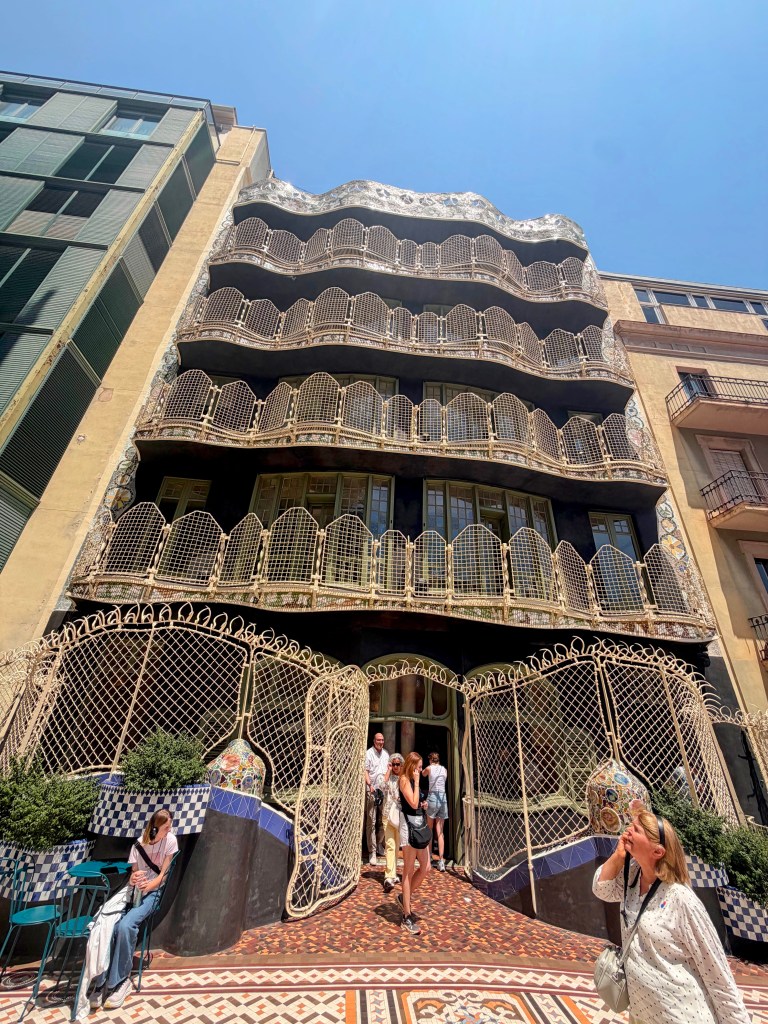
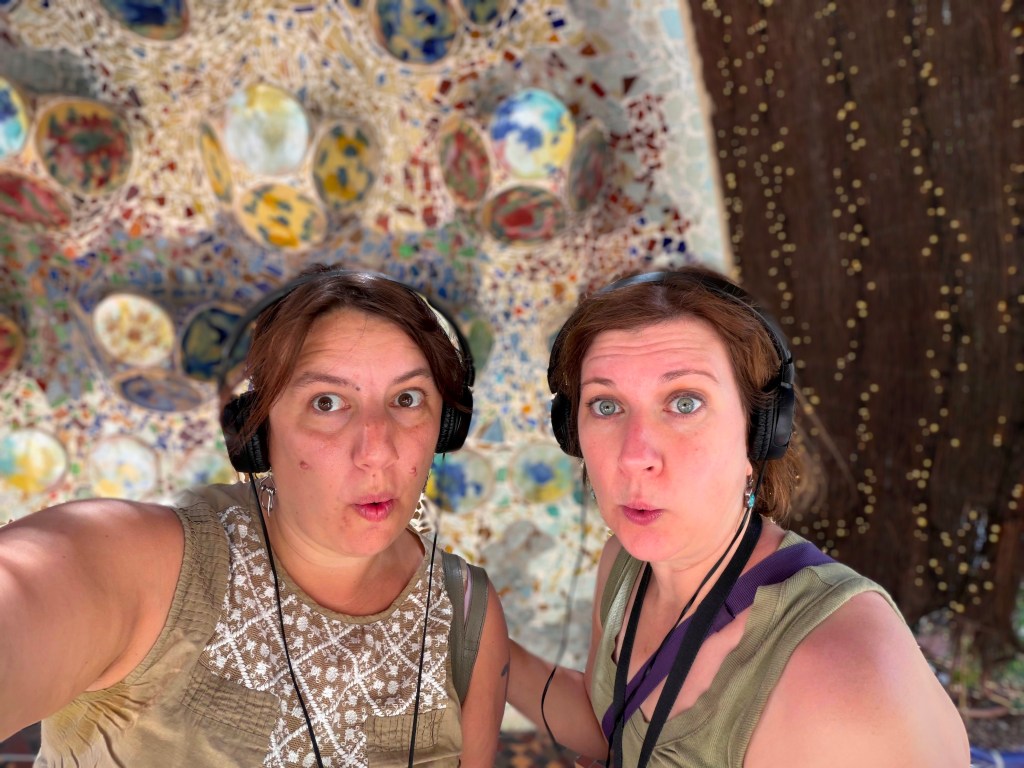
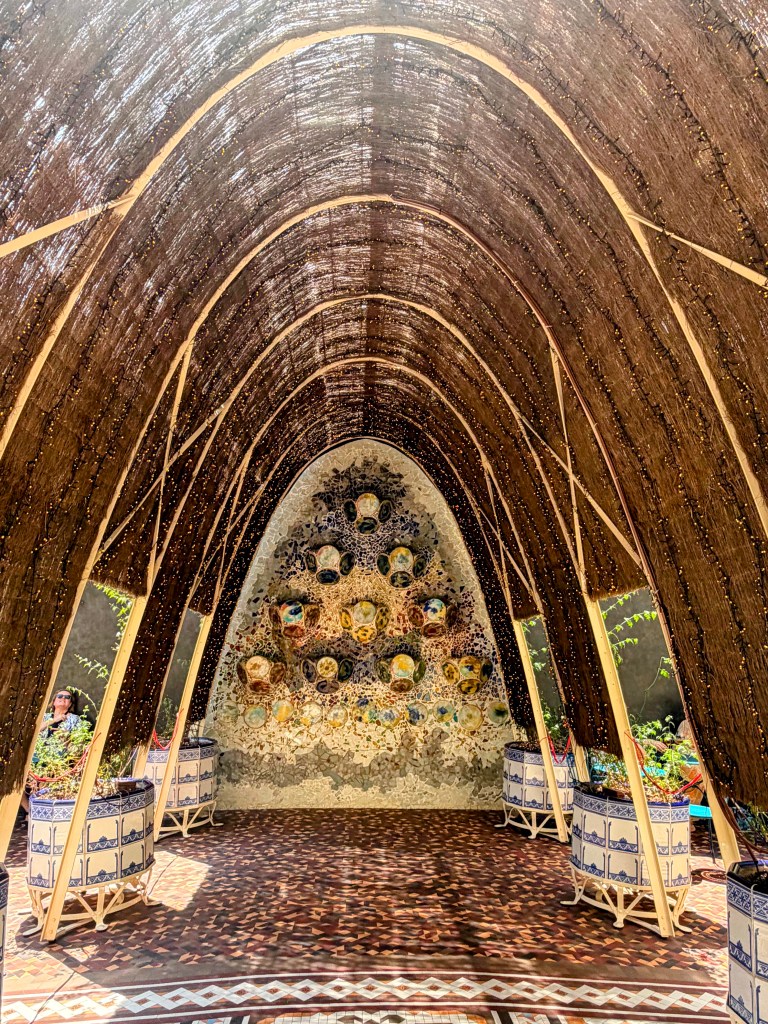
During renovation, Gaudi turned one lightwell into to two to better distribute light and added adjustable wooden shutters to better control air ventilation. But he made them both art by lining one with various blue tiles and the shutters with curved wood frames.
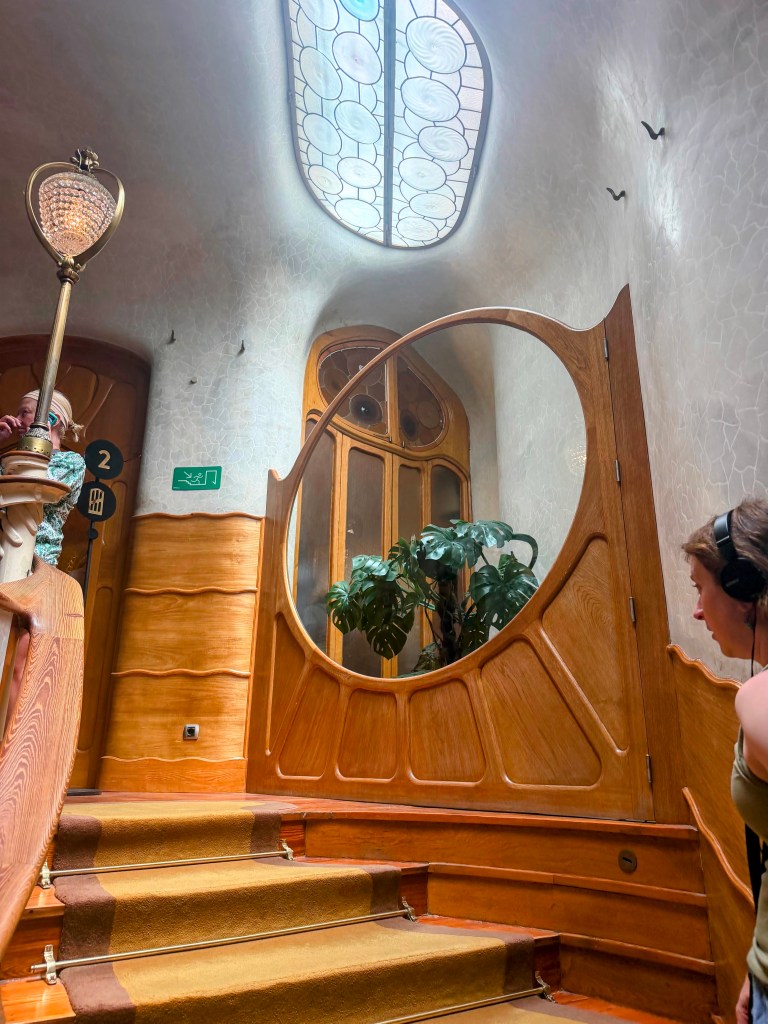
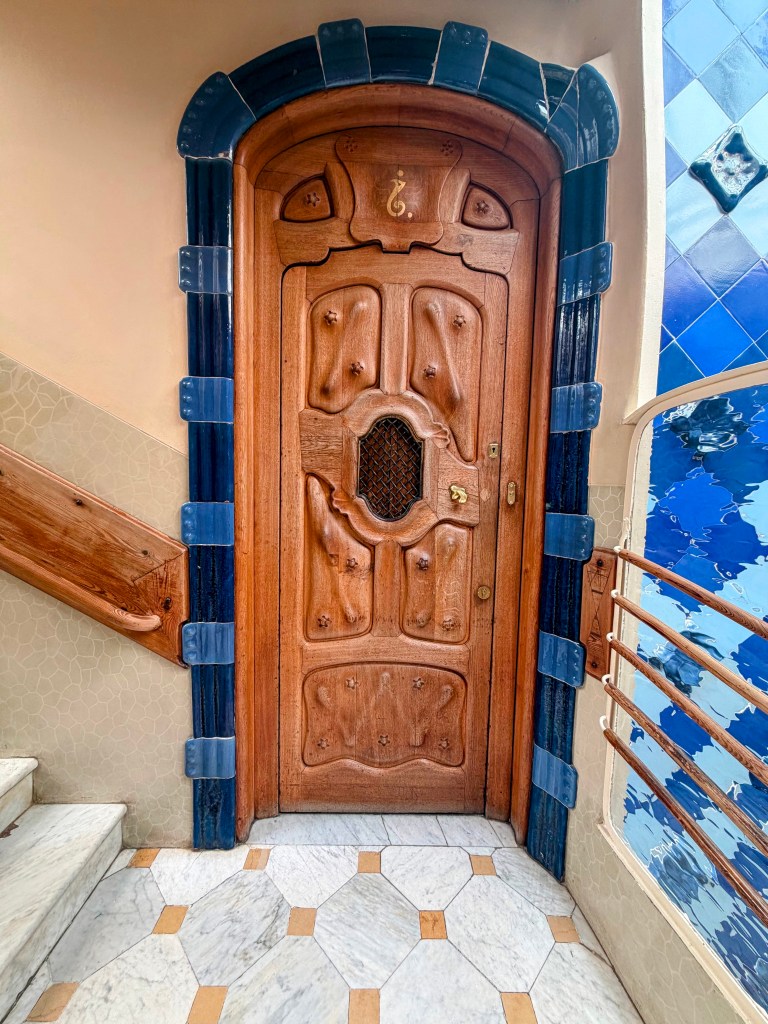
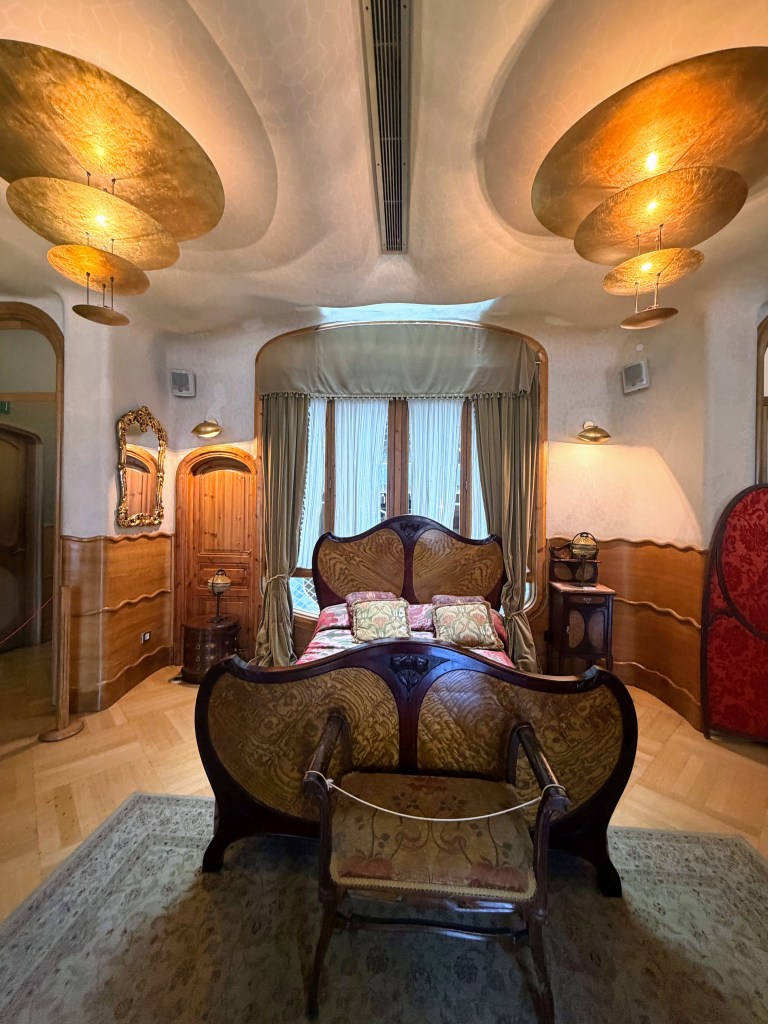
Intellectually, I understand it would be totally possible to live here and be unhappy, but I also think it would be more challenging. Maybe I’m over estimating the human ability for continued awe. Everything here is shaped to be inviting. The handrail on the staircase hugs you back.
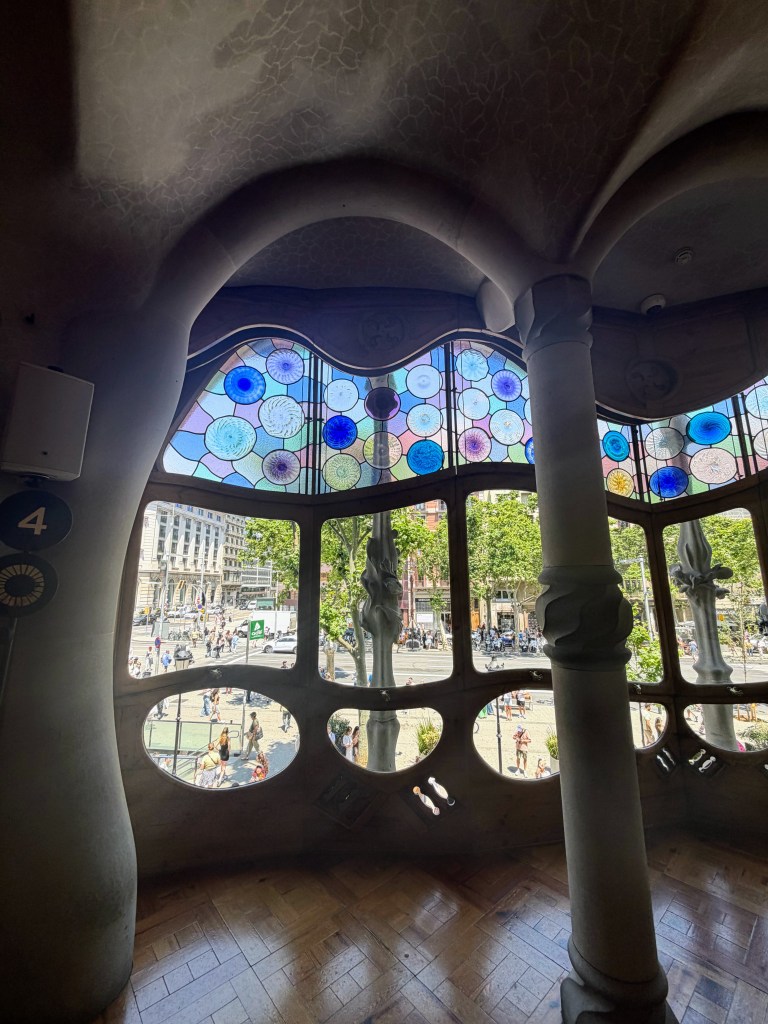
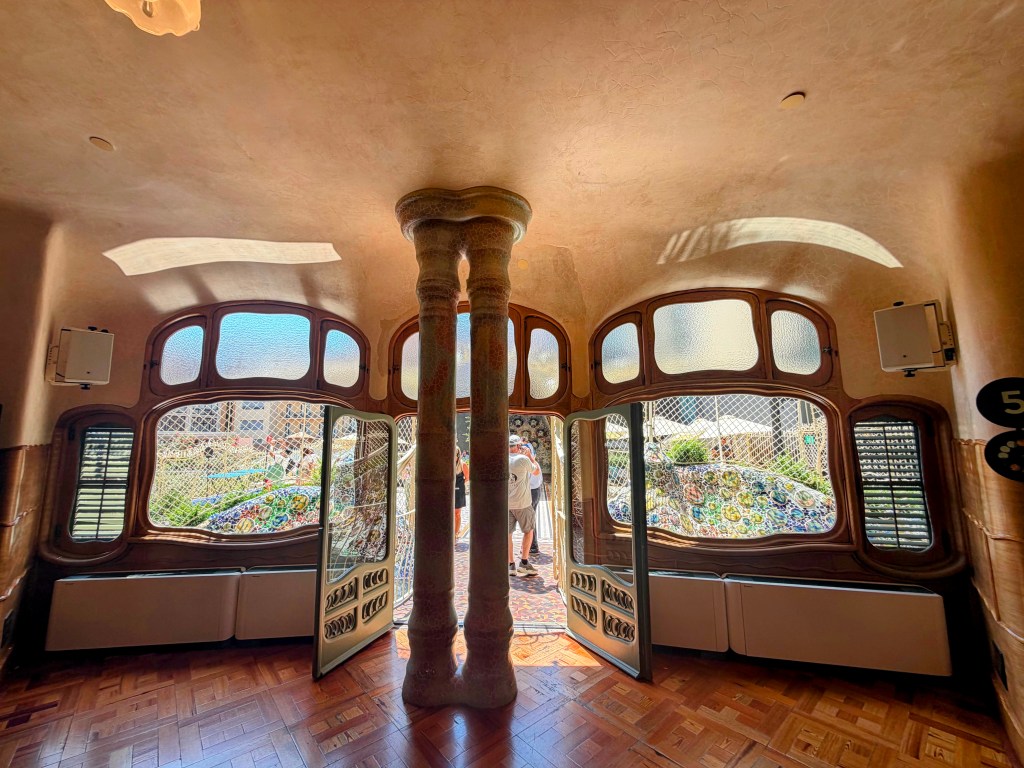
We eventually wound our way to the rooftop terrace. The building is famous for dragonscale roof that is completely impossible to see from the roof. Again, there were drinks and snacks. The sun was bright overhead, so we didn’t linger too long.
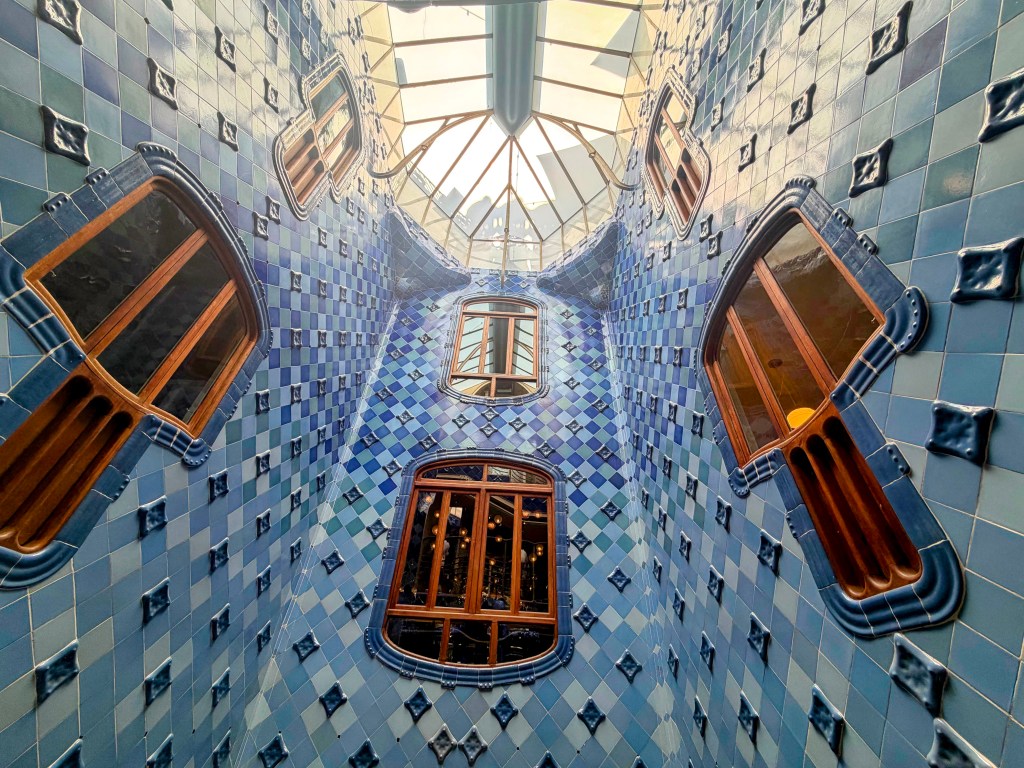
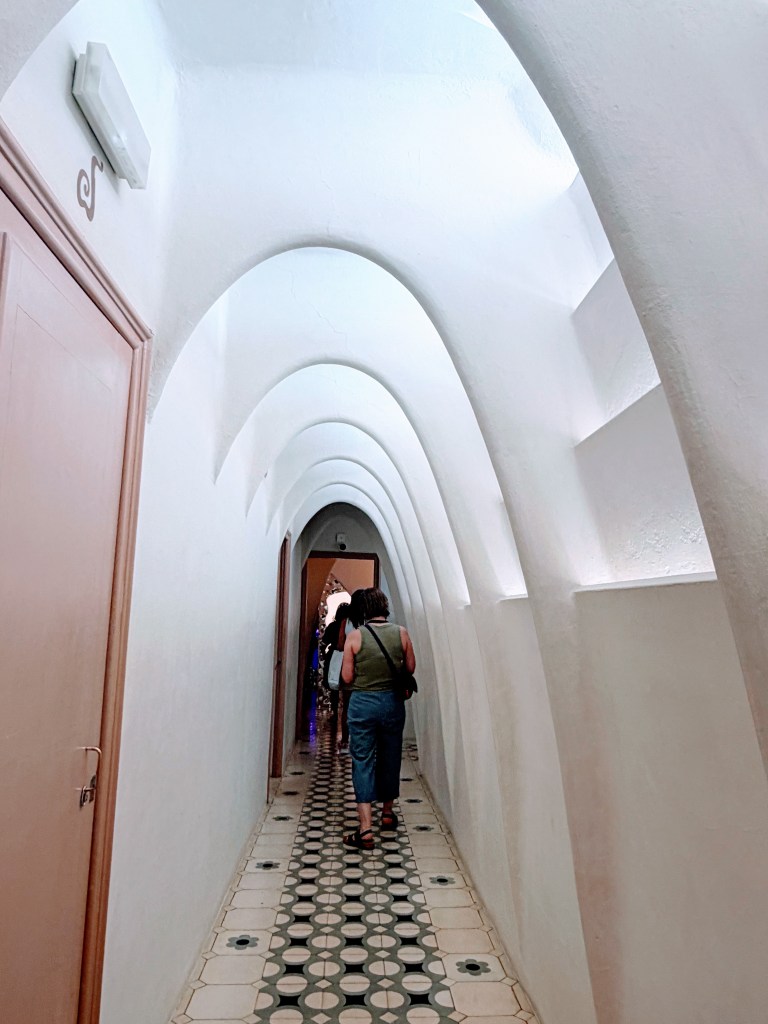
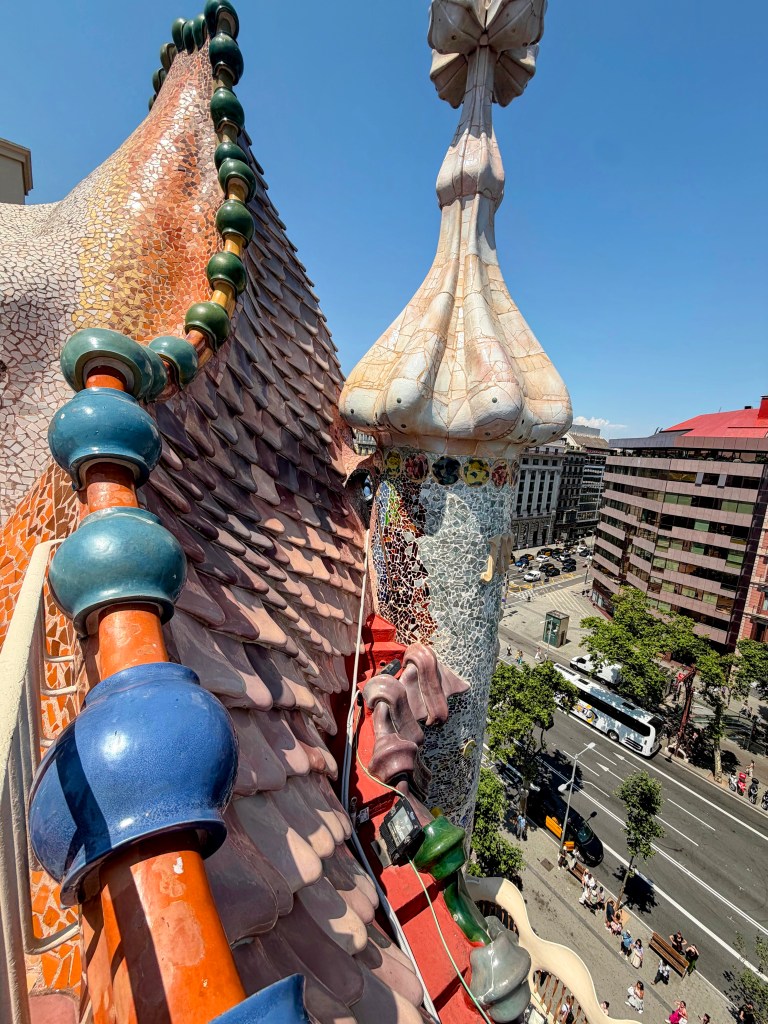
Though unable to get a look at the roof in full, even the snippet above demonstrated the insane attention to detail in the house. And on every level. In the middle picture, that’s all natural light, cause that’s how he designed it In the first picture of one of the lightwells, you can see that those tiles are individual placed and not quite uniform, you can see th unique carving of each window. It’s unreal.
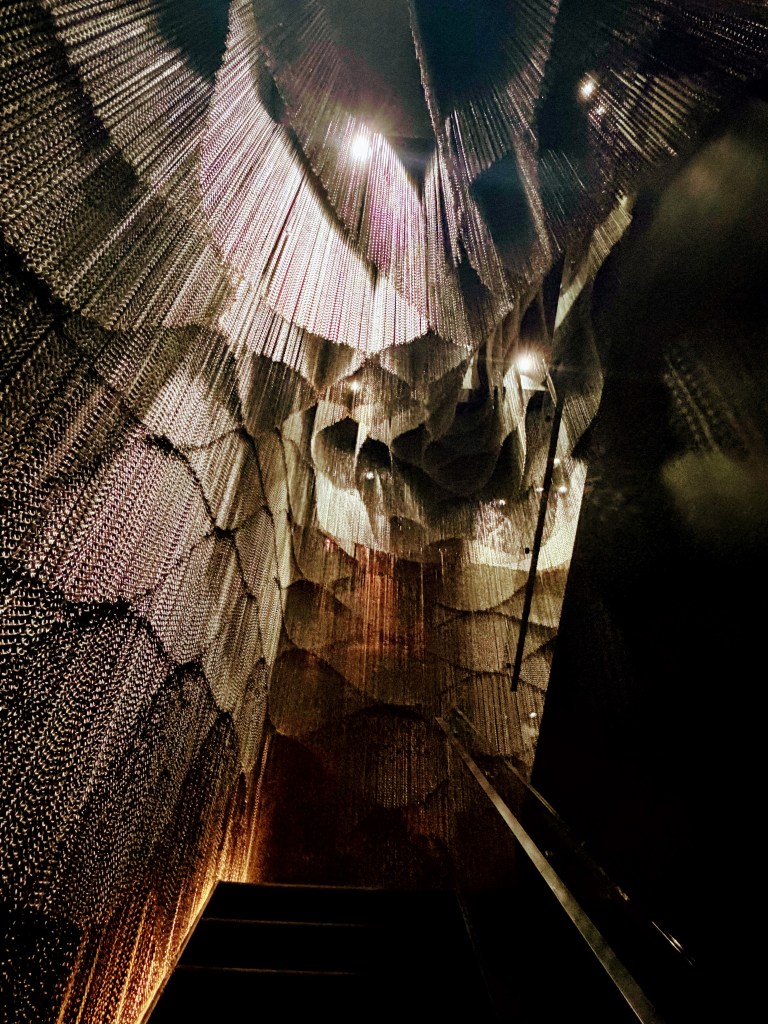
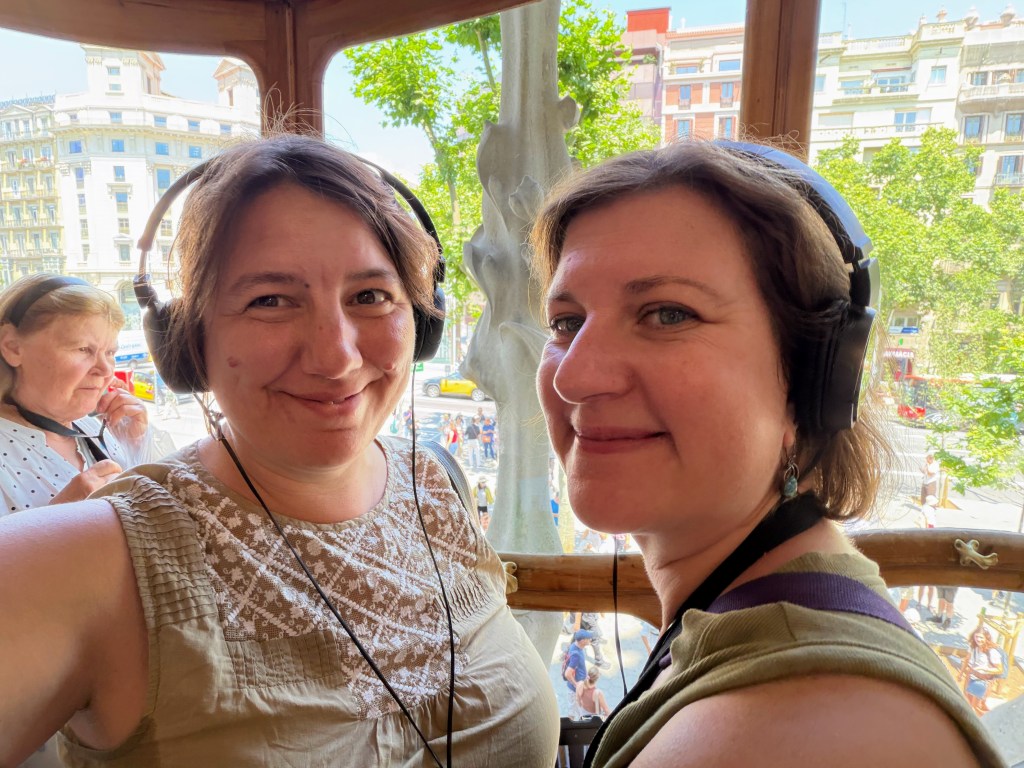
On the way back down, we paid to get a photo taken of us where you get to go out on one of the balconies and they’ve mounted a camera. They took two terrible photos in rapid succession that we bought anyways, but really don’t merit sharing. You exit through a long staircase (having gone up 7 floors, we must now go back down 7 floors) through a chain mesh immersive exhibit by Japanese architect Kengo Kuma. The aluminum chains varied in density and length and the play of light changed as we descended. Indeed, it’s meant to be an homage to Gaudi and his playfulness with light.
After perusing an over priced gift shop, Heidi and I left and just kept talking about it. Heidi had not had a lot of time to research the trip and I hadn’t fully conceptualized what it would be. With that in mind, we headed up a few blocks more to look at Casa Mitla, which we did not go in this trip.
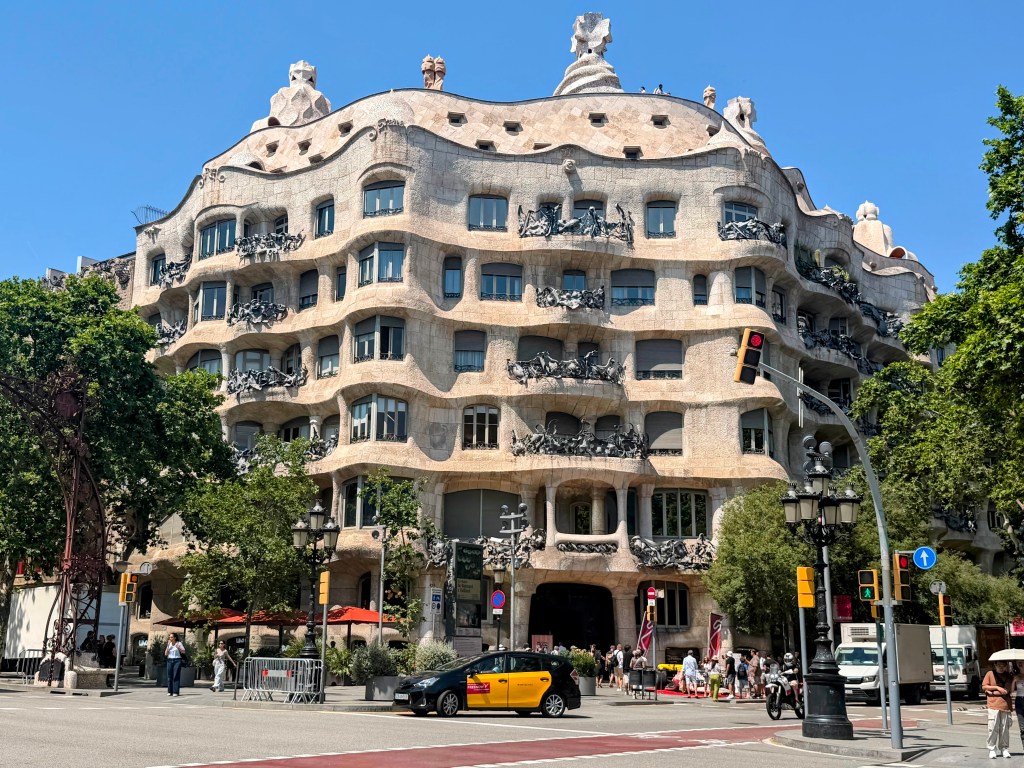
Unbelievably, two of the apartments in this building are still rented out by a few older women who have rent prices locked in from the 1980s and a the right to live in the apartment until their death at which point the historical society managing the museum will take over the apartments.
Leaving Batlló, I couldn’t imagine a more perfect building. I was even prepared to be a bit disappointed by the Sagrada Familla. But I was not.
Due to some drama with our tickets, we wound up at Sagrada Familia the very last full day of our trip. Turns out it was really the perfect end. This is hands down the most incredible building I’ve ever been in. Someone asked me if it was awe-inspiring and I didn’t quite know how to answer, because yes, but… Many churches in the world and particularly in Europe are awe inspiring. Many temples in the East are similiarly grand. They are remarkable and beautiful and the labor is clear and they make you feel small. The Sagrada Familia did not make me feel small, it made me feel welcome, bathed in light. It seemed, to me, the ultimate expression of a loving God’s beauty and grace.
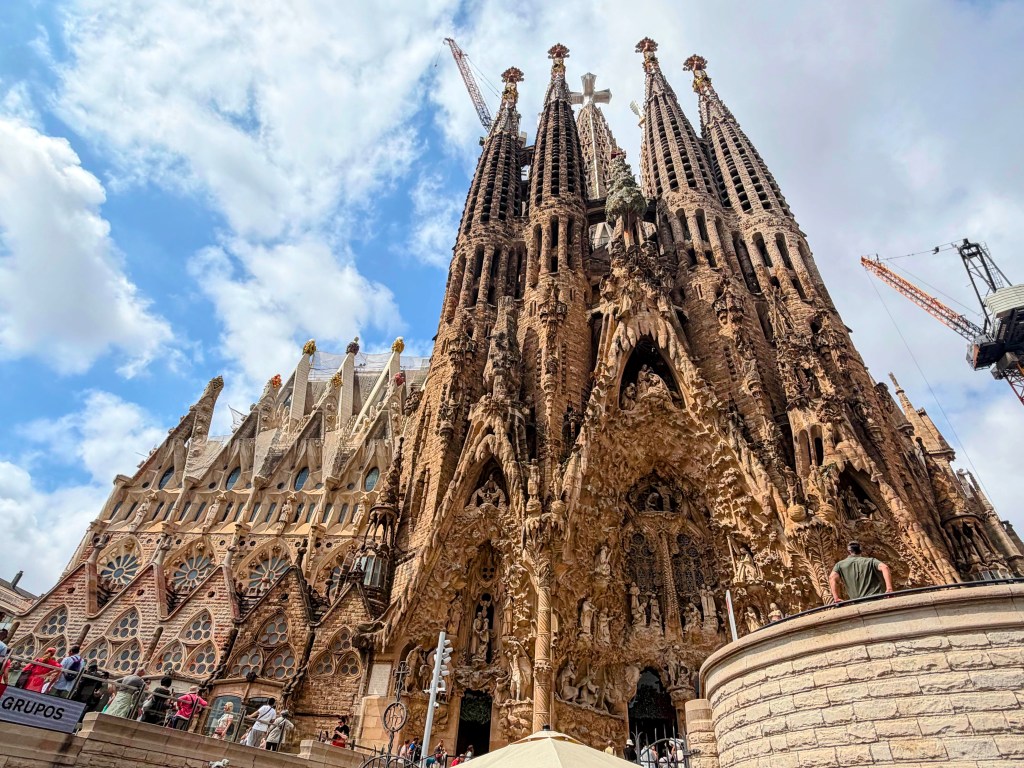
When finished, the basilica will have 3 facades, the Nativity, the Passion, and the Glory. At this time, the Glory remains largely unfinished. If you aren’t familiar, the Nativity is of course the story of the birth of Jesus, the Passion is basically him dying, and the Glory will be his rise to Heaven and the possibility of eternal bliss. The Sagrada Familia boasts 18 towers, 12 for the Apostles, 4 for the Evangelists (yeah, I had to google that one too), 1 for Mary, and one for Jesus. Jesus’ tower was very recently completed, like this year, with a 4 armed cross atop it officially making it the tallest church in the world at 566 feet tall (about the height of the Space Needle).
When we went, there was a little added chaos since Pope Leo would be coming to bless the new tower about 4 days later. We entered through the Nativity Facade which is grotto like in appearance. This is the only facade completed during Gaudi’s life and most of the work was done by that same dedicated team of craftsman. The detail is astounding. This is still a functioning church, open to the public for mass on Sundays and I assume churchgoers find something new every week.
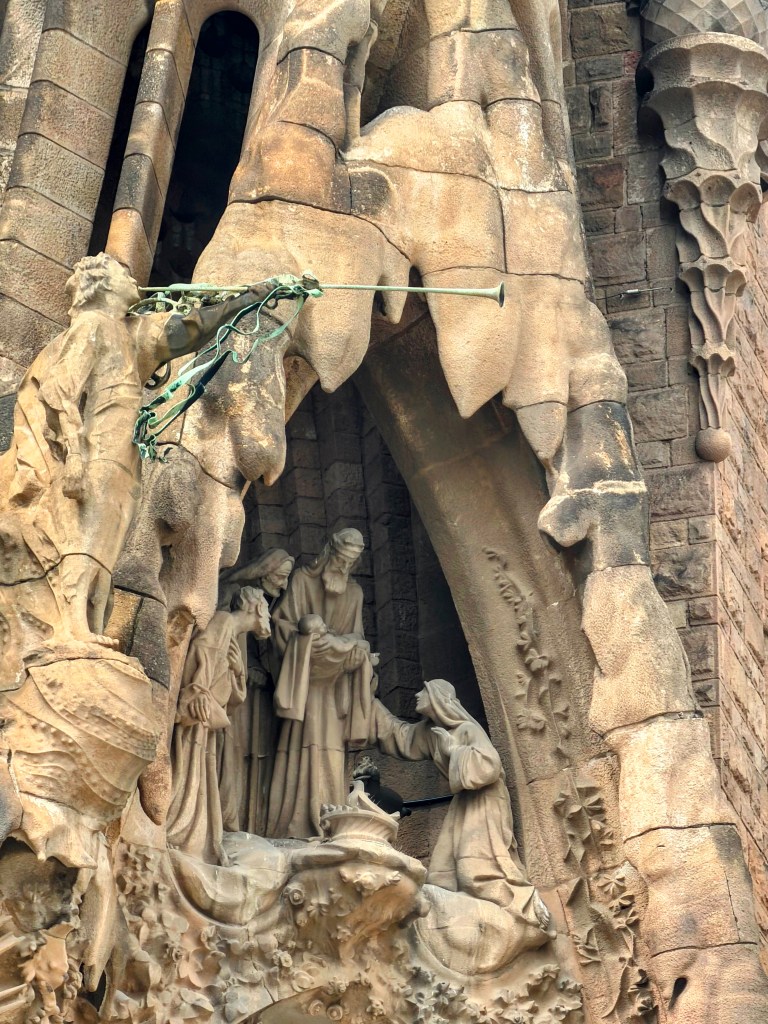
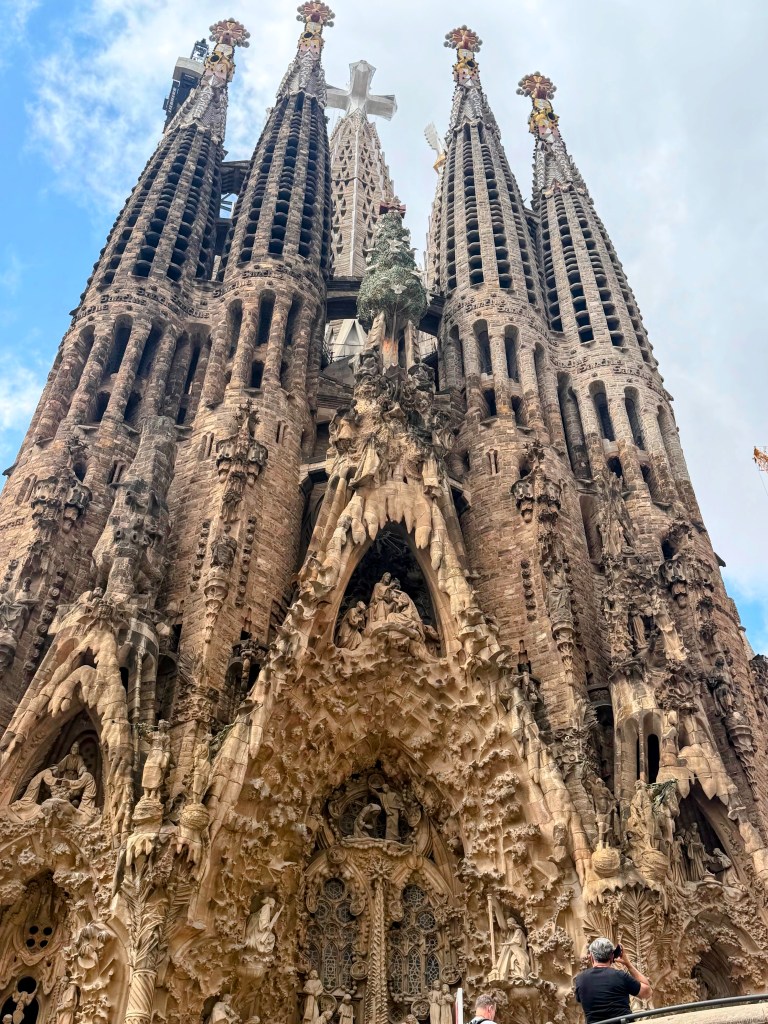
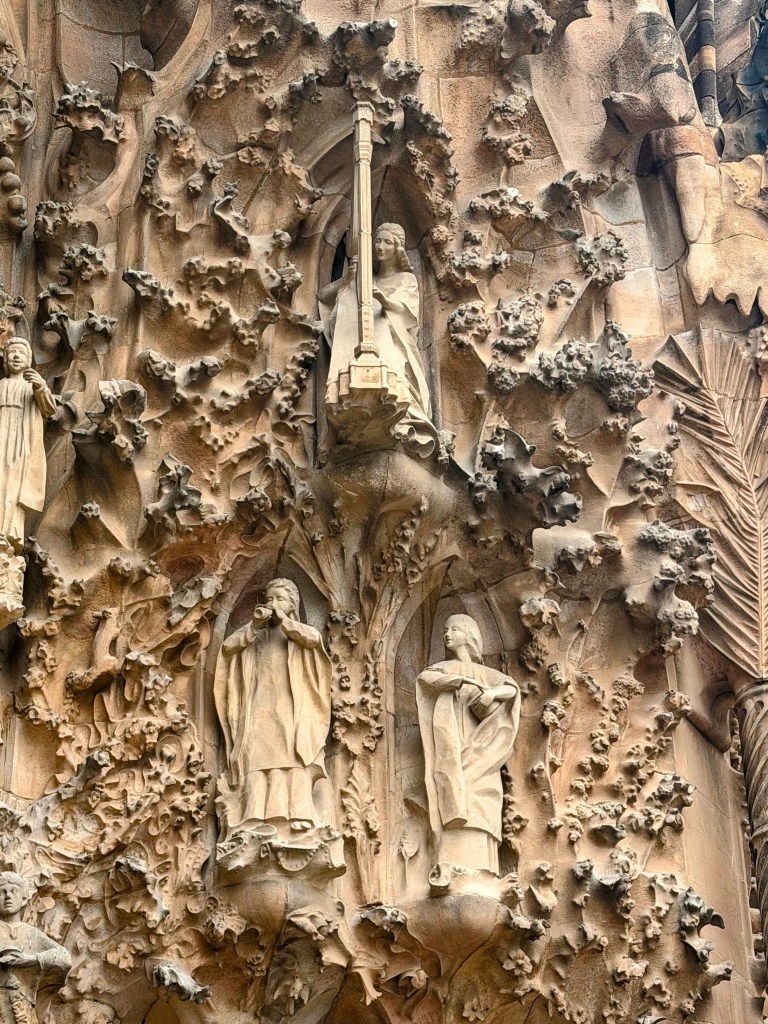
From this side, you enter one of three doors – the Portal of Charity, Faith or Hope- that were completed in 2015 by a Japanese sculptor working in bronze. Throughout Europe you hear about chruches that took hundreds of years to build, but this is the first one I’ve been to while its still in those hundreds of years. The amount of hands that have touched this work.
I don’t know how to do this other than photo dump.
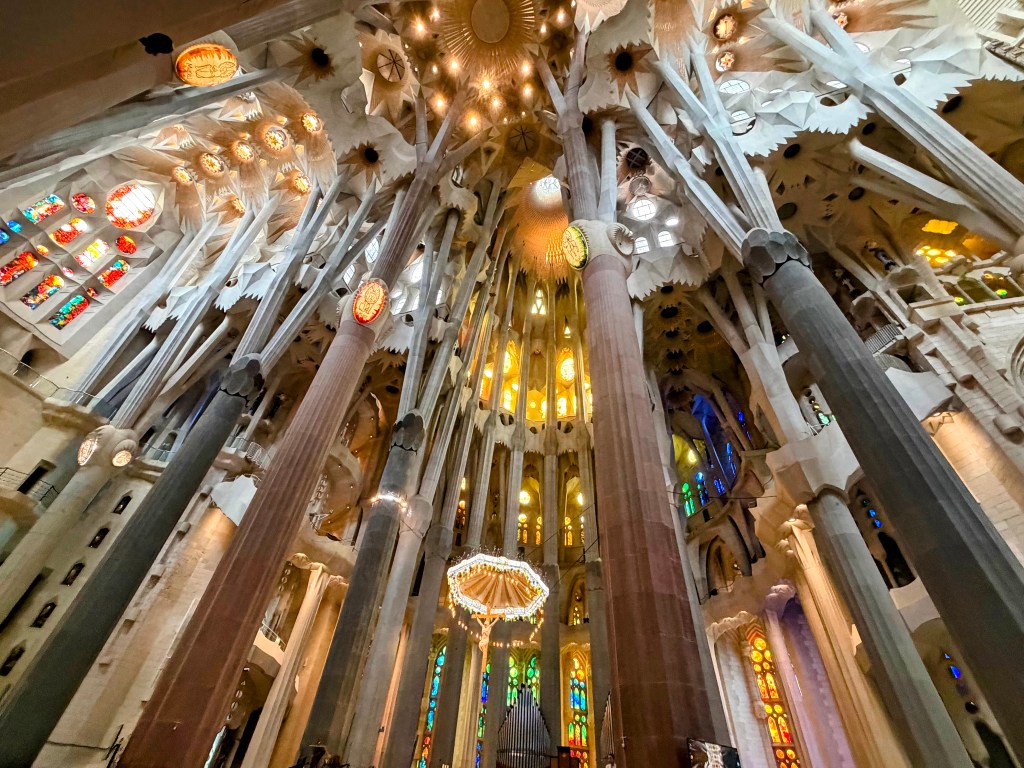
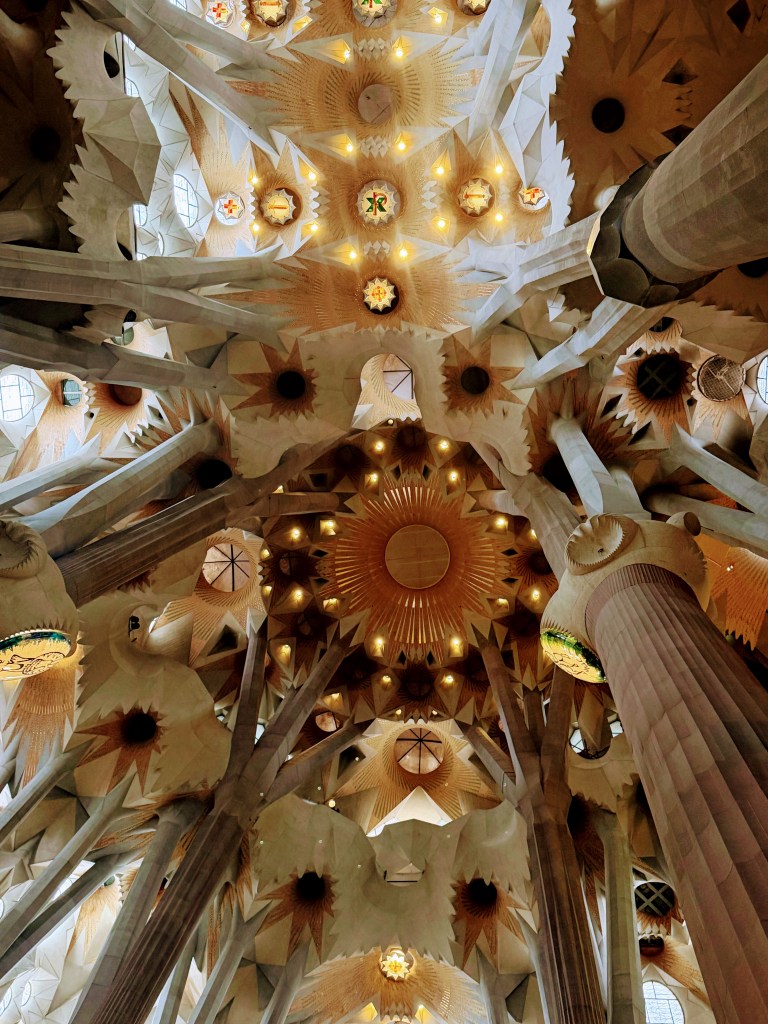
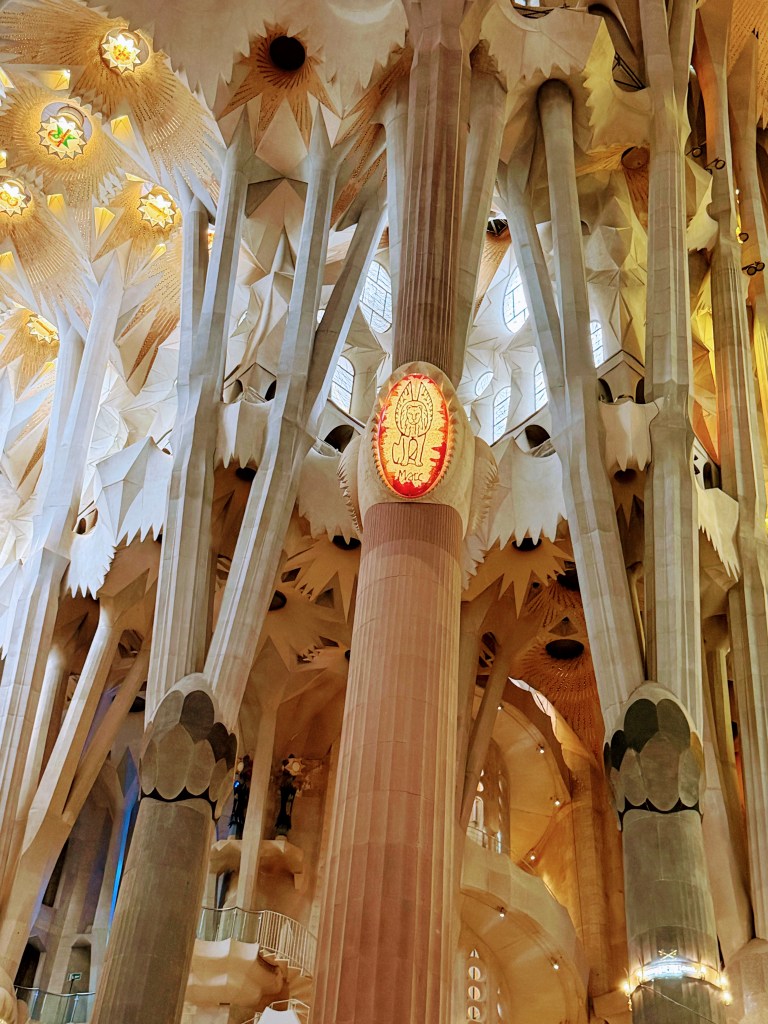
The design is meant to look like trees and it does feel a bit like wading through a forest.
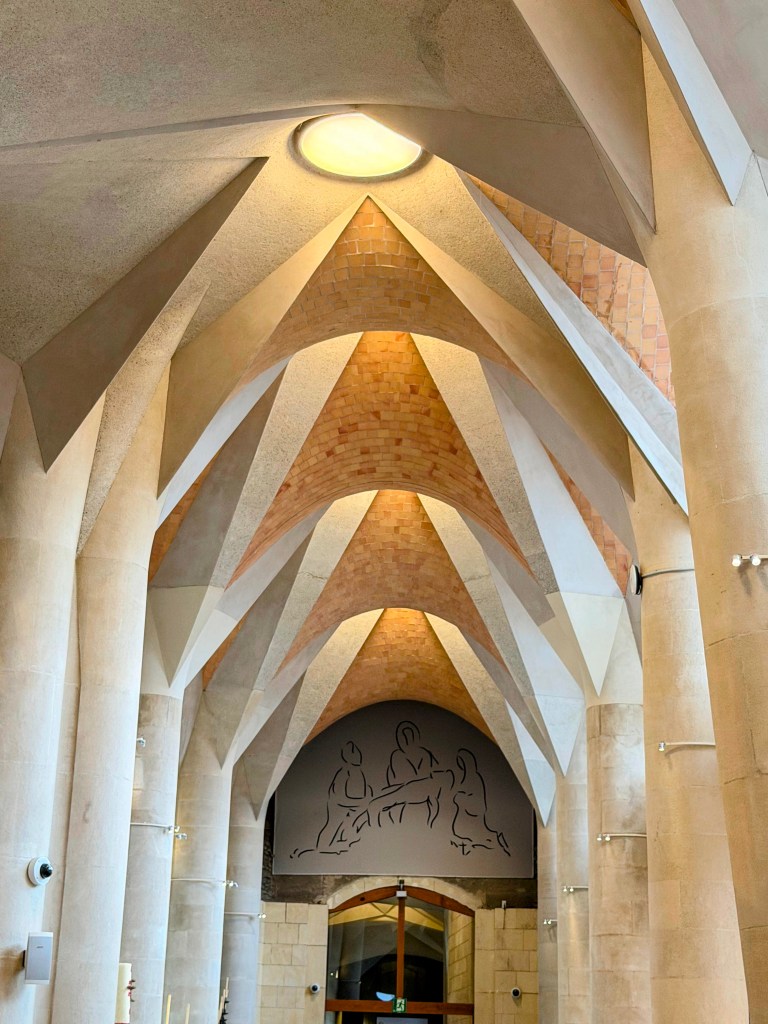
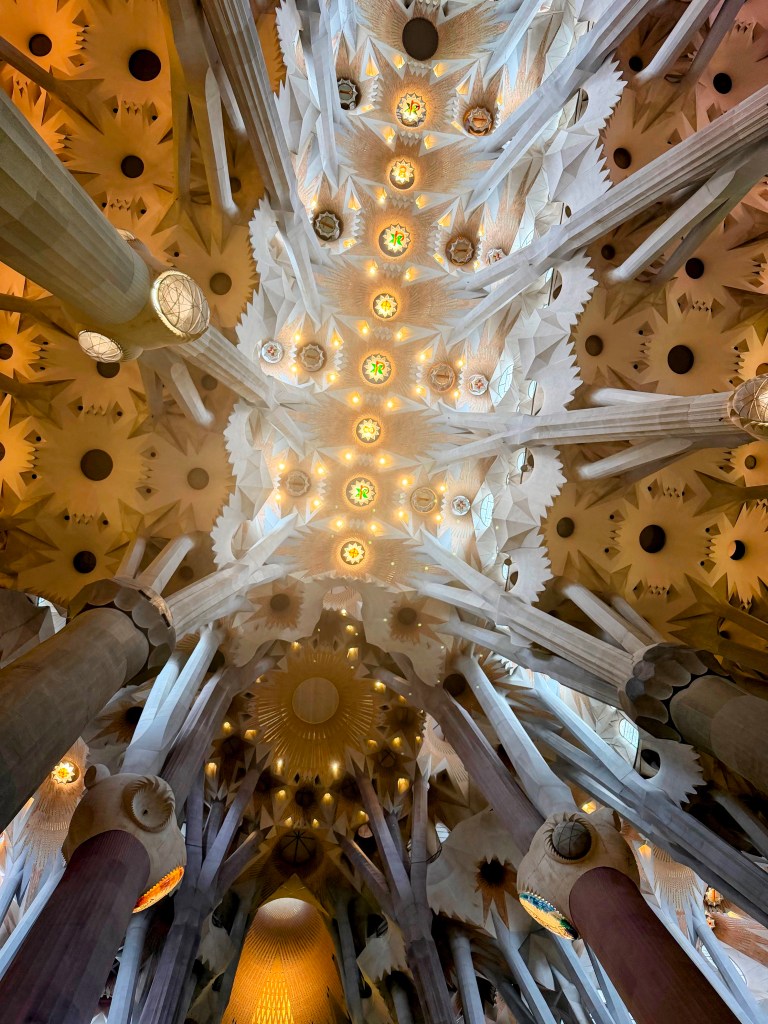
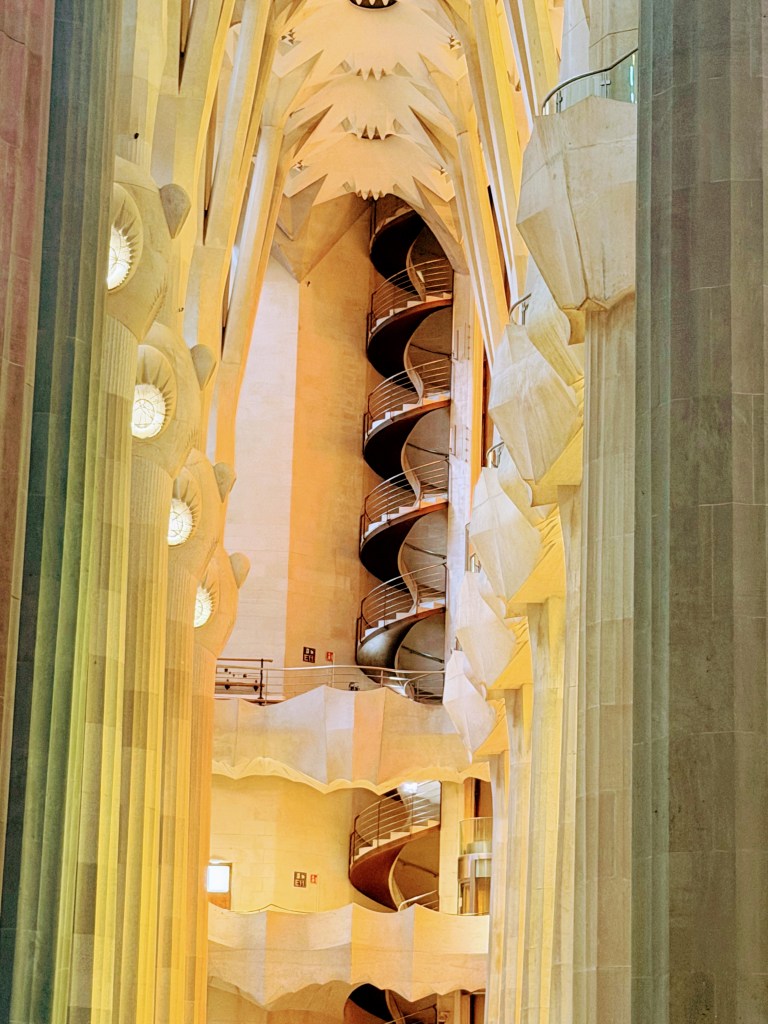
There are those Christians who seem more Jesuslike, who believe there before the grace of God go I, who believe we are all God’s children and all share in his magnificence, who don’t cast a stone. And being in this basilica, I can only assume Gaudi was one of those.
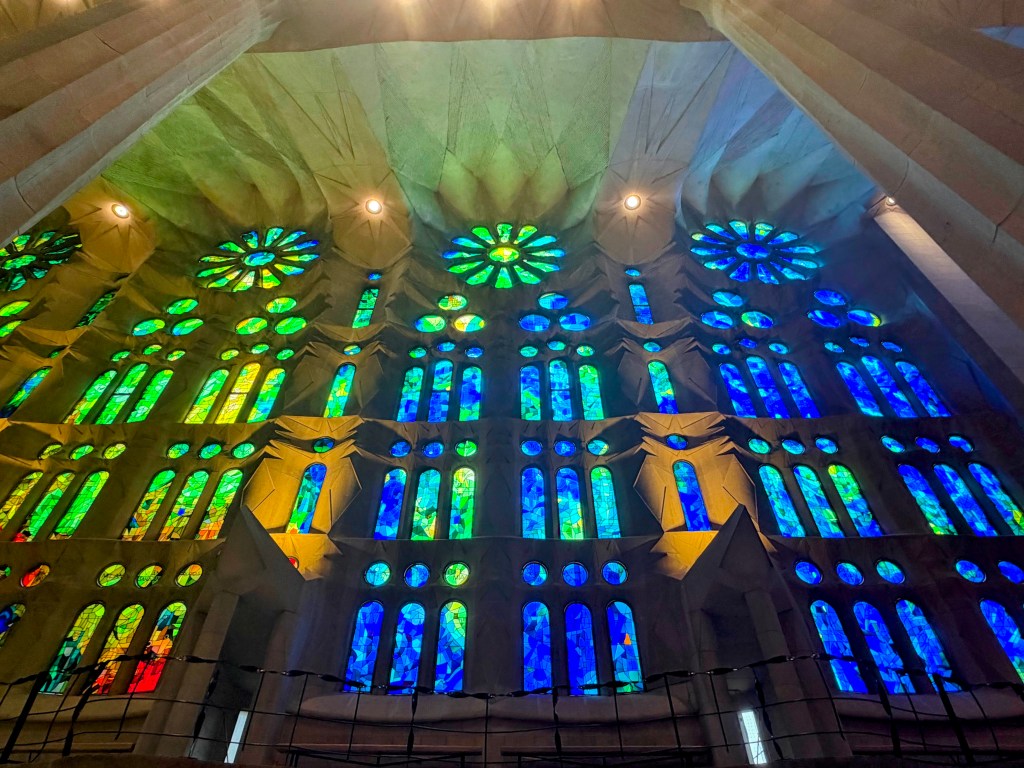
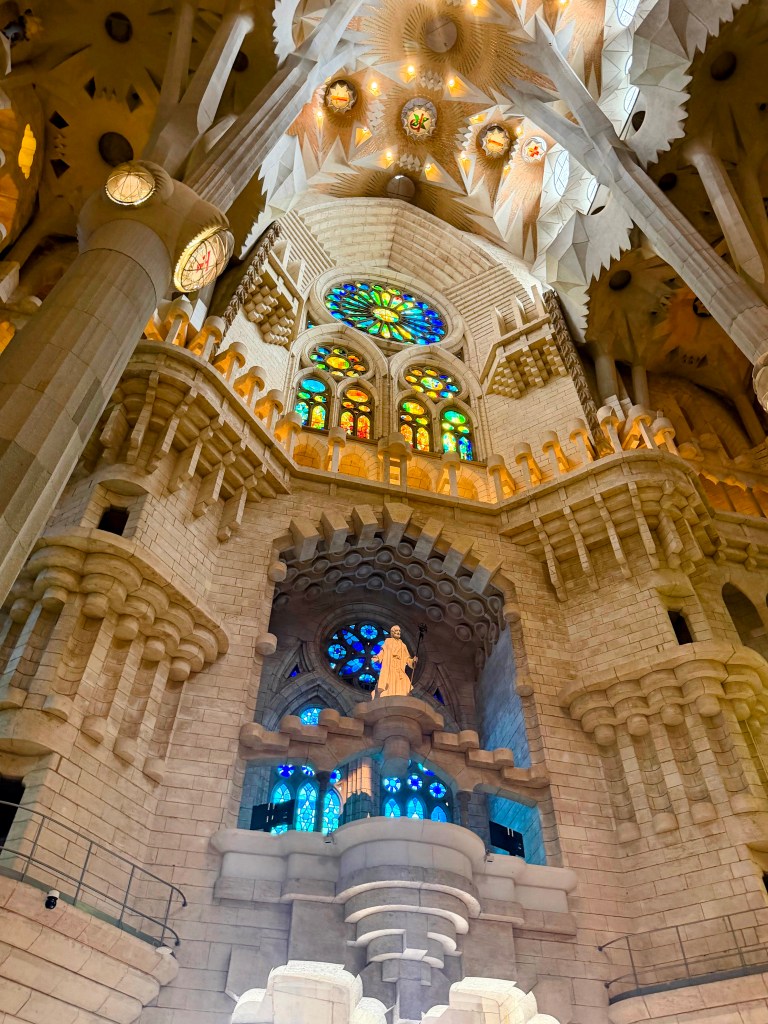
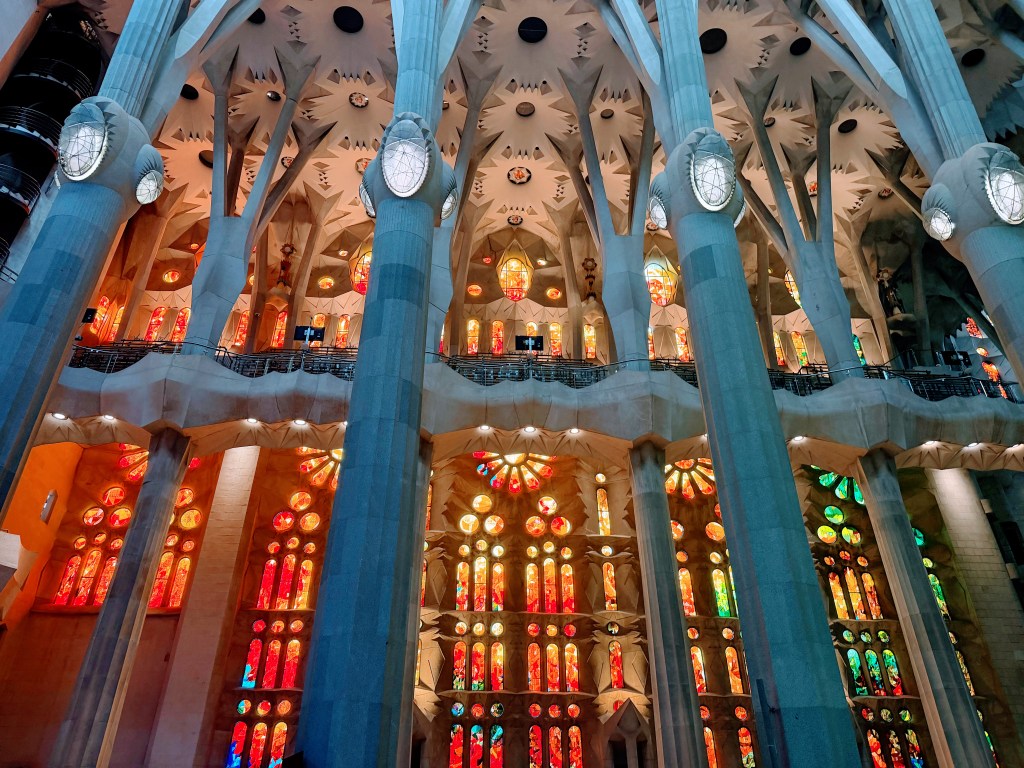
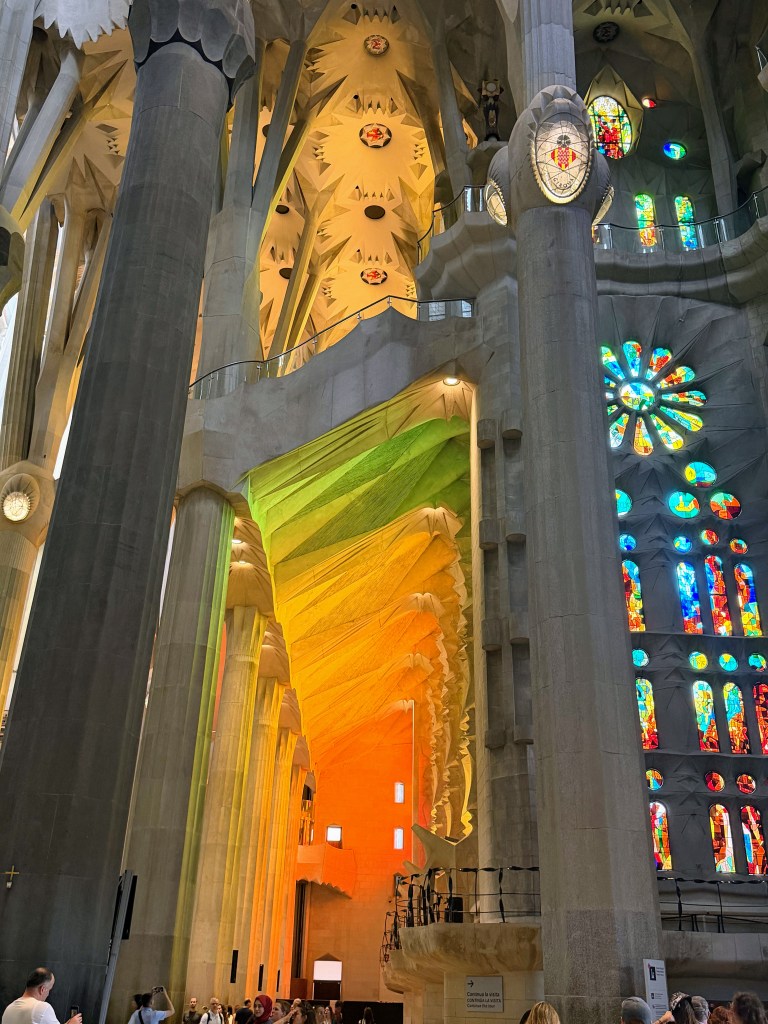
The stained glass is an abstract mosaic, specially designed to carry and reflect the light through the white building.
Gaudi created the design for the windows inspired by Gothic architecture. However medieval stained glass is classically brightest at toward the ceiling. Gaudi wanted the sun to come pouring through and paint the church in color. This means the church looks entirely different depending on the time of day and the time of year you visit.
We were there around noon on a stormy day and it looked incredible.
While Gaudi designed the windows and left detailed instructions, he did not ever see his windows. In fact, they wouldn’t be more than an idea until almost 100 years after his death. Joan Vila-Grau spent 20 years working on the windows and they were finally completed in 2019.
It was crowded, noisy and still I felt like it was a private offering to me. I assume everyone notices slightly different details, but they’re everywhere and so hidden in plain view that each one you find feels like it’s your discovery.
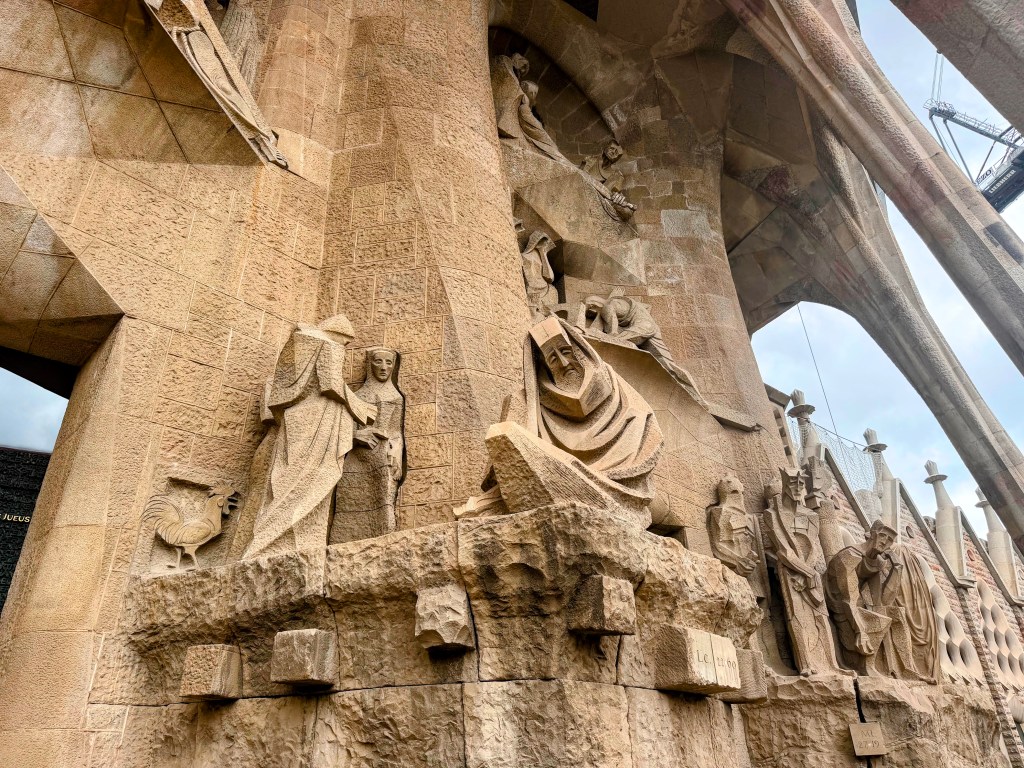
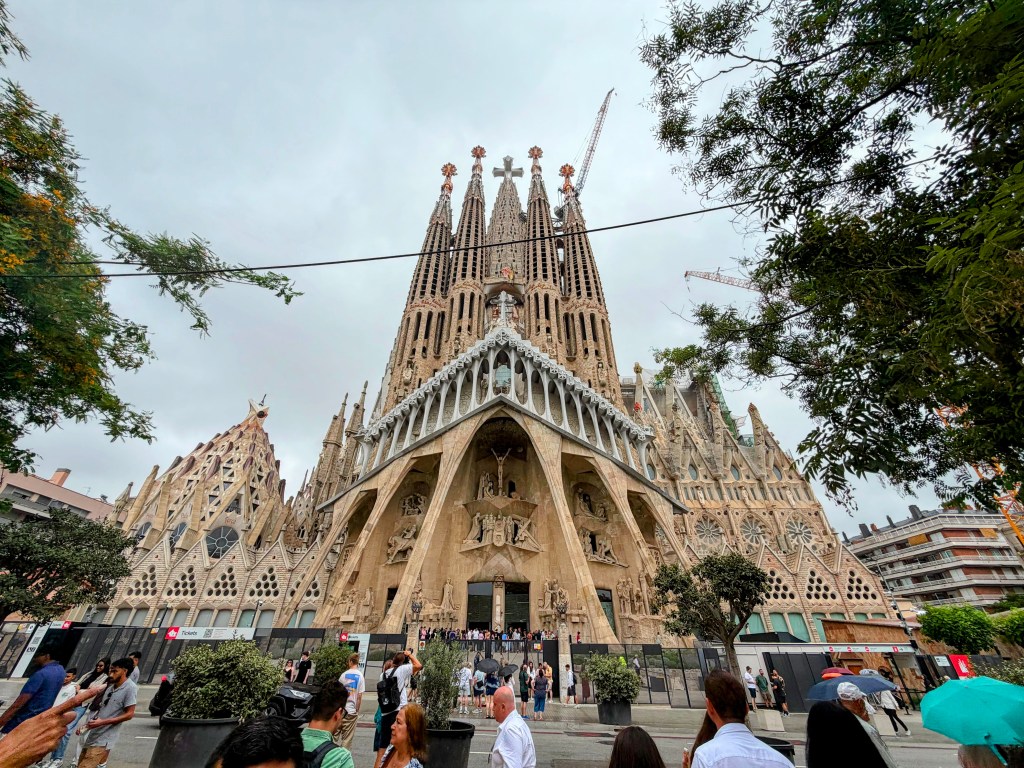
Our tour exited out the west entrance and we oohed and aahed over the Passion facade. On a personal note, I find it bizarre that his death is the passion. I get it, he so loved the world, they know not what they do, my father will care for me, but I really feel like leper healing and blind curing feels more like his life’s work.
Where the Nativity Facade drips and has curves, the Passion Facade sits somewhere between a Brutalist and Modernist style, featuring sharp angles and skeletal design to reflect the suffering and anguish of Christ’s final days.
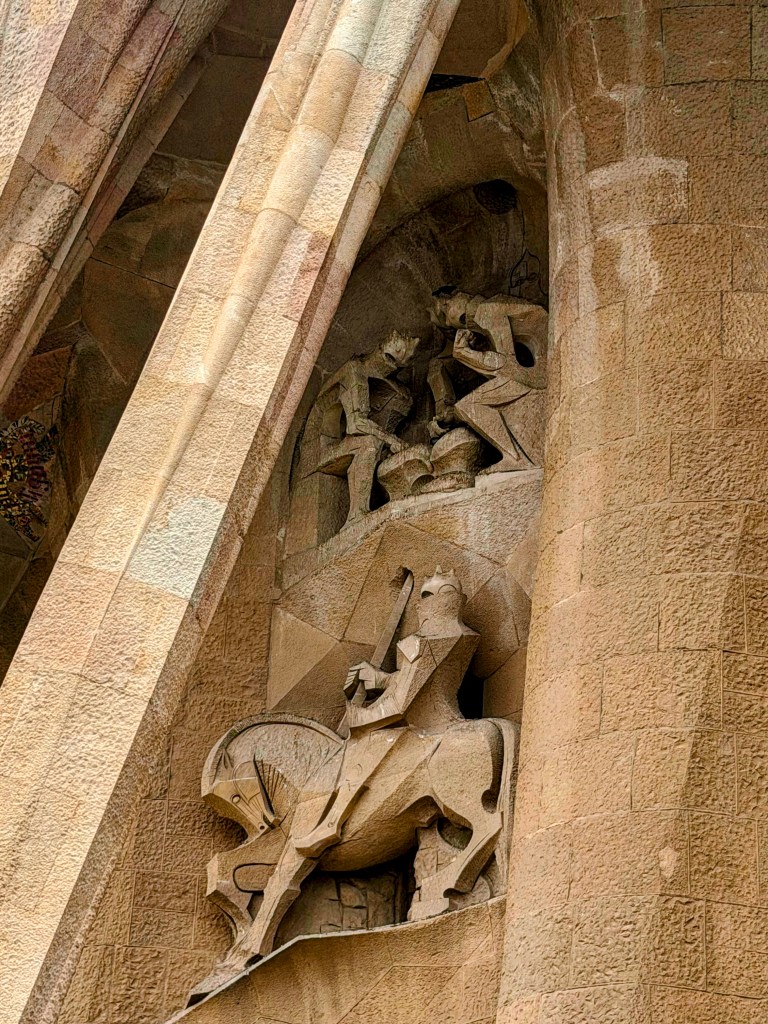
Gaudi spent the last years of his life living in a small building on the premises to oversee the construction. He even went so far as to have a school room built on the premises for the children of the workers.
Then the tour officially ended and Heidi and I had another challenge before us. Our original tour had included tickets to go up one of the towers, either the Nativity or the Passion, facing east and west respectively. I hadn’t been able to find a replacement tour offering tower access, but we were gonna try our luck on site. And we scored! Only a 45 minute wait for the Passion tower, which was about perfect cause we both wanted to put our feet up for bit.
It’s a quick and facilitated elevator ride up and not a terribly exciting elevator at that. You’re deposited high in the air in the tower. There are a LOT of instructions about not sticking your arm nor your phone out of the wire.
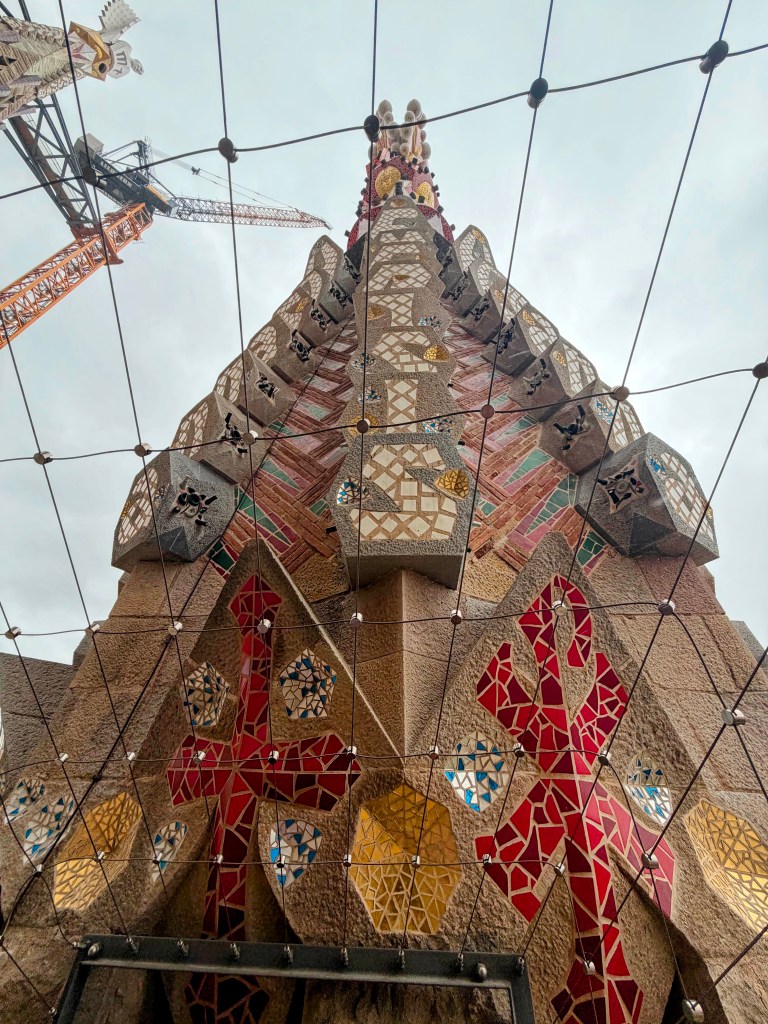
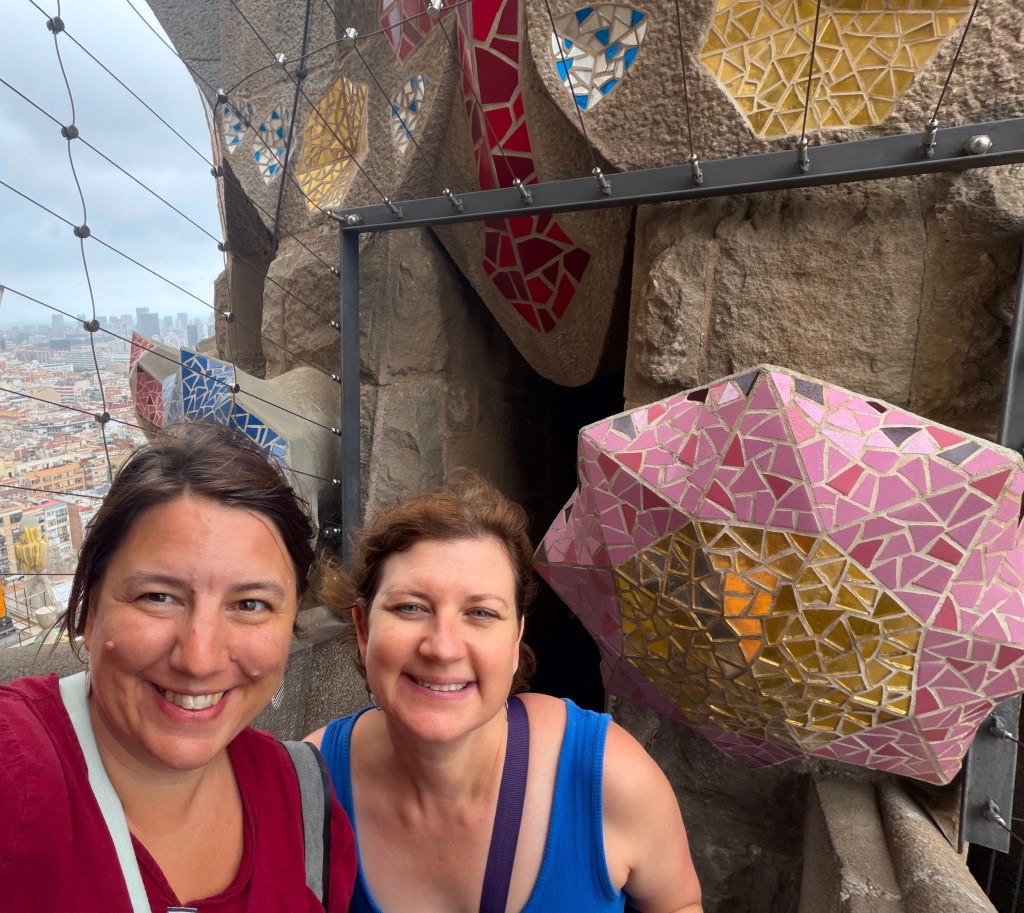
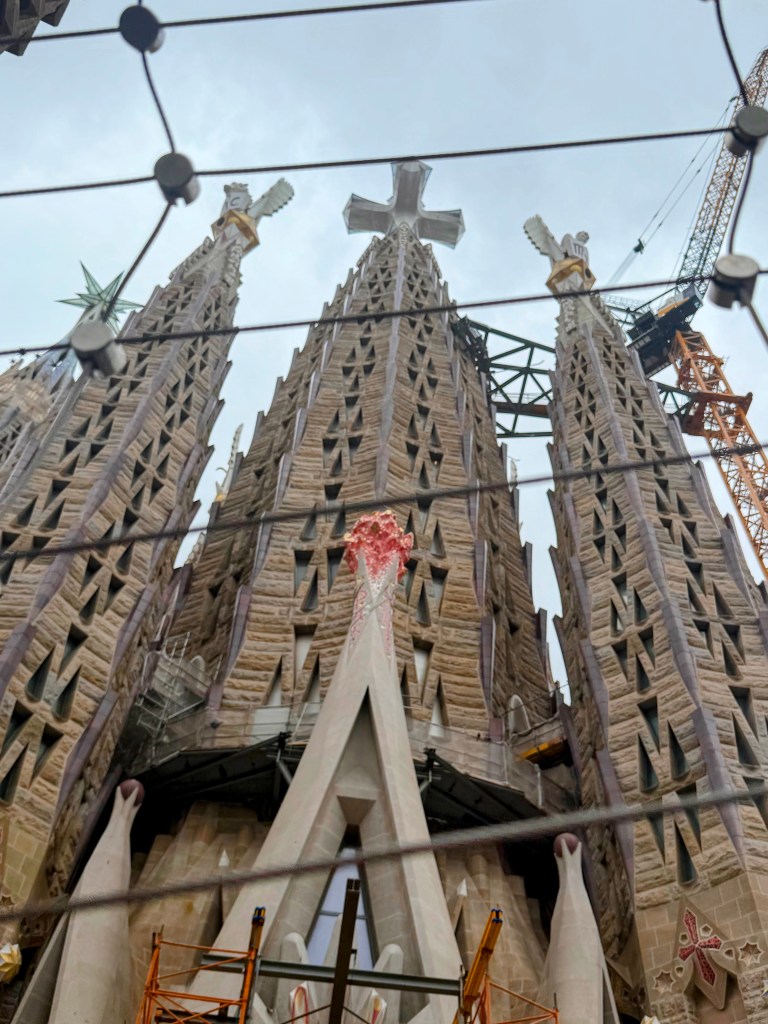
There’s a small landing space in the tower and another viewing platform. The elevator only fits maybe 8 people at a time, so it wasn’t crowded. After taking in the views, you begin the climb down. It’s punctuated by windows offering lovely views of the city and unique angles on the details of Sagrada Familia.
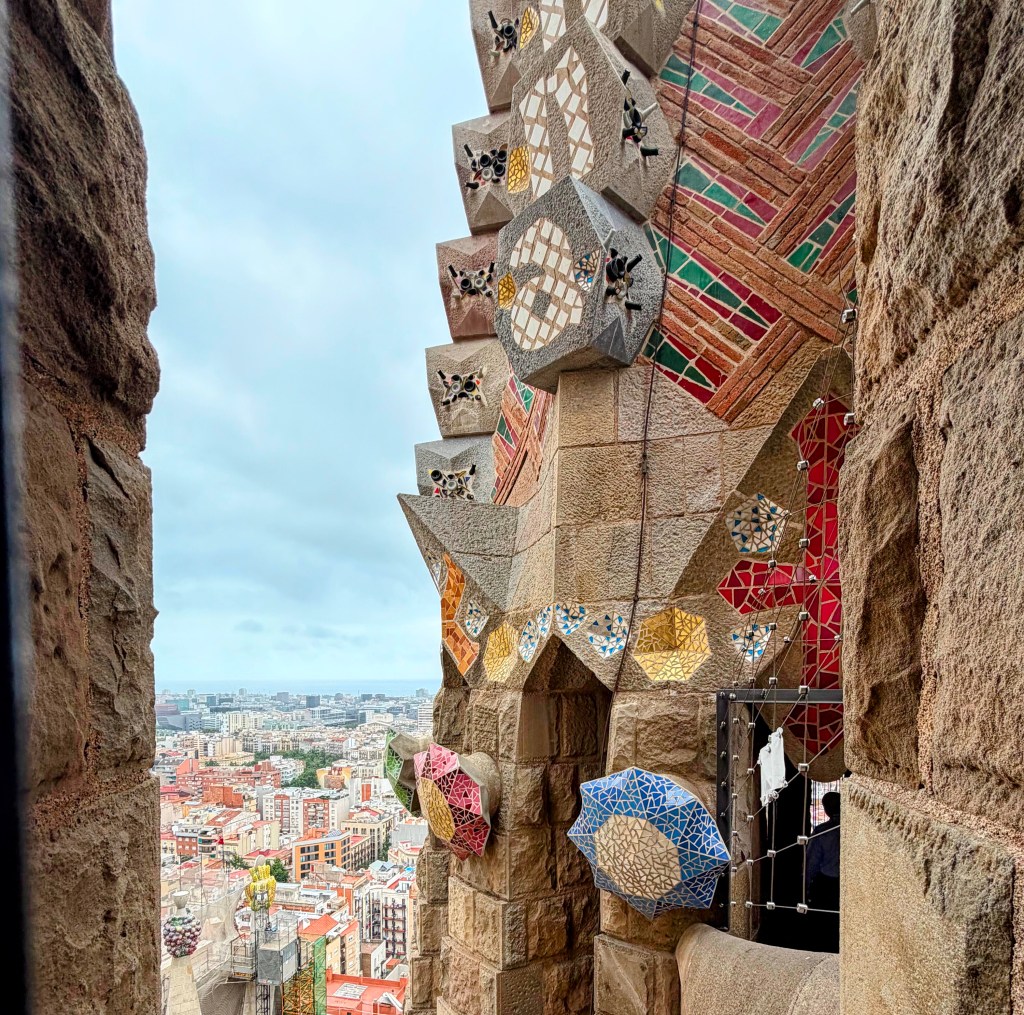
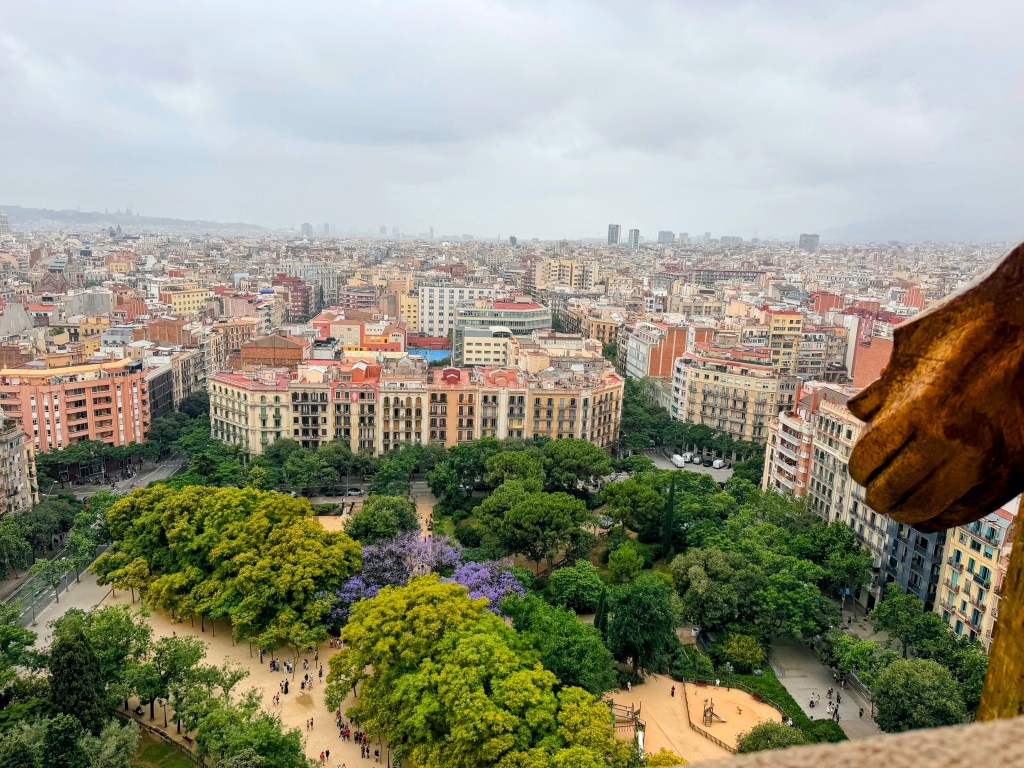
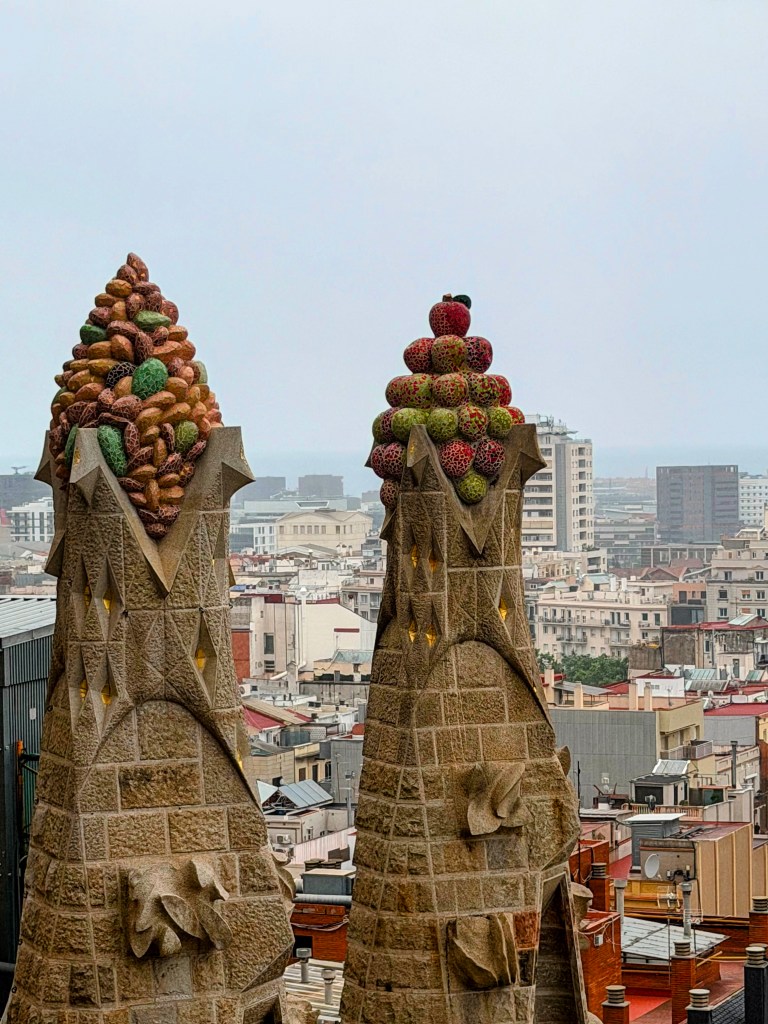
So then, the staircase starts to wind. And wind. We took a brief sojourn out a random gangplank, got rained on, and continued our spiralling descent. The further down you go, the narrow the stairwell gets and the tighter the spin. We hovered to the outside wall as there is no inside railing or really much of anything possibly other the narrowness to prevent one from falling through the middle.

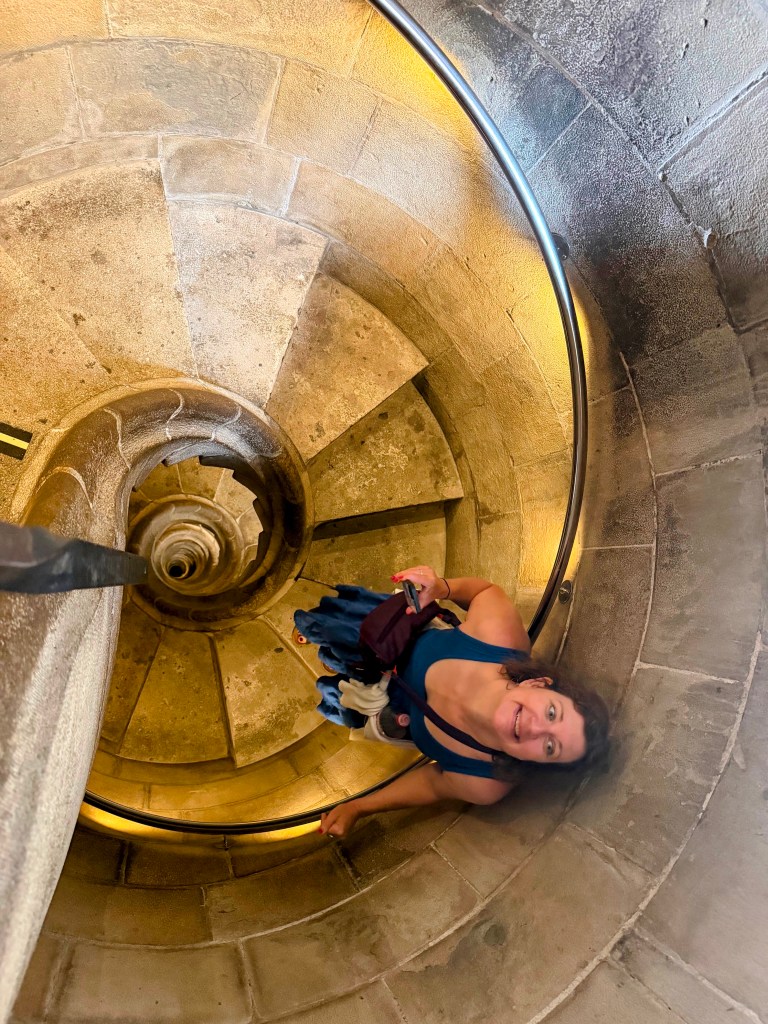
Something like 500 stairs later, we emerged, slightly dizzy by the end.
And thus ended our Gaudi adventures.
We had no tacos while exploring Gaudi sites.
 Year One Project
Leave a comment